
Articles
Why optimize group availability? Make social planning effortless
Tired of endless group chats that go nowhere? Learn how optimizing group availability makes social planning faster, easier, and way more fun for your friend group.

Why optimize group availability? Make social planning effortless

You know the drill. Someone drops a "who's free this weekend?" message in the group chat, and suddenly you're buried under a avalanche of "maybe," "idk," and "what time?" replies that go nowhere for three days. Young adults often schedule hangouts weeks or even months in advance just because coordinating feels so exhausting. But here's the thing: some friend groups manage to pull off spontaneous, low-stress hangouts all the time. The difference isn't luck. It's how they handle group availability. This article breaks down what optimizing group availability actually means, why it matters, and how the right tools can make your social life feel effortless again.
Table of Contents
- What does optimizing group availability mean?
- The hidden costs of not optimizing group plans
- Modern tools and methods for optimizing group availability
- Pitfalls and solutions: Real-life challenges of group availability
- The balance: Structure vs. spontaneity in casual hangouts
- Take action: Steps to streamline your next group hangout
- Bring your friends together—easier than ever
- Frequently asked questions
Key Takeaways
| Point | Details |
|---|---|
| Reduce planning stress | Using optimization tools eliminates endless group chats and confusion. |
| Save time and increase hangouts | Smart coordination helps you see friends more often without the hassle. |
| Balance structure with spontaneity | A flexible approach keeps planning easy while preserving fun and informal vibes. |
| Overcome group challenges | Edge cases like large groups or no-shows are solved with the right tools and steps. |
| Apply proven steps | Follow a simple framework to confidently organize your next group event. |
What does optimizing group availability mean?
At its core, optimizing group availability just means finding the best time when most of your friends can actually show up. Simple idea, right? But in practice, it's the difference between a hangout that happens and one that gets buried in a chat thread forever.
Traditional group chats are chaotic by nature. Everyone replies at different times, people forget to respond, and the "best" time ends up being whoever shouted loudest. Optimizing replaces that chaos with a clear process. Think shared calendars, quick group polls, or apps that automatically surface the times that work for the most people.
"The goal isn't to schedule every second of your social life. It's to remove the friction so that hanging out actually happens."
The benefits for casual friend groups are real. Shared calendars eliminate confusion and save time that would otherwise disappear into endless back-and-forth. When you build a habit of stress-free planning, your group stops losing hangouts to scheduling chaos and starts actually spending time together.
Here's what optimized group availability looks like in practice:
- Everyone shares their general availability upfront, not just when asked
- A poll or calendar tool collects responses automatically
- The group sees clear options instead of an open-ended question
- Someone confirms the plan quickly, and it's done
No drama. No three-day thread. Just a plan.
The hidden costs of not optimizing group plans
With a clear idea of what optimization is, let's look at what happens when it's ignored. Spoiler: it costs more than just time.
Here are the most common ways unoptimized planning hurts your group:
- Wasted hours on messaging. A single hangout can generate dozens of messages just to land on a time. Multiply that by every outing in a year and you're looking at a serious chunk of lost time.
- Double bookings and last-minute cancellations. Without a clear system, people commit to vague plans and then bail when something more concrete comes up.
- Missed hangouts entirely. Sometimes the thread just dies. Nobody follows up, and the hangout never happens.
- Group drift. When hanging out feels like too much work, people stop trying. Friendships quietly fade.
The numbers back this up. Polls and shared calendars cut back-and-forth messages significantly and save meaningful time every week for groups that use them consistently.
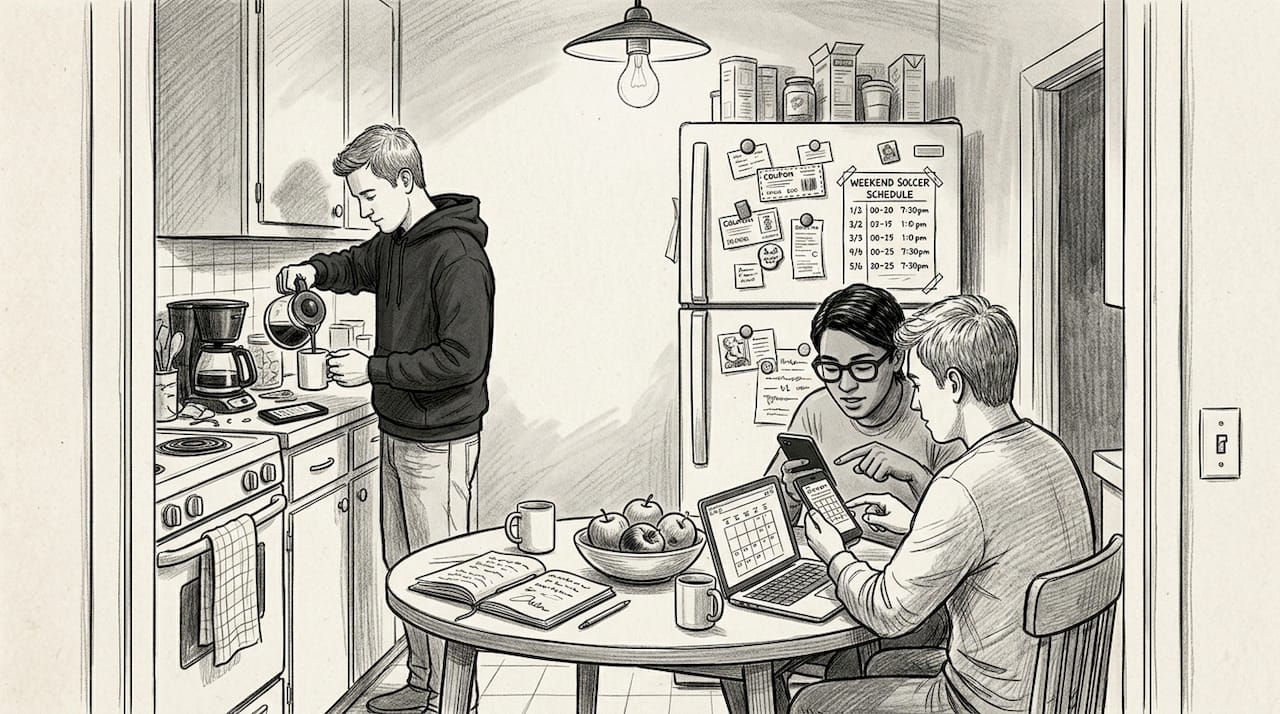
Imagine your crew trying to plan a movie night. Someone suggests Saturday. Three people say they're busy. Someone else suggests Sunday. Two more people go quiet. A week passes. The movie is out of theaters. Sound familiar? That's the real cost of skipping optimization. The good news is that tools designed to cut planning time exist specifically to prevent this exact scenario.
Modern tools and methods for optimizing group availability
Having seen why optimizing is crucial, let's explore the best ways to do it in 2026. The options have gotten genuinely impressive.
Before we compare tools, it helps to understand one term: heuristics. A heuristic is basically a smart shortcut. In scheduling, a heuristic might be "pick the time slot that works for the most people" rather than trying to find a perfect time that works for everyone. AI-powered tools using heuristics like Minimax can maximize attendance and streamline group formation automatically.
Here's how the main approaches stack up:
| Method | Speed | Effort | Best for |
|---|---|---|---|
| Manual group chat | Slow | High | Very small groups |
| Group poll (e.g., Doodle) | Medium | Low | 4 to 10 people |
| Calendar sharing | Fast | Medium | Recurring hangouts |
| AI-powered scheduling app | Very fast | Very low | Any group size |
For most casual friend groups, a combination of polls and calendar integration hits the sweet spot. Check out this event scheduling guide for a deeper look at matching tools to your group's style. You can also explore calendar sharing tools or browse Howbout app alternatives if you're looking for something new.
Pro Tip: Look for apps that combine a quick poll with automatic calendar syncing. That combo removes the two biggest friction points in one step, collecting availability and showing conflicts, without anyone having to do the math manually.
Pitfalls and solutions: Real-life challenges of group availability
Even with top apps, groups face real-life challenges. Here's how to handle them.
Large groups, time zones, and no-shows consistently cause suboptimal outcomes when groups don't plan for them. The fix isn't complicated, but it does require a little intentionality.
| Challenge | Why it happens | Proven solution |
|---|---|---|
| Large group coordination | Too many opinions, slow responses | Set a response deadline, use majority-rules polling |
| Time zone differences | People forget to convert times | Use tools with automatic time zone detection |
| No-shows and last-minute cancellations | Vague commitments | Require a clear yes/no RSVP, not just a reaction emoji |
| Uneven schedules | Shift workers, students, parents | Offer multiple time windows across different days |
Here are some quick fixes you can apply right now:
- Set a time window instead of asking for a single perfect time. "Are you free anytime Saturday afternoon?" works better than "When are you free?"
- Allow partial groups. Not everyone needs to be there for a hangout to happen. Set a minimum headcount and go.
- Build in a backup plan. If your first choice falls through, have a second option ready so the whole thing doesn't collapse.
- Use two rounds of polling for bigger groups. First round narrows it to two or three options. Second round locks it in.
For more ideas on keeping things organized without overcomplicating it, check out these friends calendar ideas and learn more about real-time scheduling tools that update everyone instantly.
The balance: Structure vs. spontaneity in casual hangouts
After addressing obstacles, let's make sure your group doesn't lose what makes hangouts fun in the first place.
Here's a real tension worth naming: too much structure can actually kill the vibe. If every hangout requires filling out a form and waiting for a confirmation email, it starts to feel like a work meeting. Nobody wants that.
"The best scheduling tools are the ones you barely notice. They handle the logistics quietly so the fun part stays front and center."
The goal is flexible optimization. You want just enough structure to make plans happen, but not so much that it feels like a chore. Over-structuring can kill spontaneity, so the smartest approach balances efficient tools with low-commitment options that keep things casual.
Pro Tip: Try using "soft" invites or low-commitment RSVPs for casual hangouts. Something like "I'm heading to the park Sunday around 2pm, come if you're free" is way more likely to get a yes than a formal poll with a deadline. Save the structured tools for bigger events or groups of six or more.
The sweet spot is using structure as a backstage tool. It does the heavy lifting behind the scenes while the actual hangout stays relaxed and natural. That's exactly what good scheduling apps are designed to do. If you want to simplify your group plans without losing the casual feel, the right tool makes all the difference.
Take action: Steps to streamline your next group hangout
Ready to make your next hangout easier? Here's exactly how to do it.
- Choose a tool that fits your group. A simple poll works for small groups. An app with calendar integration works better for larger or busier squads. Pick one and stick with it.
- Set up a poll or shared calendar. Add the potential dates and times, then share the link with your group. Keep the options to three or fewer to avoid decision fatigue.
- Give people a deadline to respond. "Vote by Thursday" is way more effective than leaving it open-ended. A deadline creates just enough urgency without pressure.
- Pick the best time and confirm it. Don't overthink it. Go with the slot that works for the most people and send a clear confirmation message.
- Follow up the day before. A quick "see you tomorrow at 4!" message keeps everyone on the same page and reduces no-shows.
Pro Tip: Rotate the organizer role within your group. When the same person always plans everything, burnout is real. Sharing the responsibility keeps things fair and actually makes hangouts happen more often because no single person is carrying the load.
The payoff is real. Flexible scheduling reduced turnover by 20% in high-turnover teams, showing that good coordination keeps groups together over time. The same principle applies to friend groups. Easy planning means more hangouts, and more hangouts mean stronger friendships. For a full walkthrough, these group scheduling steps lay out the whole process in detail.
Bring your friends together—easier than ever
You've got the strategies. Now it's time to put them to work with a tool that was actually built for this.
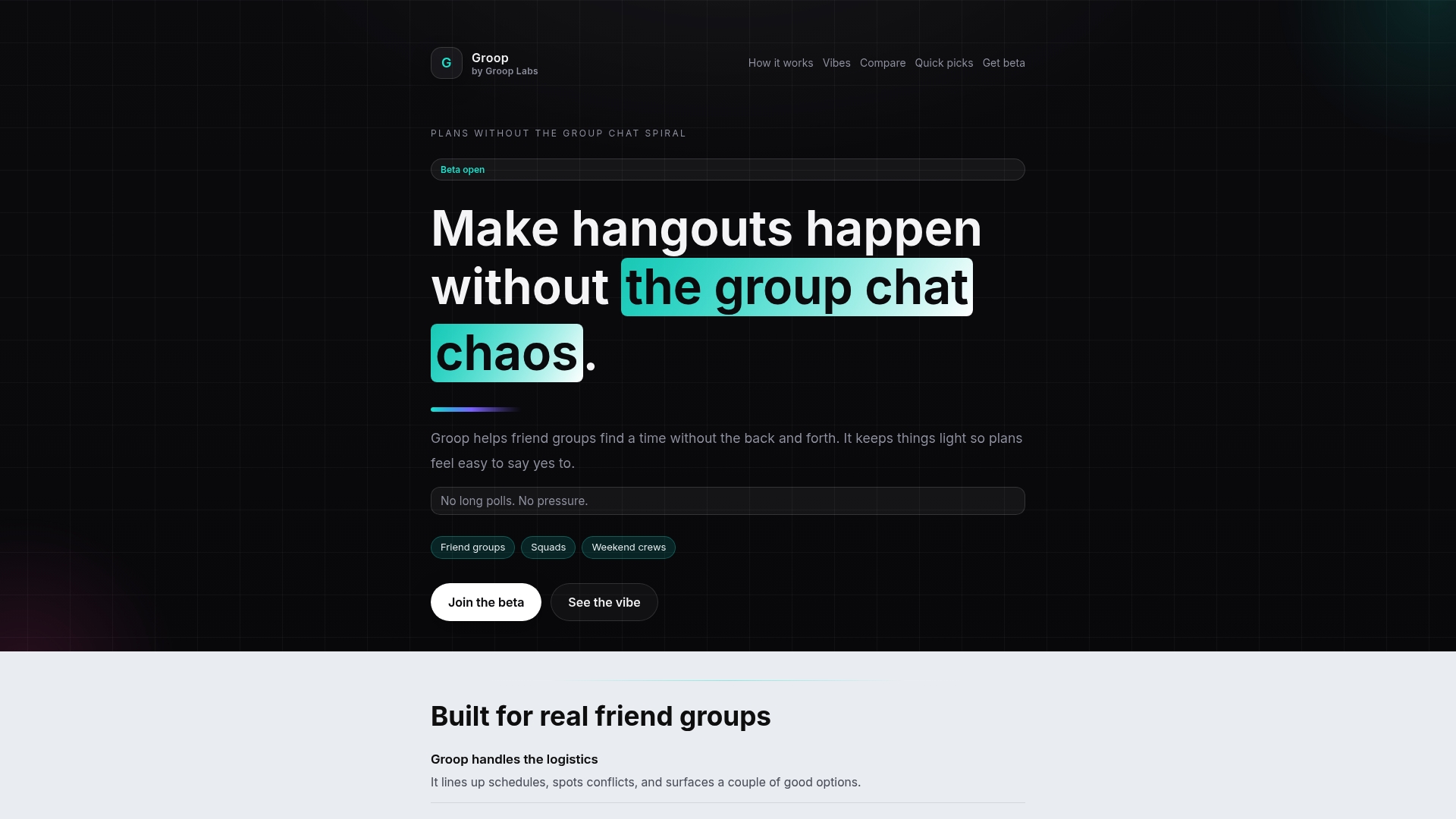
Groooop by Groop Labs is a mobile app designed specifically for casual friend groups who want to make plans without the chaos. It automatically lines up everyone's availability, surfaces conflicts, and gives your group simple, clear choices so you can confirm a hangout in minutes, not days. No long polls. No endless threads. Just a quick, pressure-free way to get your crew together. Share it with your group and see how much easier planning can actually be. Your next hangout is closer than you think.
Frequently asked questions
Why do so many friend groups struggle to make plans?
Busy schedules and lack of coordination tools cause most groups to push hangouts weeks out or miss them entirely. Without a clear system, even motivated groups lose plans to the chaos of open-ended group chats.
What is the fastest way to find a time everyone is available?
Sharing a poll with calendar integration lets everyone vote quickly, and polls reveal best group times far more efficiently than open chat threads. The result is visible to everyone instantly, so there's no need for follow-up messages.
Can optimizing schedules make meetups more frequent?
Absolutely. Optimization tools enable more spontaneous coordination by removing the friction that usually stops plans from forming. When planning is easy, groups hang out more often.
How do large groups handle time zones and no-shows?
Polls with calendar context and buffers help large or scattered groups avoid last-minute issues. Building in a backup time slot also means the hangout survives even if a few people can't make it.
How does optimizing group availability keep groups closer?
Flexible scheduling reduced turnover by 20% in high-turnover teams, and the same logic applies to friendships. Easy, stress-free planning leads to more hangouts, which strengthens bonds and keeps groups from drifting apart over time.