
Articles
Group Scheduling: Simplifying Social Plans Together
Group scheduling for friend groups made easy—definitions, key features, different methods, common pitfalls, and best practices for seamless meetups.

Group Scheduling: Simplifying Social Plans Together

Trying to pin down a time when everyone in your friend group can hang out often feels like a puzzle with too many moving parts. Between different schedules, last-minute changes, and mixed-up messages, classic planning can be frustrating. Group scheduling stands out as a smarter way to coordinate, focusing on each person's preferences, flexibility, and how real-life events shift plans. Here, you will discover how modern scheduling tools actually make it easier to bring friends and study squads together without endless back-and-forth.
Table of Contents
- Group Scheduling Defined And Debunked
- Types Of Group Scheduling Methods
- How Modern Apps Streamline Planning
- Core Features And Real-World Scenarios
- Pitfalls To Avoid When Scheduling With Groups
Key Takeaways
| Point | Details |
|---|---|
| Understanding Group Scheduling | Group scheduling is a nuanced process that requires consideration of participant availability and social dynamics, not just finding common time slots. |
| Selecting Scheduling Methods | Choose group scheduling methods that fit the group's size and adaptability needs, such as heuristic methods for smaller groups or hybrid techniques for any size. |
| Role of Modern Apps | Modern scheduling apps streamline the planning process by integrating intelligent features that anticipate group preferences and offer real-time updates. |
| Avoiding Common Pitfalls | Establish clear communication and accountability frameworks to sidestep common scheduling challenges like unequal contributions and misaligned expectations. |
Group Scheduling Defined and Debunked
Group scheduling represents a sophisticated approach to organizing collective activities and tasks, extending far beyond simplistic planning methods. At its core, group scheduling involves strategically coordinating multiple participants' availability, preferences, and constraints to create seamless social or professional interactions.
Traditionally, group scheduling has been misunderstood as a linear process of finding mutual time slots. However, complex allocation strategies reveal a nuanced framework that considers multiple dimensions:
- Participant availability constraints
- Individual scheduling preferences
- Resource optimization
- Flexibility for spontaneous adjustments
- Minimizing coordination overhead
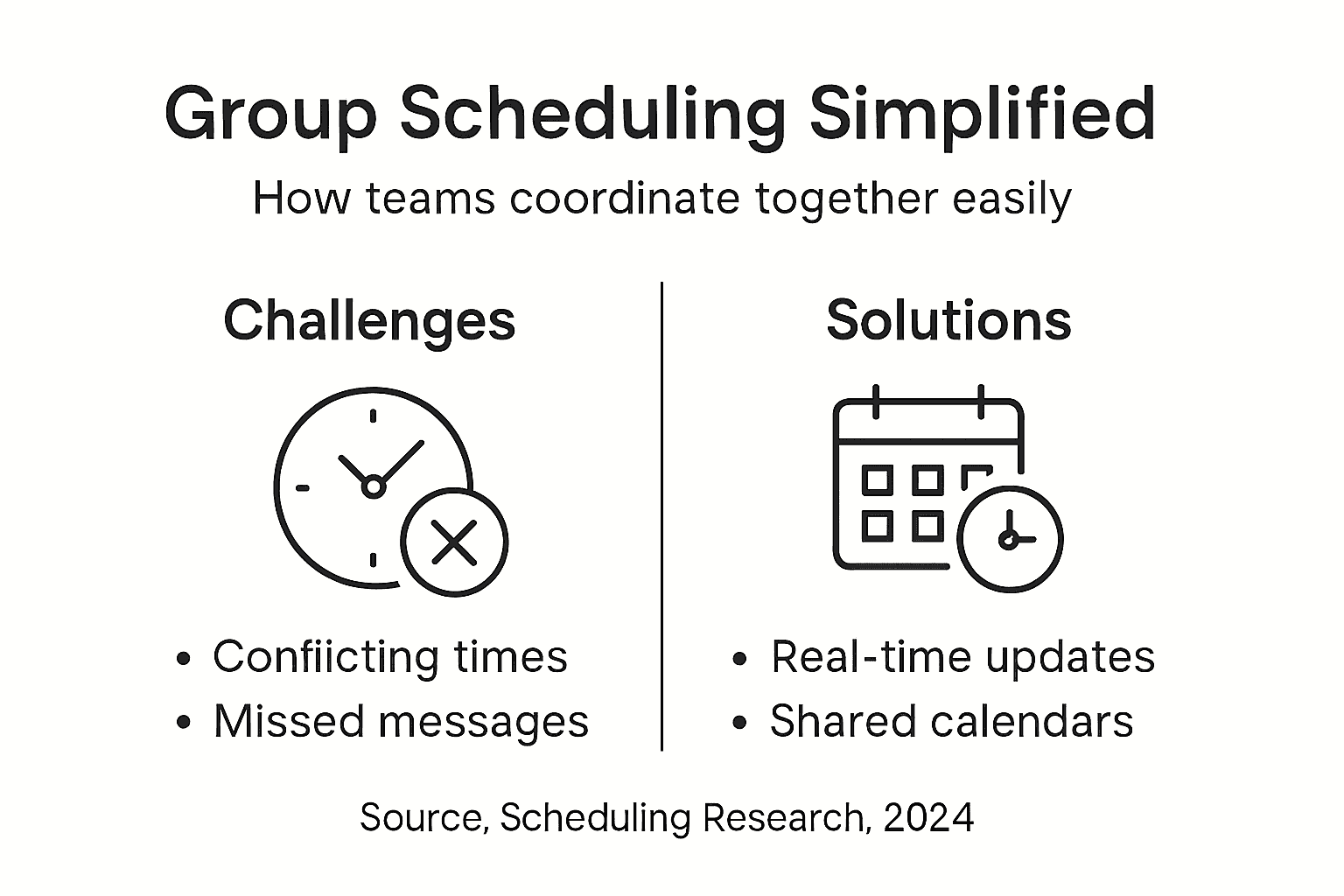
Contrary to popular belief, group scheduling isn't just about finding a common time. Scheduling research demonstrates that effective group coordination requires understanding complex inter-group dynamics and objectives.
Modern group scheduling approaches recognize that social planning involves more than mechanical time matching. They prioritize human factors like personal comfort, social dynamics, and individual scheduling flexibility. This means moving beyond rigid time slots to create more organic, adaptable planning experiences.
Pro tip: Start group scheduling by understanding each participant's core availability and flexibility rather than demanding absolute synchronization.
Types of Group Scheduling Methods
Group scheduling methods represent a diverse landscape of strategic approaches designed to coordinate complex social and professional interactions. Scheduling techniques range from simple rule-based systems to sophisticated computational models that adapt to dynamic human needs.
The primary categories of group scheduling methods include:
- Heuristic Methods: Quick, rule-based solutions for generating feasible schedules
- Metaheuristic Approaches: Advanced algorithms exploring larger solution spaces
- Mathematical Optimization: Precise modeling of scheduling constraints
- Hybrid Techniques: Combining multiple strategies for enhanced performance
Modern scheduling approaches distinguish between different operational paradigms:
- Offline Scheduling: Pre-planned arrangements created before actual execution
- Online Scheduling: Dynamic systems that adjust in real-time
- Centralized Coordination: Single decision-making point
- Decentralized Planning: Distributed decision-making across participants
Real-time scheduling represents the most sophisticated approach, integrating machine learning and predictive analytics to create more responsive and intelligent planning systems. Dynamic scheduling techniques now leverage historical data and predictive models to anticipate group preferences and potential scheduling conflicts.
These methods recognize that effective group coordination is more than mechanical time matching—it's about understanding complex human dynamics, individual preferences, and situational flexibility.
Here's how key group scheduling methods compare in approach and adaptability:
| Method Type | Adaptability to Changes | Ideal Group Size |
|---|---|---|
| Heuristic Methods | Moderate | Small to medium |
| Metaheuristic Approaches | High | Medium to large |
| Mathematical Optimization | Low | Structured, formal |
| Hybrid Techniques | Very high | Any size |
Pro tip: Select a group scheduling method that matches your specific social context and adapts to your group's unique communication patterns.
How Modern Apps Streamline Planning
Modern mobile applications have revolutionized group scheduling by transforming complex social coordination into seamless, intuitive experiences. Group planning apps now leverage intelligent design principles to reduce the traditional friction associated with organizing multiple people's schedules.
Key features that distinguish contemporary scheduling apps include:
- Automatic availability matching
- Real-time collaborative updates
- Intuitive interface design
- Cross-platform synchronization
- Intelligent conflict resolution
- Personalized preference tracking
These apps fundamentally reimagine social planning by moving beyond simple calendar sharing. Intelligent scheduling technologies now anticipate user preferences, suggest optimal meeting times, and provide contextual recommendations that adapt to each group's unique communication dynamics.

The evolution of group scheduling apps reflects broader technological trends toward more human-centered design. Modern platforms understand that scheduling isn't just about finding a time—it's about creating meaningful connections with minimal administrative overhead. Efficient group chat features now integrate seamlessly with scheduling tools, allowing friends and colleagues to transition smoothly between conversation and coordination.
Pro tip: Choose a group scheduling app that feels natural to your social circle's communication style, not just the most feature-packed option.
Core Features and Real-World Scenarios
Group scheduling tools transform complex coordination challenges by delivering sophisticated features that adapt to diverse social and professional contexts. AI-powered scheduling solutions now provide intelligent mechanisms for seamless collaborative planning.
Critical core features include:
- Intelligent availability matching
- Automated conflict resolution
- Dynamic preference tracking
- Personalized time suggestion algorithms
- Seamless communication integration
- Real-time collaborative updates
Different scenarios demand unique scheduling approaches. In academic environments, university timetabling systems demonstrate how advanced scheduling technologies handle intricate constraints like faculty availability, student enrollments, and institutional requirements.
These technologies go beyond simple calendar management. Contextual scheduling understands nuanced human dynamics, suggesting optimal meeting times that consider individual preferences, work patterns, and potential scheduling conflicts. By leveraging machine learning and intelligent design, modern apps transform group coordination from a logistical challenge into a smooth, almost intuitive experience.
Pro tip: Select group scheduling tools that offer flexible customization and integrate naturally with your existing communication platforms.
Pitfalls to Avoid When Scheduling With Groups
Group scheduling can quickly become a complex maze of conflicting preferences, communication challenges, and potential interpersonal tensions. Group collaboration challenges emerge from multiple interconnected dynamics that can derail even the most well-intentioned planning efforts.
Key pitfalls to watch for include:
- Unequal contribution levels
- Lack of clear communication
- Domination by single group members
- Misaligned scheduling expectations
- Poor time management
- Insufficient role clarity
One of the most destructive dynamics occurs when group members fail to establish transparent expectations and accountability mechanisms. Ineffective group dynamics frequently stem from unaddressed power imbalances and communication breakdowns that prevent smooth coordination.
Effective group scheduling requires proactive strategies that anticipate potential conflicts and create flexible, inclusive planning frameworks. By recognizing these potential pitfalls early, groups can develop communication protocols that transform scheduling from a potential source of stress into a collaborative, engaging process.
Review common pitfalls against proactive solutions for effective group scheduling:
| Pitfall | Proactive Solution | Example Protocol |
|---|---|---|
| Unequal contribution levels | Assign rotating responsibilities | Scheduling facilitator |
| Lack of clear communication | Document scheduling decisions | Shared planning log |
| Misaligned expectations | Set upfront availability surveys | Pre-meeting questionnaire |
| Domination by single member | Rotate discussion leaders | Scheduled leader rotation |
Pro tip: Establish a group communication charter that explicitly defines expectations, roles, and conflict resolution strategies before beginning any collaborative scheduling.
Simplify Your Group Scheduling with Grooop
The challenges of coordinating multiple people's schedules can create frustration and wasted time. This article highlights how group scheduling requires more than just finding a common time. It calls for understanding participant preferences, minimizing conflicts, and keeping communication clear and balanced. Grooop is designed exactly for these pain points by offering a lightweight, intuitive app that aligns everyone’s availability while preserving the natural flow of your group’s conversations.
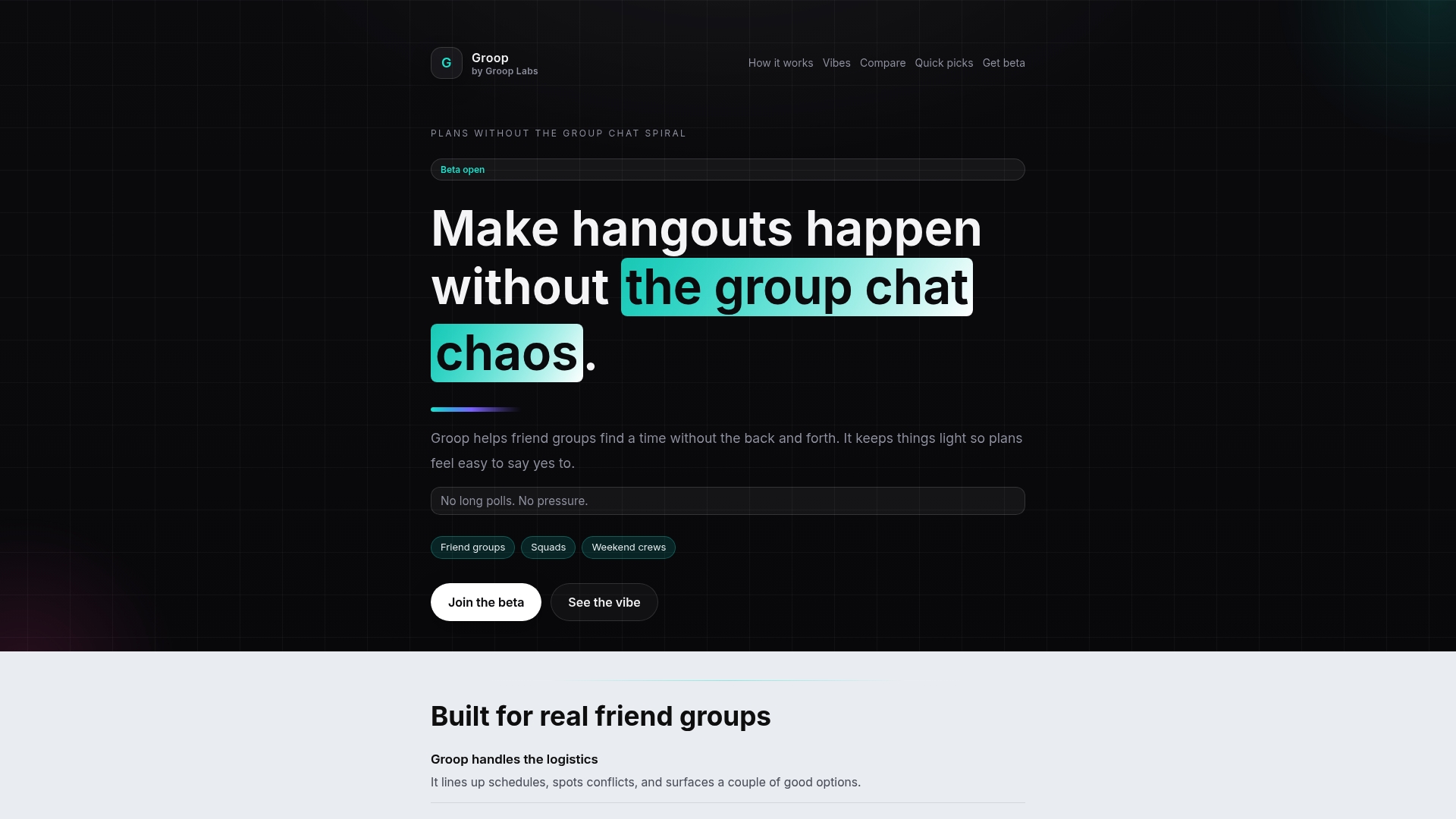
Experience hassle-free social planning that respects your group’s vibe. Grooop helps you avoid lengthy polls, confusing chats, and scheduling conflicts by surfacing clear options that are easy to choose from. Whether you’re organizing hangouts, study sessions, or casual outings, Grooop’s smart coordination tools keep planning relaxed and efficient. Discover how you can move smoothly from conversation to confirmed plans today by visiting Grooop and start simplifying your group scheduling now.
Frequently Asked Questions
What is group scheduling?
Group scheduling is a method of coordinating multiple participants' availability, preferences, and constraints to facilitate seamless social or professional activities.
How do modern apps improve group scheduling?
Modern apps streamline group scheduling by offering features such as automatic availability matching, real-time updates, and intelligent conflict resolution, making the process more intuitive and efficient.
What types of group scheduling methods are available?
Group scheduling methods include heuristic methods, metaheuristic approaches, mathematical optimization, and hybrid techniques, each with different adaptability and suitability for varying group sizes.
What pitfalls should I avoid when scheduling with groups?
Common pitfalls in group scheduling include unequal contribution, lack of clear communication, and misaligned expectations. Proactive solutions include assigning responsibilities, documenting decisions, and establishing clear communication protocols.