
Articles
7 Steps for a Smart Friend Group Organizing Checklist
Discover a 7-step friend group organizing checklist for college students. Learn practical planning tips to streamline hangouts and reduce stress in group events.

7 Steps for a Smart Friend Group Organizing Checklist

Planning activities with your friends often turns into a maze of confusing messages and clashing schedules. Finding a time that works for everyone and getting clear answers can feel almost impossible. The challenge grows as your group gets busier and more spread out, leaving you frustrated and overwhelmed.
You deserve a simple approach that turns group coordination into something enjoyable. This list will reveal actionable methods to bring your friend group together with less stress. From using a centralized communication platform to syncing your calendars and managing scheduling conflicts, you will discover practical ways to make social planning easy and effective.
Get ready to unlock proven tactics that help your group avoid missed connections, forgotten invites, and endless back-and-forth messages. With these insights, you can create group plans that actually happen and keep everyone excited about the next hangout.
Table of Contents
- 1. Set Up a Shared Group Platform
- 2. Pick a Simple Plan Starter
- 3. Sync Everyone's Availability
- 4. Spot and Address Schedule Conflicts
- 5. Keep Choices Clear and Limited
- 6. Send Friendly Reminders to All
- 7. Make Confirmations Quick and Easy
Quick Summary
| Takeaway | Explanation |
|---|---|
| 1. Use a Shared Group Platform | Choose a centralized communication tool to streamline group planning and improve coordination among members. |
| 2. Propose Flexible Options | Start with low-pressure suggestions that invite discussion and accommodate different preferences within the group. |
| 3. Sync Availability Efficiently | Use digital calendars to track group members' schedules, making it easier to find common free times without extensive back-and-forth messaging. |
| 4. Limit Decision Choices | Offer no more than 3-4 specific options to reduce decision fatigue and encourage group participation in planning activities. |
| 5. Send Friendly Reminders | Schedule casual reminders to maintain group awareness and engagement without pressuring anyone, enhancing overall participation. |
1. Set Up a Shared Group Platform
Organizing friend group activities starts with choosing the right digital meeting ground. A centralized communication platform eliminates the chaos of scattered messages and ensures everyone stays connected.
Modern friend groups need more than traditional text messaging. They require a space that allows seamless coordination and instant updates. Platforms like group communication tools help streamline social planning by providing a single hub for decision-making.
Key features to look for in a shared group platform include:
- Real-time messaging capabilities
- Event scheduling functions
- File and photo sharing options
- Easy accessibility across multiple devices
- Notification settings for important updates
Choosing the right platform transforms group communication from frustrating to fun.
Consider platforms that integrate multiple communication styles. Some apps offer voting mechanisms for group decisions making scheduling easier. Others provide calendar integrations that automatically sync potential meetup times.
Digital coordination reduces planning stress by creating transparent communication channels where everyone can contribute equally. This approach prevents miscommunication and ensures no group member feels left out.
Pro tip: Test different platforms with a small group first to find the most comfortable and intuitive option for your specific friend circle.
2. Pick a Simple Plan Starter
Navigating group plans begins with proposing something that feels low-pressure and inclusive. Effective social coordination starts with creating an approachable initial suggestion that gives everyone room to contribute.
The art of plan starting involves presenting flexible options that invite discussion rather than demanding immediate commitment. Social planning techniques emphasize creating an open environment where everyone feels comfortable sharing preferences.
Consider these strategies for initiating group plans:
- Propose multiple potential dates and times
- Suggest broad activity categories instead of specific venues
- Use language that feels inviting and casual
- Include options for different budget levels
- Allow space for alternative suggestions
The best group plans emerge from collaborative brainstorming.
Broad suggestions work better than rigid expectations. Instead of saying "We must go to this restaurant on Saturday," try "Weekend hangout ideas? I'm thinking food or outdoor activity."
Technology can help streamline this process. Many group communication platforms now offer polling features that let everyone vote on preferences without extensive back-and-forth messaging.
Pro tip: Start with 3-4 flexible options and be prepared to adapt based on group feedback.
3. Sync Everyone's Availability
Coordinating schedules is the trickiest part of group planning. Shared availability tracking transforms chaotic scheduling into a smooth collaborative process.
Collaborative calendar software helps groups navigate the complex world of finding mutual free time. Modern digital tools make it easier than ever to align everyone's schedules without endless text message chains.
Key strategies for syncing availability include:
- Use digital shared calendars
- Set a reasonable response window
- Provide multiple potential time slots
- Consider different time zones
- Allow flexibility for individual schedules
The secret to great group plans is understanding each other's time constraints.
Digital coordination reduces scheduling frustration. By using platforms that show real-time availability, groups can quickly identify overlapping free windows without manual back-and-forth negotiations.
Consider tools that integrate automatic time zone conversions and send gentle reminders. This approach helps everyone stay informed without feeling pressured.
Pro tip: Create a shared calendar invite with multiple optional time slots to maximize the chances of group participation.
4. Spot and Address Schedule Conflicts
Schedule conflicts can turn group planning into a nightmare. Proactive conflict management helps prevent last-minute cancellations and frustrating mix-ups.
Scheduling conflict resolution requires a strategic approach that balances individual needs with group dynamics. Understanding how conflicts emerge is the first step to preventing them.
Key strategies for managing scheduling conflicts include:
- Communicate early and often
- Use digital scheduling tools
- Create a backup plan
- Establish clear group priorities
- Be flexible with alternatives
Not every conflict can be avoided but most can be managed with thoughtful communication.
Digital tools make conflict detection easier. Modern scheduling platforms can automatically highlight overlapping commitments and suggest alternative time slots that work for everyone.
When conflicts arise consider the following hierarchy: group event importance individual schedule constraints and potential alternatives. This approach helps maintain group cohesion while respecting personal limitations.
Pro tip: Always have a quick communication channel ready to discuss and resolve scheduling issues in real time.
5. Keep Choices Clear and Limited
Choice overload can paralyze group decision-making faster than anything else. Focused choices drive better decisions by preventing mental exhaustion and streamlining the planning process.
Group decision-making techniques reveal that limiting options actually increases group satisfaction and participation. When faced with too many possibilities people often become overwhelmed and disengage.
Strategies for creating clear choices include:
- Propose no more than 3-4 specific options
- Define criteria for selection upfront
- Categorize choices by type or priority
- Establish a clear decision-making timeline
- Create a simple voting or ranking system
Simplicity transforms group planning from frustrating to fun.
Decision frameworks help reduce complexity. By establishing clear parameters and expectations upfront you create an environment where everyone feels empowered to contribute without feeling overwhelmed.
Think of choice limitation like a restaurant menu. Too many options cause decision paralysis while a curated selection makes choosing enjoyable and straightforward.
Pro tip: Create a quick poll or shared document where group members can easily compare and evaluate limited options.
6. Send Friendly Reminders to All
No one likes being the person who forgets the details. Gentle group communication keeps everyone on the same page without creating unnecessary pressure.
Team reminders reduce mental load by creating a shared sense of accountability and connection. The key is striking a balance between being helpful and being annoying.
Strategies for sending effective reminders include:
- Use a conversational tone
- Provide specific event details
- Send reminders at strategic times
- Offer multiple communication channels
- Include an easy response mechanism
Friendly reminders build group cohesion without feeling like nagging.
Digital tools make reminder management seamless. Automated systems can help schedule notifications that feel personal and considerate rather than intrusive.
Think of reminders like a helpful friend nudging you about plans. The goal is to make everyone feel included and informed without creating additional stress.
Pro tip: Schedule your first reminder 48 hours before the event and a final check-in 2 hours prior to help everyone stay prepared.
7. Make Confirmations Quick and Easy
Confirmation anxiety can kill group momentum faster than anything else. Streamlined response methods transform planning from stressful to smooth.
Effective attendance confirmations reduce group planning friction by making participation effortless. The easier you make saying "yes," the more likely people will actually respond.
Key strategies for simple confirmations include:
- Provide one-click RSVP options
- Include all essential event details upfront
- Set clear response deadlines
- Offer multiple confirmation channels
- Make responses feel low pressure
The best plans invite participation without demanding commitment.
Digital tools simplify group coordination. Modern platforms allow instant responses through text message polls, shared calendar invites, and quick link confirmations.
Think of confirmations like ordering takeout. The simpler the menu and ordering process the more likely you are to get exactly what you want.
Pro tip: Create a universal link or QR code that lets group members confirm attendance in less than 10 seconds.
Below is a comprehensive table summarizing the steps and strategies for organizing friend group activities as discussed throughout the article.
| Step | Description | Benefits |
|---|---|---|
| Set Up a Shared Group Platform | Choose a centralized communication platform with features such as messaging, scheduling, file sharing, and notifications. | Facilitates seamless coordination and eliminates scattered messages. |
| Pick a Simple Plan Starter | Start with flexible, low-pressure activity suggestions inviting discussion. | Encourages collaboration and reduces commitment anxiety. |
| Sync Everyone's Availability | Use shared calendars and scheduling tools to navigate group members' schedules. | Streamlines schedule coordination and minimizes scheduling conflicts. |
| Spot and Address Schedule Conflicts | Proactively manage potential scheduling conflicts and establish group priorities. | Enhances group cohesion and prevents last-minute cancellations. |
| Keep Choices Clear and Limited | Limit options to 3-4 specific choices to drive group decision-making. | Reduces mental exhaustion and increases group satisfaction. |
| Send Friendly Reminders to All | Employ automated systems to send timely and conversational reminders. | Keeps everyone informed and fosters group accountability. |
| Make Confirmations Quick and Easy | Offer simple RSVP options with essential event details and flexible response mechanisms. | Boosts participation and diminishes response delays. |
Streamline Your Friend Group Plans Effortlessly with Grooop
Planning a friend group hangout can quickly become overwhelming when juggling multiple schedules and preferences. This article outlined clear steps like syncing availability, managing scheduling conflicts, and keeping choices simple to reduce the usual chaos and stress. If you find yourself frustrated by endless back-and-forth messaging and complicated polls, Grooop offers a smart solution designed exactly for these challenges. With Grooop you can start a plan smoothly, see who is free instantly, spot conflicts early, and provide your group with easy options to decide from all while preserving your group’s natural vibe.
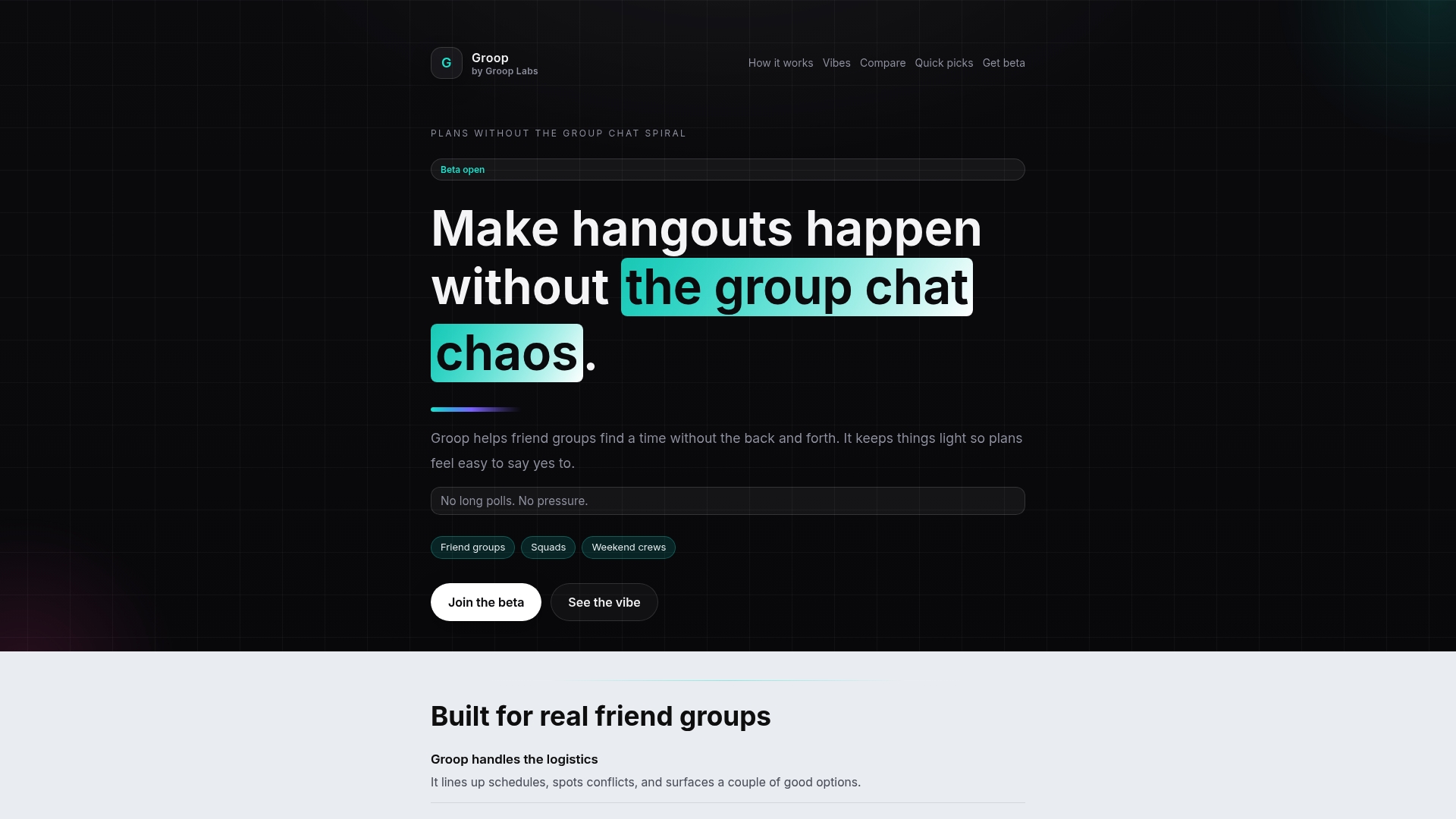
Don't let confusing group chats hold back your fun. Experience hassle-free social planning today by exploring how Grooop makes coordinating friend groups simple and relaxed at https://groop-labs.com. Visit Grooop's main page to get started and discover a friend group scheduling tool that actually fits your lifestyle. Your next hangout can be just a few taps away with clear choices and quick confirmations thanks to Grooop's mobile app.
Frequently Asked Questions
How can I set up a shared group platform for my friend group?
To set up a shared group platform, choose a digital communication tool that supports real-time messaging, event scheduling, and file sharing. Start by testing different platforms with a few friends to find the most intuitive option for your group.
What should I consider when proposing a plan starter to friends?
When proposing a plan starter, create low-pressure suggestions that allow for flexible discussions. Offer multiple options for dates and activities to encourage everyone to share their preferences without feeling obligated.
How can I efficiently sync everyone's availability for a group event?
To sync everyone's availability, use a shared digital calendar that allows all members to update their free time. Set a reasonable response window and include multiple potential time slots to maximize participation.
What strategies can help manage scheduling conflicts within a friend group?
To manage scheduling conflicts, communicate regularly and use digital scheduling tools to identify overlapping commitments. Create a backup plan and be flexible with alternatives to accommodate individual schedules while prioritizing group needs.
How can I limit choices to make group decision-making easier?
To limit choices and simplify decision-making, propose no more than 3-4 specific options for activities or venues. Establish clear criteria for selection and use a simple voting system to make evaluating choices straightforward and engaging.