
Articles
7 Essential Friend Group Coordination Tips for Easy Hangouts
Discover 7 essential friend group coordination tips that simplify planning and make organizing hangouts with your crew stress-free and enjoyable.

7 Essential Friend Group Coordination Tips for Easy Hangouts

Trying to organize a hangout with friends often turns into endless messaging, missed signals, and last minute cancellations. Group planning can feel like more work than fun when expectations and preferences clash or communication falls apart. If you have ever felt frustrated by failed group outings, you are definitely not alone.
This series of practical tips will help you overcome common friendship planning pitfalls. You will discover ways to set clear group expectations, simplify decision making, and keep everyone engaged in a way that feels natural. By applying these focused strategies, you can turn chaotic group chats into memorable hangouts that everyone looks forward to.
Get ready to unlock simple, actionable methods that transform the way your friend group plans and enjoys time together.
Table of Contents
- 1. Set Clear Group Expectations For Planning
- 2. Utilize Simple Scheduling Tools For Polling
- 3. Keep Choices Manageable For Quicker Decisions
- 4. Respect Everyone's Availability And Preferences
- 5. Surface Conflicts Early To Avoid Frustration
- 6. Communicate Updates With Minimal Messages
- 7. Celebrate Wins To Boost Group Motivation
Quick Summary
| Key Message | Explanation |
|---|---|
| 1. Set Clear Group Expectations | Establish communication norms to prevent planning frustrations and keep everyone aligned during group hangouts. |
| 2. Utilize Scheduling Tools | Use digital tools to streamline scheduling by matching everyone's availability and eliminating endless discussions. |
| 3. Manage Choices for Decisions | Limit options to avoid overwhelming the group, facilitating quicker decisions and more enjoyable meetups. |
| 4. Respect Individual Preferences | Acknowledge each member's unique schedules and social needs to foster a more inclusive and understanding group dynamic. |
| 5. Celebrate Group Successes | Recognize achievements, no matter how small, to strengthen connections and maintain motivation within the friend group. |
1. Set Clear Group Expectations for Planning
Everyone knows group hangouts can quickly turn into a communication nightmare. Setting clear expectations from the start prevents frustration and ensures everyone is on the same page. Establishing communication standards early helps your friend group navigate planning challenges smoothly.
When you first gather your friend group, schedule a quick initial meetup specifically to discuss planning norms. This sounds formal, but it does not need to be a serious meeting. Think of it like creating a fun rulebook for your social adventures. Discuss key aspects like response times, decision making processes, and preferred communication channels.
Key Expectations to Discuss:
- Response Time: Agree on how quickly friends should respond to hangout proposals
- Decision Making: Establish whether majority vote or consensus works best
- Communication Platform: Choose a primary method for coordinating plans
- Conflict Resolution: Create a friendly approach for handling scheduling conflicts
By having these conversations upfront, you eliminate the endless back and forth that typically derails group plans. Your friends will appreciate the proactive approach that makes socializing easier and more enjoyable.
Pro tip: Create a quick shared document or group chat pinned message outlining your agreed expectations to keep everyone aligned and accountable.
2. Utilize Simple Scheduling Tools for Polling
Say goodbye to the endless group chat chaos of trying to find a mutually convenient time. Simple scheduling tools can transform your hangout planning from a nightmare into a smooth, drama free process. Why saying "any time works" makes planning harder highlights the importance of strategic coordination.
These digital tools do more than just track availability. They eliminate the circular conversations where everyone says "I'm flexible" but nobody actually commits. Modern polling platforms allow each friend to input their specific availability windows, automatically highlighting overlapping free times and making decision making transparent and easy.
Key Features to Look For in Scheduling Tools:
- Instant Availability Matching: Shows common free time slots at a glance
- Mobile Friendly: Accessible across different devices and platforms
- Easy User Interface: Minimal clicks required to input schedules
- Real Time Updates: Automatically reflects changes when someone updates their availability
By introducing a structured approach to scheduling, you remove the social awkwardness of coordinating hangouts. These tools transform group planning from a potential source of stress into a quick, efficient process that keeps everyone connected.
Pro tip: Choose a scheduling tool that sends automatic reminders and allows quick voting to keep everyone engaged and accountable.
3. Keep Choices Manageable for Quicker Decisions
Too many options can paralyze even the most decisive friend group. Effective decision making requires limiting choices to prevent overwhelming everyone and stalling your hangout plans.
When planning group activities, the paradox of choice can turn a simple meetup into a marathon of indecision. Humans naturally struggle when presented with too many options. By curating and narrowing down possibilities, you create a clear path to actually making plans and enjoying time together.
Strategies for Simplifying Group Choices:
- Prescreen Options: Eliminate obviously unsuitable suggestions before group discussion
- Set Specific Parameters: Define clear boundaries for acceptable activities
- Use Voting Limits: Allow each person only a set number of votes
- Time Box Decisions: Set a strict time limit for making final choices
This approach transforms group planning from a frustrating negotiation into a streamlined process. By intentionally constraining choices, you help your friends move from endless deliberation to actual enjoyment.
Pro tip: Rotate decision making responsibilities among group members to ensure everyone gets a chance to choose and everyone stays engaged.
4. Respect Everyone's Availability and Preferences
Not every friend has the same schedule or social energy level. Valuing individual communication preferences can transform group hangouts from stressful negotiations into enjoyable experiences.
Every person in your friend group has unique constraints personal commitments and social comfort zones. Understanding and respecting these differences prevents resentment and ensures everyone feels heard and valued. Some friends might work night shifts while others have early morning classes. Some prefer spontaneous meetups others need advance planning.
Key Strategies for Respecting Friend Preferences:
- Communicate Openly: Ask about individual schedules and constraints upfront
- Flexible Timing: Rotate meetup times to accommodate different schedules
- Alternative Options: Provide multiple hangout formats for different energy levels
- No Guilt Policies: Make it okay to opt out without explanation
By creating an inclusive approach that considers everyone's individual needs you build a more supportive and understanding friend group. This approach recognizes that friendship is about connection not rigid expectations.
Pro tip: Create a shared document where friends can anonymously note their scheduling preferences and comfort levels to encourage honest communication.
5. Surface Conflicts Early to Avoid Frustration
Unresolved tensions can turn a fun group hangout into an awkward nightmare. Conflict mediation strategies are essential for maintaining healthy friend group dynamics and preventing small misunderstandings from escalating into major rifts.
Most friend groups experience occasional friction. Someone might feel consistently left out, disagree with activity choices, or have underlying personal tensions. The key is creating a safe environment where people can express concerns openly without fear of judgment or backlash.
Effective Conflict Resolution Approaches:
- Create Safe Spaces: Encourage honest communication without defensiveness
- Active Listening: Focus on understanding perspectives before responding
- Validate Feelings: Acknowledge emotions even if you disagree with viewpoints
- Seek Compromise: Find solutions that consider everyone's perspectives
- Avoid Blame: Focus on resolving issues rather than assigning fault
By normalizing open conversations about group dynamics you transform potential conflicts into opportunities for deeper understanding and connection. The goal is not perfection but mutual respect and genuine friendship.
Pro tip: Schedule occasional group check ins where everyone can share feelings and concerns in a structured supportive environment.
6. Communicate Updates with Minimal Messages
In the world of group chats, less is definitely more. Targeted communication strategies can transform your friend group from a message storm to a smooth information exchange.
When planning hangouts, most friend groups fall into a common trap: endless back and forth messages that create more confusion than clarity. Your goal is to communicate efficiently without overwhelming everyone with unnecessary details. Think of your group updates like a quick news bulletin instead of a lengthy documentary.
Key Principles for Minimal Messaging:
- Be Specific: Include only essential information
- Use Clear Language: Avoid unnecessary explanations
- Lead with Important Details: Put key information first
- Set Communication Expectations: Agree on message length and frequency
- Choose Right Channels: Use text for quick updates and calls for complex discussions
By keeping messages short and purposeful you reduce communication fatigue and increase the likelihood that everyone actually reads and responds to important information.
Pro tip: Create a quick template for hangout updates that includes location time and any critical details in three sentences or less.
7. Celebrate Wins to Boost Group Motivation
Successful friend groups know the secret sauce is not just planning hangouts but enjoying the journey together. Celebrating small group achievements transforms ordinary meetups into memorable experiences that strengthen connections.
Most friend groups overlook the power of recognition. When you acknowledge even tiny victories like successfully coordinating a complex group dinner or pulling off a spontaneous weekend trip you create positive momentum. These moments of celebration reinforce why you enjoy spending time together and motivate everyone to keep planning awesome adventures.
Celebration Strategies for Friend Groups:
- Acknowledge Effort: Recognize the work behind organizing hangouts
- Create Fun Rituals: Develop group specific celebration traditions
- Share Appreciation: Verbalize what each person contributes
- Document Memories: Take photos or create shared digital albums
- Keep It Low Pressure: Celebrations should feel natural not forced
By intentionally highlighting group successes you create a culture of positivity and mutual support. Each celebration becomes a small reminder of why your friendship matters.
Pro tip: Start a group chat tradition where everyone shares one highlight from the hangout to reinforce positive memories and build collective excitement.
Below is a comprehensive table summarizing effective strategies for planning and managing group hangouts, as highlighted in the article.
| Strategy | Implementation | Benefits |
|---|---|---|
| Set Clear Group Expectations | Establish communication standards, including response times, decision methods, and preferred platforms. | Promotes efficient group planning, aligning everyone's expectations. |
| Utilize Scheduling Tools | Employ user-friendly apps to find mutual availability and set reminders. | Simplifies coordination, ensuring convenient scheduling and removing logistical stress. |
| Limit Choices for Decisions | Curating options, setting voting limits, and adhering to decision timeboxes. | Streamlines decision-making processes, reducing group indecisiveness. |
| Respect Availability Preferences | Collect personal schedules, needs, and preferences while avoiding any obligation to participate. | Enhances inclusivity and respects individual group member contributions, fostering a nurturing environment. |
| Address Disputes Proactively | Facilitate open, respectful dialogue about issues while focusing on understanding and resolution. | Maintains a cohesive group dynamic by addressing issues constructively, preventing unresolved tensions. |
| Optimize Communication | Prioritize concise, essential messaging for planning updates using agreed-upon communication guidelines. | Ensures clarity and reduces message fatigue, fostering effective group conversations. |
| Celebrate Group Achievements | Recognize activities, organize celebrations, and develop group traditions. | Strengthens social bonds by creating positive memories and enhancing motivation for future gatherings. |
Simplify Your Friend Group Hangouts with Groop
Coordinating easy and enjoyable hangouts can be challenging when faced with constant back-and-forth messages and endless scheduling conflicts. This article highlights common pain points like managing communication expectations, limiting choices to speed decisions, and respecting everyone's availability. If you want to put an end to the chaos of group planning while keeping your friend group’s vibe intact Groop is designed to help. Groop offers a lightweight scheduling tool tailored to casual friend groups that automatically lines up availability and surfaces conflicts clearly so your hangouts are stress-free and fun.
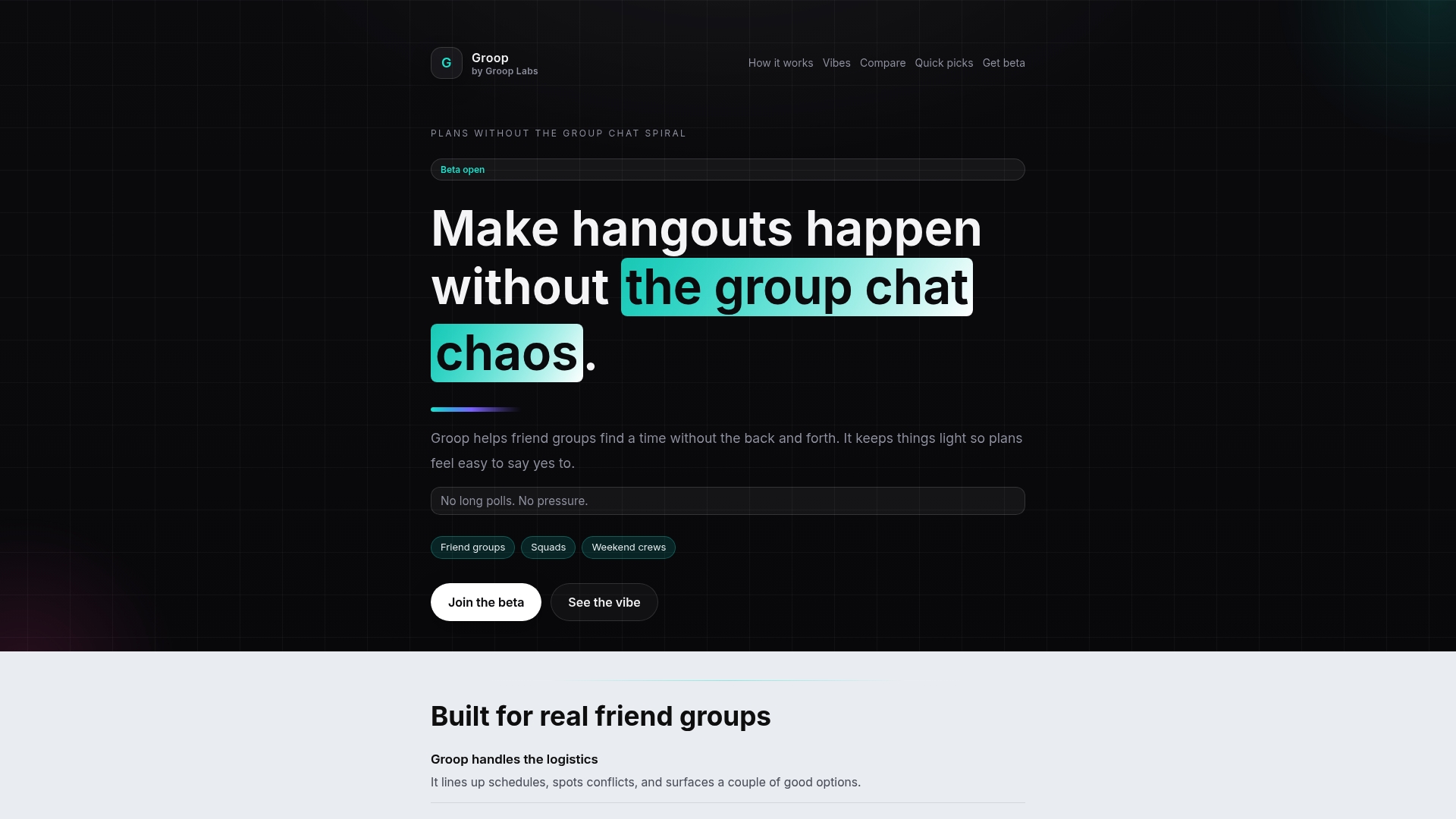
Ready to take the frustration out of planning your next get-together Start using Groop today and enjoy quick, pressure-free decision-making that respects everyone’s preferences. Discover how our simple yet powerful app keeps logistics effortless so you can focus on the moments that matter. Visit Groop Labs to get started and transform your friend group coordination now.
Frequently Asked Questions
How can I set clear group expectations for planning hangouts?
Setting clear group expectations starts with an initial meeting to discuss planning norms. Agree on key aspects like response times, decision-making processes, and conflict resolution methods to ensure everyone is aligned.
What are some effective scheduling tools for friend group hangouts?
Utilize easy-to-use scheduling tools that allow each friend to input their availability. Look for features like instant availability matching and real-time updates to help coordinate hangouts efficiently without confusion.
How can I simplify decision-making when planning group activities?
To simplify decision-making, limit options by prescreening and defining parameters for activities. Use voting limits and time constraints to encourage quicker choices, transforming potential indecision into streamlined planning.
How can I respect my friends' availability and preferences during planning?
Respect your friends' unique schedules and preferences by communicating openly about their availability. Offer flexible timing options and encourage an atmosphere where it's okay to opt out of plans without pressure.
How do I surface conflicts early within a friend group?
To surface conflicts early, create a safe space for open communication among friends. Encourage active listening and validation of feelings to address any underlying tensions before they escalate into larger issues.
What are some ways to celebrate successes in friend group planning?
Celebrate group successes by acknowledging individual efforts and creating fun rituals for recognition. Simple traditions like sharing highlights from hangouts can reinforce positive experiences and strengthen group bonds.