
Articles
Managing Hangout Logistics: Making Group Plans Stress-Free
Managing hangout logistics means streamlining group planning, handling schedules, surfacing conflicts, and avoiding common coordination pitfalls.

Managing Hangout Logistics: Making Group Plans Stress-Free

Locked in group chat debates trying to plan a simple coffee run or catch-up? When everyone’s schedules clash and picking a spot turns into an endless discussion, hangout planning can feel more stressful than finals. That’s why understanding hangout logistics matters for every socially active college friend group, especially in busy cities where making plans stick can seem impossible. This guide spells out how combining smart coordination methods and the right social infrastructure turns group plans from headaches into easy, fun memories.
Table of Contents
- What Is Hangout Logistics in Social Planning
- Key Approaches for Coordinating Group Schedules
- Core Features That Streamline Planning
- Common Pitfalls and How to Avoid Them
- Comparing Popular Hangout Planning Apps
Key Takeaways
| Point | Details |
|---|---|
| Effective Hangout Logistics | Success in social planning requires structured coordination of schedules, preferences, and venues to facilitate connections. |
| Communication is Key | Transparent communication channels and collaborative technologies help minimize scheduling conflicts and enhance participant engagement. |
| Proactive Pitfall Prevention | Anticipating challenges and implementing prevention strategies creates a more enjoyable and inclusive social experience. |
| Choosing the Right Tools | Evaluating planning apps based on usability, integration, and custom features is essential for fostering seamless group interactions. |
What Is Hangout Logistics in Social Planning
Hangout logistics represents the strategic coordination of social interactions and gathering spaces that enable meaningful connections between people. At its core, social planning involves deliberately designing opportunities for groups to connect, interact, and share experiences in intentional and comfortable environments.
Understanding hangout logistics requires exploring how social infrastructure networks facilitate human connections. These networks are more than just physical spaces - they're carefully designed systems that support community relationships and enable spontaneous social interactions. By mapping out potential meeting locations, coordinating group availability, and considering individual preferences, hangout logistics transforms casual social planning from a chaotic process into a streamlined experience.
The framework of hangout logistics encompasses several critical elements that determine successful group meetups. These include availability matching, venue selection, transportation considerations, budget alignment, and individual comfort levels. Effective hangout logistics acts like a social navigation system, helping friend groups smoothly transition from initial conversation to actual meetup without the typical communication friction.
Key Components of Hangout Logistics:
- Scheduling coordination
- Location selection
- Budget management
- Transportation planning
- Individual preference integration
Pro tip: Always have a backup plan and communicate flexible options when organizing group hangouts to reduce planning stress and increase the likelihood of successful meetups.
Here's a summary comparing core challenges and solutions in group hangout logistics:
| Coordination Challenge | Impact on Social Planning | Common Solution |
|---|---|---|
| Conflicting Schedules | Delays or missed meetups | Real-time calendar tools |
| Varying Preferences | Dissatisfaction or dropout | Consensus voting systems |
| Budget Constraints | Limited venue options | Early budget alignment |
| Communication Gaps | Confusion or frustration | Transparent group chats |
Key Approaches for Coordinating Group Schedules
Coordinating group schedules requires a strategic approach that balances individual preferences with collective goals. Effective scheduling is less about rigid control and more about creating flexible frameworks that accommodate diverse personal constraints while maintaining group momentum.
Successful group coordination involves establishing structured planning protocols that provide clear guidelines without feeling overly restrictive. These protocols should include transparent communication channels, defined roles, and adaptable decision-making processes that allow groups to navigate scheduling challenges smoothly. By creating predictable yet flexible systems, teams can minimize conflicts and maximize participation.
The core strategies for coordinating group schedules revolve around several key principles. First, establishing consistent communication rhythms helps ensure everyone remains informed and engaged. Second, implementing collaborative technologies that enable real-time availability tracking can dramatically reduce scheduling friction. Third, rotating leadership responsibilities prevents burnout and encourages shared accountability. Finally, building in buffer time and maintaining a solution-oriented mindset helps groups adapt when unexpected conflicts arise.
Essential Scheduling Coordination Techniques:
- Use shared digital calendars
- Establish weekly check-in windows
- Create flexible meeting time ranges
- Implement democratic voting mechanisms
- Rotate scheduling responsibilities
Pro tip: Designate a rotating "scheduling champion" in your group who manages coordination for one month, then passes the responsibility to another member to distribute planning workload fairly.
Core Features That Streamline Planning
Streamlining group planning requires sophisticated digital tools that transform complex coordination challenges into seamless experiences. Efficient planning systems integrate multiple functionalities that reduce administrative overhead and create smoother interaction pathways for participants.

Modern planning technologies offer comprehensive event management tools that automate traditionally manual processes. These advanced systems eliminate repetitive tasks by providing centralized platforms where group members can simultaneously view, modify, and confirm scheduling details. The core objective is creating an environment where coordination feels effortless and intuitive, reducing the cognitive load associated with traditional planning methods.
The most effective planning features focus on four critical dimensions: communication, availability tracking, decision-making, and flexibility. Communication tools enable real-time messaging and updates. Availability tracking allows instantaneous visibility into individual schedules. Democratic decision-making mechanisms help groups reach consensus quickly. Flexibility features permit rapid adjustments when unexpected changes occur. By combining these dimensions, planning platforms can dramatically reduce coordination friction and enhance group productivity.
Key Streamlining Features:
- Synchronized calendar integration
- Automated conflict detection
- Real-time group messaging
- Voting and consensus tools
- Personalized availability windows
- One-click schedule proposals
Pro tip: Choose planning tools with intuitive interfaces that require minimal training, ensuring every group member can participate without technical barriers.
Common Pitfalls and How to Avoid Them
Group planning can quickly unravel without careful attention to potential challenges. Social coordination requires more than good intentions - it demands strategic awareness of the common obstacles that can derail even the most well-meaning hangout attempts.
Understanding group collaboration challenges is crucial for creating smooth, stress-free social experiences. The most frequent pitfalls emerge from communication breakdowns, uneven participation, and misaligned expectations. These issues often stem from undefined roles, lack of clear decision-making processes, and individual members feeling either overwhelmed or undervalued within the group dynamic.
Effective group planning demands proactive strategies to mitigate potential conflicts. Key prevention tactics include establishing transparent communication channels, rotating leadership responsibilities, creating inclusive decision-making processes, and setting clear expectations from the outset. Groups should prioritize creating an environment where every member feels heard, valued, and responsible for the collective experience. This approach transforms potential friction points into opportunities for deeper connection and more enjoyable shared experiences.
Key Pitfall Prevention Strategies:
- Define clear group roles
- Establish transparent communication protocols
- Create inclusive decision-making processes
- Rotate leadership responsibilities
- Set explicit expectations upfront
- Build in flexibility for individual preferences
- Practice active listening
- Encourage equal participation
Pro tip: Create a brief group charter at the start of planning that outlines communication expectations, decision-making processes, and shared goals to prevent misunderstandings.
Comparing Popular Hangout Planning Apps
Navigating the landscape of hangout planning apps requires understanding the nuanced features that transform group coordination from chaotic to effortless. Digital planning tools have evolved dramatically, offering sophisticated solutions that cater to different social dynamics and group preferences.
When evaluating planning apps for group coordination, several key dimensions become critical for assessment. These include real-time collaboration capabilities, intuitive interface design, cross-platform compatibility, notification systems, and flexibility in handling diverse social scenarios. The most effective apps understand that group planning isn't just about scheduling - it's about creating seamless social experiences that reduce friction and enhance connection.
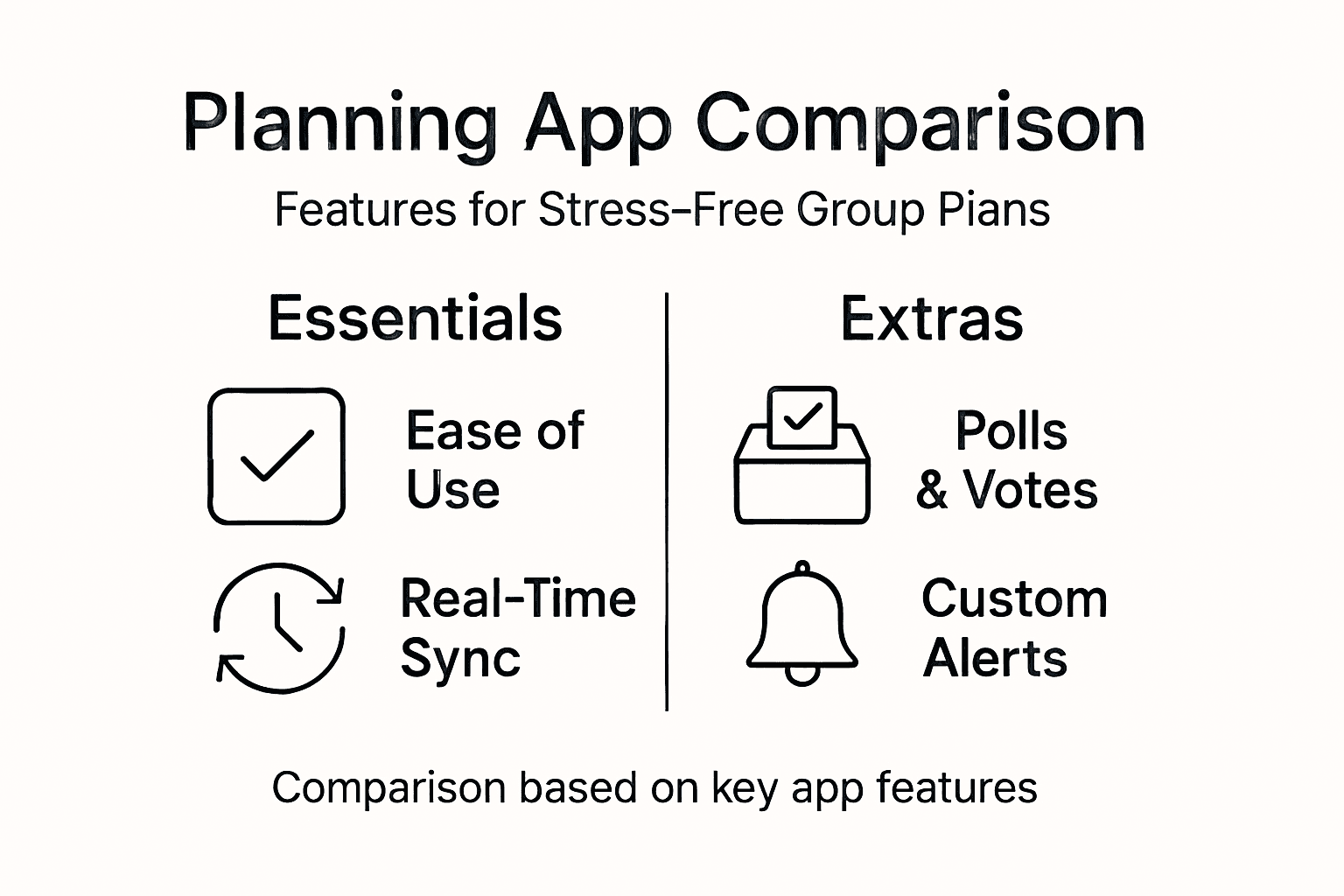
Top hangout planning apps differentiate themselves through unique features tailored to specific user needs. Some excel in calendar synchronization, others prioritize democratic voting mechanisms, while some focus on precise availability matching. Factors like user interface simplicity, integration with existing communication platforms, and customization options play significant roles in determining an app's effectiveness. Groups should evaluate these tools not just on technical capabilities, but on how naturally they facilitate social interaction and reduce planning stress.
Comparative Evaluation Criteria:
The table below contrasts key dimensions of leading hangout planning apps:
| Evaluation Factor | Why It Matters | Example Consideration |
|---|---|---|
| Interface Simplicity | Boosts user adoption | Can everyone easily navigate? |
| Cross-Platform Support | Ensures broad accessibility | Does it work on all devices? |
| Customization Features | Adapts to group needs | Can settings be tailored? |
| Integration with Tools | Streamlines workflow | Syncs with calendars or messaging? |
- Real-time collaboration features
- Cross-platform accessibility
- Intuitive user interface
- Customization options
- Integration capabilities
- Notification management
- Democratic decision-making tools
- Cost-effectiveness
Pro tip: Test multiple planning apps with a small group project before committing, to understand which interface and feature set feels most natural and reduces your specific coordination challenges.
Simplify Your Hangout Logistics with Groop
Managing group plans can often feel overwhelming due to conflicting schedules and endless communication. The article highlights these common challenges like availability matching, budgeting concerns, and the stress of coordinating multiple preferences. If you are seeking a way to reduce the back-and-forth chaos in social planning while keeping things relaxed and natural, Groop offers a tailored solution designed exactly for groups like yours.
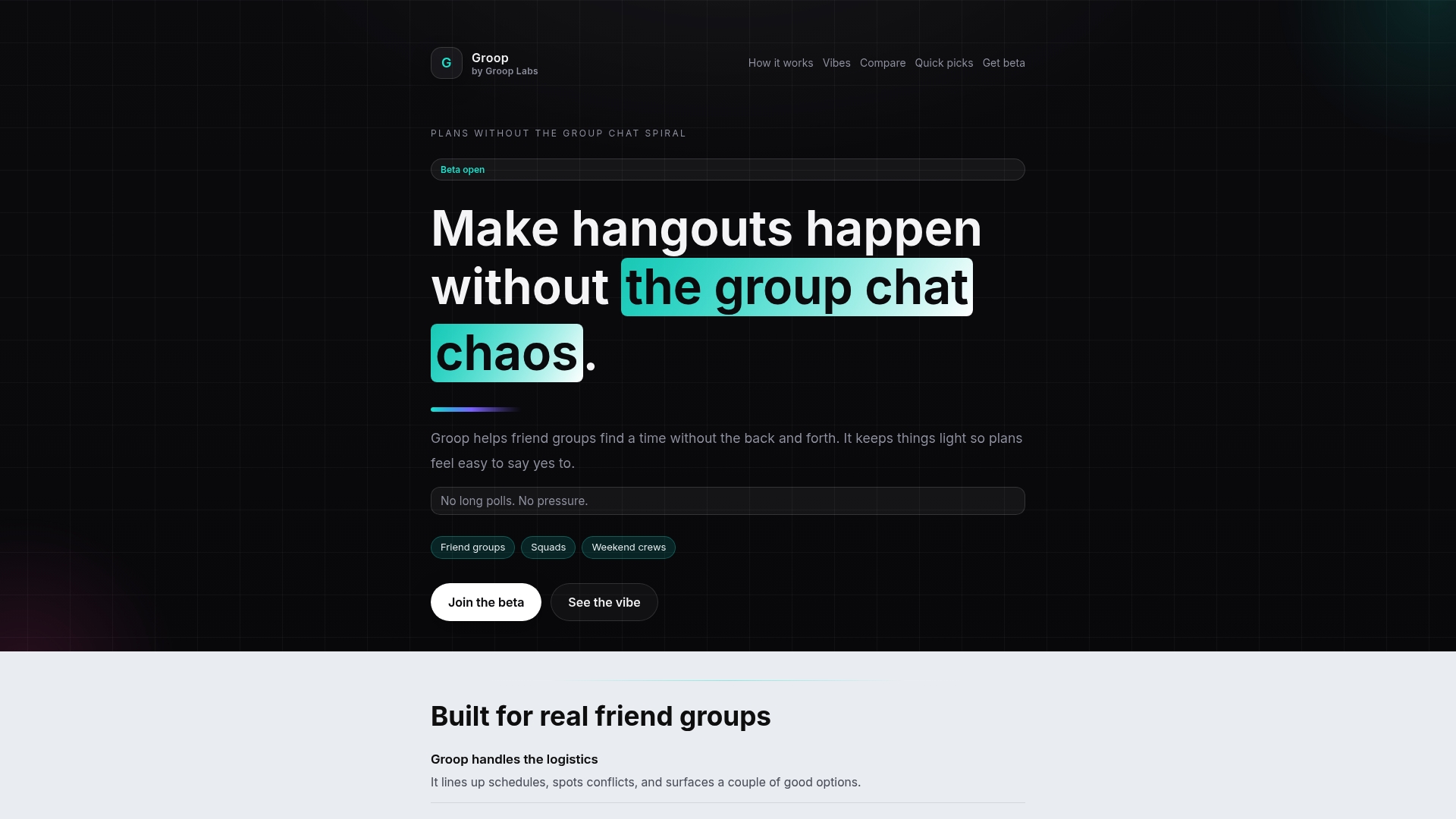
Explore how Groop’s intuitive mobile app streamlines scheduling by automatically lining up availability and surfacing conflicts. Its lightweight, user-friendly platform lets your group focus on meaningful connections instead of logistical headaches. Ready to transform your social planning and make hangouts effortless? Visit Groop Labs and start experiencing stress-free coordination today. Discover how Groop can help you apply proven scheduling coordination techniques and overcome common group planning pitfalls with ease.
Frequently Asked Questions
What are the key components of hangout logistics?
The key components of hangout logistics include scheduling coordination, location selection, budget management, transportation planning, and individual preference integration.
How do I effectively coordinate group schedules?
Effective coordination involves using shared digital calendars, establishing consistent communication, creating flexible meeting time ranges, and implementing democratic voting mechanisms for group decisions.
What features should I look for in a hangout planning app?
Look for features such as real-time collaboration capabilities, intuitive user interface, cross-platform support, customization options, and integration with existing communication tools.
What are common pitfalls in group planning, and how can I avoid them?
Common pitfalls include communication breakdowns and misaligned expectations. To avoid them, define clear group roles, establish transparent communication protocols, and rotate leadership responsibilities.