
Articles
Friend Group Coordination Explained: Stress-Free Planning
Friend group coordination explained: discover scheduling styles, app solutions like Groop, real-world pitfalls, and how to keep plans effortless.

Friend Group Coordination Explained: Stress-Free Planning

Syncing up with friends in a busy city can feel like juggling group chats, last-minute polls, and ghosted messages just to land on one night out. For young adults juggling packed routines, finding harmony in a friend group's plans is more than just picking a date—it is about blending personalities, schedules, and communication styles. Discover how strong social bonds and smart coordination tools transform the chaos of event planning into easy, rewarding gatherings with your crew.
Table of Contents
- What Is Friend Group Coordination?
- Types Of Social Planning Styles
- How Scheduling Apps Streamline Planning
- Common Pitfalls In Group Coordination
- Keeping Plans Easy And Pressure-Free
Key Takeaways
| Point | Details |
|---|---|
| Friend Group Coordination | Successful coordination depends on trust, understanding, and communication among friends, enhancing social experiences. |
| Social Planning Styles | Different styles (top-down, bottom-up, participatory, mixed) impact decision-making and group dynamics, influencing planning efficiency. |
| Scheduling App Benefits | Modern scheduling apps streamline coordination by reducing conflicts and enhancing collective participation through automation and intelligent features. |
| Avoiding Coordination Pitfalls | Addressing role ambiguity and fostering equal participation helps friends navigate challenges, promoting a more collaborative and enjoyable planning atmosphere. |
What Is Friend Group Coordination?
Friend group coordination represents the intricate social process through which groups of friends strategically organize their collective activities, interactions, and decision-making. At its core, this coordination involves complex interpersonal dynamics where individuals synchronize their schedules, preferences, and social expectations to create meaningful shared experiences. Friendship group sociological frameworks suggest that successful coordination depends on established trust, mutual understanding, and consistent communication patterns.
The essence of friend group coordination goes beyond simple logistical planning. It encompasses an intricate web of social negotiations where group members balance individual desires with collective goals. Coordination mechanisms emerge through repeated interactions, allowing friends to develop intuitive understanding of each other's availability, interests, and communication styles. Social bond research indicates that stronger friendships actually improve coordination efficiency, with close-knit groups demonstrating more seamless planning and decision-making processes.
Effective friend group coordination typically involves several key elements: clear communication channels, flexible scheduling approaches, shared technological tools, and a mutual commitment to maintaining group connections. These elements work together to transform potential planning chaos into smooth, enjoyable social experiences. Friends who master coordination skills can more readily navigate complex scheduling challenges, reduce planning stress, and create memorable group activities that strengthen their social bonds.
Pro tip: Establish a consistent communication rhythm with your friend group, whether through a dedicated group chat or regular check-ins, to streamline future coordination efforts.
Types Of Social Planning Styles
Social planning styles represent diverse approaches that groups use to organize activities and make collective decisions. Social planning models typically fall into four primary categories: top-down, bottom-up, participatory, and mixed approaches. Each style offers unique advantages and challenges in coordinating group interactions, reflecting different levels of decision-making authority and community involvement.
The top-down planning style involves centralized decision-making where key group members or designated leaders determine plans and strategies. This approach can be highly efficient for quick action but may inadvertently exclude individual preferences. In contrast, bottom-up planning emphasizes grassroots participation, allowing every group member to contribute ideas and influence the final outcome. Evidence-informed social planning methods suggest that the most effective strategies often blend elements from multiple approaches to create flexible, responsive coordination frameworks.
Participatory and mixed planning styles offer more nuanced approaches to social coordination. Participatory planning encourages active engagement from all group members, creating a democratic process where collective input shapes decisions. Mixed models combine top-down structure with bottom-up flexibility, allowing groups to adapt their planning strategy based on specific contexts and group dynamics. These approaches recognize that friend groups are complex social ecosystems requiring sophisticated, adaptive coordination mechanisms.
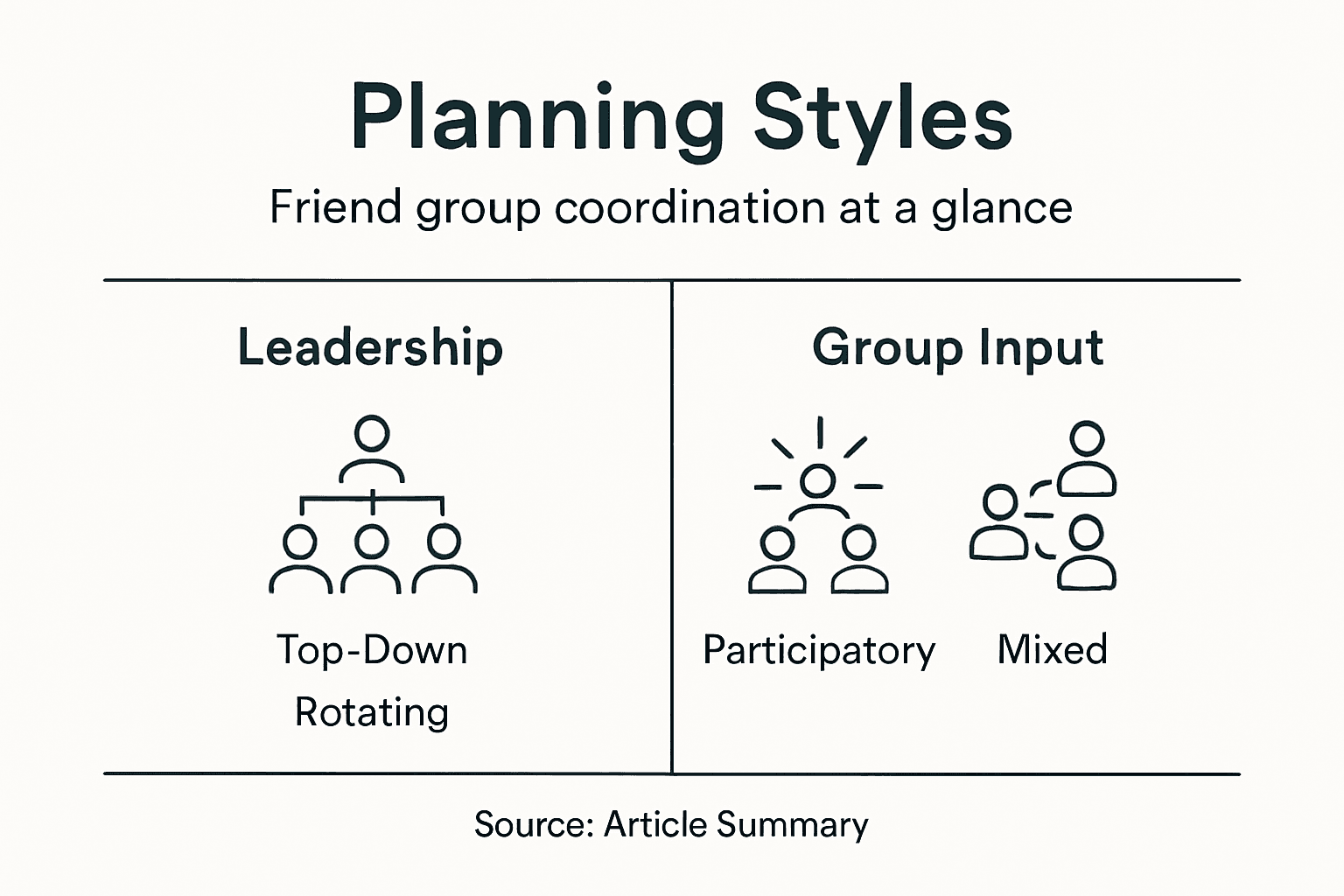
Here's how key social planning styles differ in group decision-making:
| Style | Decision Authority | Group Involvement | Best For |
|---|---|---|---|
| Top-down | Small group leaders | Limited to none | Fast, urgent decisions |
| Bottom-up | All members | Broad, democratic | Creative, inclusive plans |
| Participatory | All members equally | High, collaborative | Complex group dynamics |
| Mixed | Leaders and members | Flexible based on context | Adaptive, changing groups |
Pro tip: Experiment with different planning styles within your friend group to discover the approach that best matches your collective communication and decision-making preferences.
How Scheduling Apps Streamline Planning
Scheduling apps revolutionize group planning by transforming complex coordination challenges into seamless, user-friendly experiences. Centralized event management platforms enable friend groups to eliminate the traditional communication chaos associated with planning social gatherings. These digital tools consolidate scheduling preferences, availability, and logistical details into a single, accessible interface, dramatically reducing the time and mental energy typically spent negotiating meetups.
The core strength of modern scheduling apps lies in their sophisticated automation features. Real-time calendar synchronization, automatic conflict detection, and intelligent reminder systems work together to minimize scheduling friction. Academic planning software demonstrates how these technologies can generate multiple scheduling options, proactively identify potential conflicts, and provide transparent visibility into group availability. For friend groups, this means moving beyond endless text message chains and spreadsheet negotiations toward more efficient, stress-free planning approaches.
Advanced scheduling apps go beyond basic calendar management by incorporating smart features that understand group dynamics. These platforms can analyze individual preferences, suggest optimal meeting times, and even track historical planning patterns within a friend group. By leveraging data and intelligent algorithms, scheduling apps transform the planning process from a potential source of stress into a streamlined, collaborative experience that preserves the social enjoyment of spending time together.
See how scheduling app features impact group planning:
| Feature | Benefit for Groups | Planning Outcome |
|---|---|---|
| Real-time sync | Shows up-to-date availability | Fewer scheduling conflicts |
| Automatic reminders | Prompts responses from everyone | Better attendance rates |
| Preference analysis | Suggests convenient meeting times | More satisfying group decisions |
| Historical data tracking | Learns group habits over time | Faster, smoother future planning |
Pro tip: Choose a scheduling app that allows everyone in your friend group to input their preferences easily and provides clear, visual representation of collective availability.
Common Pitfalls In Group Coordination
Group coordination is fraught with subtle challenges that can derail even the most well-intentioned social plans. Group coordination challenges often emerge from complex interpersonal dynamics that create unexpected friction. These pitfalls range from communication breakdowns to unspoken expectations, transforming what should be an enjoyable planning process into a source of stress and potential conflict.

One of the most significant coordination obstacles is the phenomenon of groupthink, where the desire for harmony leads groups to suppress individual perspectives and critical thinking. This dynamic can result in superficial agreement and suboptimal decision-making. Online group interaction research highlights additional challenges, such as assuming automatic social alignment and neglecting individual communication preferences. These issues can create invisible barriers that prevent authentic collaboration and meaningful group planning.
Additionally, friend groups frequently encounter coordination challenges related to role ambiguity and unequal participation. Some members might consistently take on planning responsibilities, while others remain passive, creating underlying tensions. Successful group coordination requires establishing clear communication norms, recognizing individual strengths, and creating a balanced approach that allows everyone to contribute meaningfully. By proactively addressing these potential pitfalls, friend groups can transform their planning process from a potential source of frustration into an opportunity for deeper connection and shared experiences.
Pro tip: Regularly rotate planning responsibilities among group members to prevent burnout and ensure everyone feels equally invested in coordinating social activities.
Keeping Plans Easy And Pressure-Free
Creating stress-free social plans requires a deliberate approach that prioritizes flexibility and collective comfort. Social planning strategies emphasize the importance of transparent communication and realistic expectations. By establishing a planning framework that values individual preferences and group dynamics, friends can transform potentially complicated meetups into enjoyable, low-pressure experiences that everyone looks forward to.
Successful pressure-free planning hinges on developing adaptable coordination methods that accommodate diverse schedules and preferences. This means moving beyond rigid scheduling approaches and embracing more fluid, collaborative decision-making processes. Effective social planning models recommend creating multiple options, allowing for easy opt-in or opt-out scenarios, and maintaining an attitude of understanding when plans inevitably shift. The key is creating an environment where no one feels guilty about changing plans or unable to participate.
To keep social coordination truly pressure-free, groups should establish clear, compassionate communication norms. This involves setting expectations that plans are suggestions, not obligations, and that individual well-being matters more than perfect attendance. Techniques like providing advance notice, offering multiple participation levels, and normalizing last-minute changes can dramatically reduce planning stress. By prioritizing relationship maintenance over logistical perfection, friend groups can create a planning culture that feels supportive and genuinely enjoyable.
Pro tip: Create a group agreement that explicitly states plans are flexible and that skipping an event is always acceptable without explanation.
Simplify Friend Group Coordination With Groop
Navigating the challenges of friend group coordination can feel overwhelming when juggling schedules, preferences, and communication styles. This article highlights key pain points like scheduling conflicts, communication breakdowns, and the stress of planning social meetups. Groop understands these hurdles and offers a streamlined solution designed to eliminate the back-and-forth chaos by providing clear, manageable options for your group's plans. Its lightweight scheduling tool supports rapid, pressure-free decision-making while respecting each member's availability and vibe.
Discover how Groop’s user-friendly app can transform your friend group’s social planning into a smooth and enjoyable experience. With automatic availability alignment, conflict detection, and simple choices, Groop keeps plans easy and stress-free so you can focus on what matters most: spending quality time together. Start coordinating smarter today by visiting Groop’s home page and experience hassle-free group planning that matches the coordination styles and communication needs discussed in this Friend Group Coordination Explained: Stress-Free Planning article. Take the first step toward joyful, seamless planning now.
Frequently Asked Questions
What are the key elements of effective friend group coordination?
Effective friend group coordination involves clear communication channels, flexible scheduling approaches, shared technological tools, and a mutual commitment to maintaining group connections. These elements help streamline planning and create enjoyable shared experiences.
How can scheduling apps help with planning group activities?
Scheduling apps can transform complex coordination challenges into seamless experiences by consolidating scheduling preferences and availability. They offer features like real-time calendar synchronization, automatic conflict detection, and intelligent reminders, reducing the time and energy spent negotiating meetups.
What are the common pitfalls in group coordination to avoid?
Common pitfalls include groupthink, which can suppress individual perspectives, and role ambiguity, where some members may dominate planning while others do not participate. Addressing these issues through clear communication norms and rotating planning responsibilities is crucial for successful coordination.
How can friend groups keep social plans easy and pressure-free?
To keep plans easy and pressure-free, groups can adopt adaptable coordination methods, set clear expectations that plans are suggestions, and normalize changes in scheduling. Maintaining a supportive environment where individual well-being comes first can greatly reduce planning stress.
Recommended
- Managing Hangout Logistics: Making Group Plans Stress-Free | Groop Blog
- Join Group Chats: The Essential Guide for 2026 | Groop Blog
- 9 Creative Group Hangouts Ideas to Try in 2026 | Groop Blog
- Friend Group Chat Guide: Building Stronger Bonds in 2026 | Groop Blog
- Group Event Coordination Process: Streamlining Planning for Busy Schedules - WhenNOT Blog