
Articles
What Is Real-Time Group Scheduling and Why It Matters
Real-time group scheduling streamlines planning for friend groups, explains core concepts, types, how it works, key features, and common pitfalls.

What Is Real-Time Group Scheduling and Why It Matters

Swapping endless group chats for an easy way to plan meetups is every friend group’s dream. It matters because last-minute changes, busy calendars, and miscommunications can turn even the simplest hangout into a headache. By embracing real-time group scheduling, you unlock a smarter, more flexible method that syncs everyone’s plans and makes group coordination feel effortless from start to finish.
Table of Contents
- Defining Real-Time Group Scheduling Basics
- Major Types And Key Distinctions
- How Real-Time Scheduling Works In Groups
- Essential Features For Social Coordination
- Common Pitfalls And What To Avoid
Key Takeaways
| Point | Details |
|---|---|
| Real-Time Group Scheduling Enhances Coordination | This technique streamlines planning by synchronizing availability and preferences, reducing communication friction. |
| Static vs. Dynamic Scheduling | Choose between fixed availability for predictable routines or flexible systems for spontaneous meetups to match group dynamics. |
| Essential Features Improve User Experience | Prioritize platforms with real-time tracking and intuitive interfaces to simplify the scheduling process. |
| Avoid Common Scheduling Pitfalls | Be mindful of response deadlines and complex interfaces to prevent frustration and abandoned plans. |
Defining Real-Time Group Scheduling Basics
Real-Time Group Scheduling represents a sophisticated coordination approach designed to help friend groups efficiently plan activities with minimal friction and maximum flexibility. Unlike traditional planning methods involving endless text chains and conflicting suggestions, this modern technique leverages digital tools to synchronize everyone's availability and preferences in a streamlined, user-friendly manner.
At its core, real-time group scheduling works by creating a dynamic platform where participants can quickly share their schedules, highlight potential meetup times, and converge on mutually convenient options. Real-time scheduling involves breaking complex coordination into synchronized tasks, allowing groups to navigate scheduling challenges with unprecedented speed and precision. The system functions like a digital meeting coordinator, automatically detecting overlapping free periods and surfacing the most promising windows for group activities.
The primary goal of real-time group scheduling is removing logistical barriers that typically derail social planning. By providing an intuitive interface that shows everyone's availability simultaneously, these tools eliminate the exhausting back-and-forth communication that traditionally accompanies group coordination. Participants can see potential time slots, vote on preferences, and reach consensus without marathon messaging sessions. This approach transforms group planning from a stressful negotiation into a smooth, collaborative experience.
Pro Tip: Always set a reasonable response deadline when initiating a group scheduling request to ensure timely and decisive planning.
Major Types and Key Distinctions
Real-time group scheduling encompasses several distinct approaches, each designed to address different coordination challenges and social dynamics. Real-time systems feature multiple task scheduling types, ranging from rigid structured methods to more flexible adaptive frameworks that match modern social interactions.
The primary categories of real-time group scheduling can be broadly classified into static and dynamic scheduling methods. Static scheduling involves predetermined time slots and fixed availability windows, ideal for groups with predictable routines like study groups or recurring team meetings. Dynamic scheduling, conversely, offers more spontaneity and flexibility, allowing participants to adjust and modify plans in real time based on changing individual circumstances.
Within these broader categories, specialized scheduling techniques emerge to serve specific social coordination needs. Priority-based algorithms enable groups to rank potential meetup times based on collective preferences, while deadline-driven approaches help establish clear response windows and commitment expectations. These nuanced methods transform group planning from a chaotic negotiation into a streamlined, data-driven decision-making process that respects each participant's time and constraints.
Pro Tip: Always choose a scheduling method that matches your group's typical communication style and flexibility level to maximize planning efficiency.
Here's a side-by-side look at major real-time group scheduling methods:
| Scheduling Type | Flexibility Level | Best Use Case |
|---|---|---|
| Static Scheduling | Low | Regular meetings or routines |
| Dynamic Scheduling | High | Spontaneous group activities |
| Priority-Based | Medium | Selecting ideal meeting times |
| Deadline-Driven | Medium | Ensuring timely responses |
How Real-Time Scheduling Works in Groups
Real-time group scheduling operates through a sophisticated mechanism that transforms complex social coordination into a seamless, intelligent process. Real-time scheduling systems dynamically partition available time, ensuring each participant's constraints and preferences are carefully considered and balanced.
The core mechanism involves multiple interconnected stages of coordination. First, participants input their individual availability, creating a comprehensive map of potential meeting windows. Intelligent algorithms then analyze these inputs, identifying overlapping time slots and potential conflicts. Advanced systems use priority-based ranking to suggest optimal meeting times that maximize group convenience while respecting individual schedules. Managing group logistics becomes a streamlined, conflict-free process, eliminating the traditional communication gridlock that typically derails social planning.

Technically, these systems function through complex computational processes that instantaneously compare multiple scheduling variables. The platform continuously updates in real time, allowing participants to see shifting availability, propose alternative times, and reach consensus with minimal manual intervention. By transforming scheduling from a negotiation into an algorithmic solution, these tools dramatically reduce the cognitive load associated with coordinating group activities.
Pro Tip: Encourage all group members to update their availability promptly and accurately to maximize the scheduling algorithm's effectiveness.
Essential Features for Social Coordination
Effective group scheduling platforms require a robust set of features designed to simplify and streamline social coordination. Dynamic group scheduling tools continuously adapt to participant inputs, providing a flexible and responsive approach to planning group activities that goes far beyond traditional communication methods.
The most critical features include real-time availability tracking, intelligent conflict resolution, and intuitive user interfaces. These platforms must offer instant visual representations of group availability, allowing participants to see potential meeting times at a glance. Automated suggestions that consider individual preferences, time zones, and scheduling constraints help groups navigate the complex landscape of coordinating multiple schedules. Social chat groups benefit from seamless collaboration tools that reduce the friction of planning and maximize the likelihood of successful group meetups.
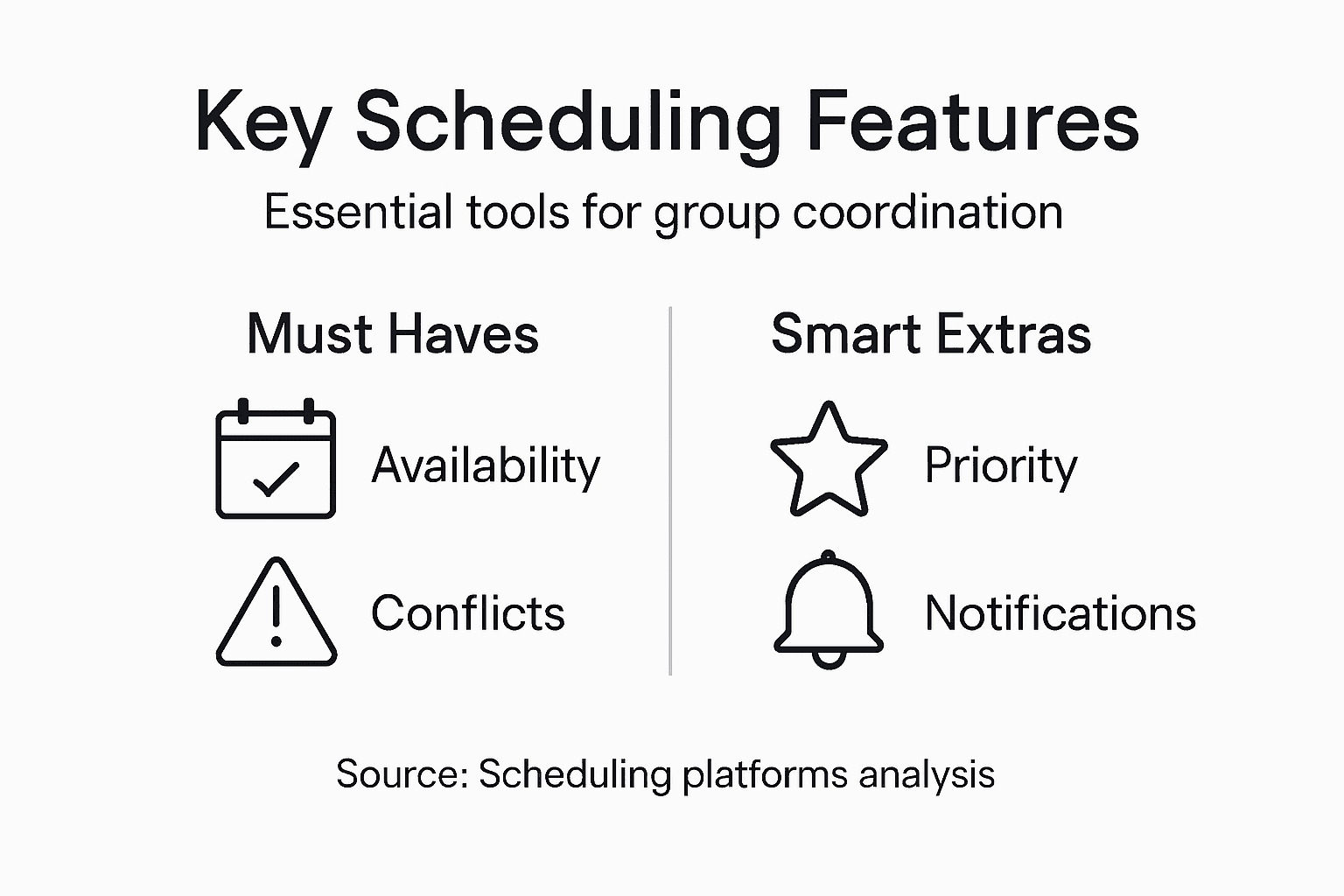
Advanced scheduling systems incorporate additional sophisticated elements like priority ranking, notification management, and contextual recommendations. These features transform group coordination from a tedious negotiation into a smooth, almost effortless process. By providing intelligent suggestions, managing complex scheduling variables, and maintaining a user-friendly experience, these platforms eliminate the traditional pain points associated with group planning.
Pro Tip: Prioritize platforms that offer multiple communication channels and flexible input methods to accommodate different user preferences and scheduling styles.
Common Pitfalls and What to Avoid
Group scheduling technologies are powerful, but certain missteps can quickly derail even the most sophisticated planning efforts. Scheduling systems can fail without proper timing predictability, making it crucial to understand and avoid common organizational traps that undermine effective group coordination.
One significant pitfall is over-reliance on manual input and lack of flexible adaptation. Many groups fall into the trap of expecting all members to respond immediately or consistently, which creates unnecessary friction. Rigid scheduling approaches that don't account for individual variability in availability, communication styles, and personal preferences can lead to frustration and abandoned plans. Successful group scheduling requires nuanced understanding that people have different response patterns, time constraints, and comfort levels with planning technology.
Additional critical mistakes include overwhelming participants with too many options, failing to set clear response deadlines, and neglecting to provide context for proposed meeting times. Complex scheduling interfaces that require extensive manual navigation can discourage participation, while platforms that don't clearly communicate the purpose and expected commitment level of a proposed gathering will see decreased engagement. The most effective group scheduling tools strike a delicate balance between providing enough information and maintaining simplicity.
The following table highlights common pitfalls and their consequences when using group scheduling tools:
| Pitfall | Resulting Challenge |
|---|---|
| Rigid scheduling methods | Increased frustration and drop-off |
| Overwhelming option sets | Decision fatigue among members |
| Unclear response deadlines | Delayed or missed commitments |
| Complicated interfaces | Lower engagement and participation |
| Lack of context for events | Uncertainty and reduced attendance |
Pro Tip: Always establish a clear, reasonable response window and provide just enough context to help group members make quick, informed decisions about their availability.
Simplify Your Group Plans with Real-Time Scheduling Made Easy
The article highlights the common challenge of coordinating group plans without endless messaging and conflicting schedules. If you have ever felt frustrated by the back-and-forth chaos of trying to find a time that works for everyone in your friend group, you are not alone. Real-time group scheduling tackles key pain points like managing availability, avoiding decision fatigue, and reaching quick, pressure-free consensus. Concepts such as dynamic scheduling and automatic conflict detection are designed to make social planning feel natural and stress-free.
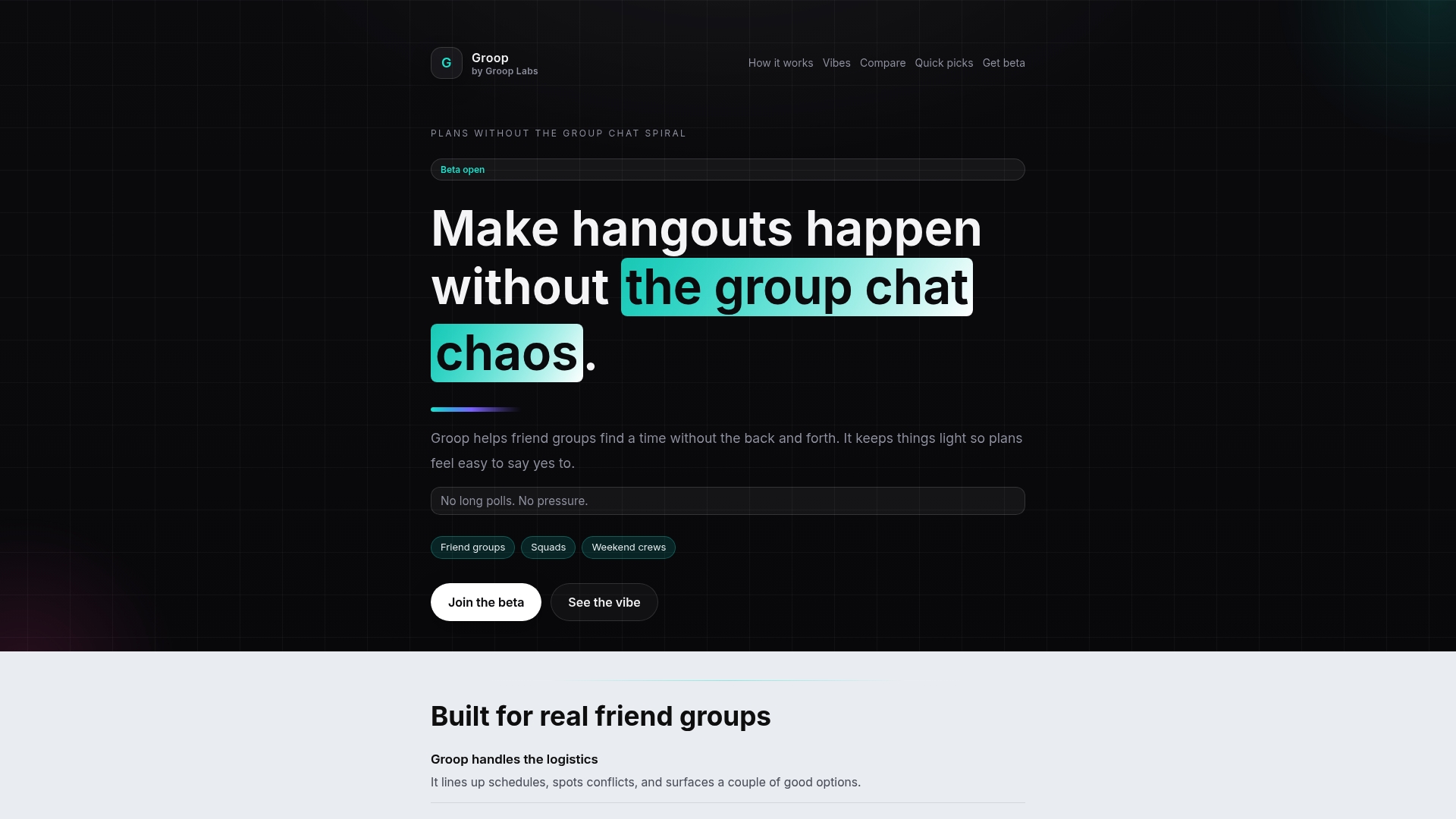
Experience how Groop takes real-time group scheduling concepts and turns them into an intuitive mobile app that keeps your group's vibe intact. Groop helps by lining up everyone’s availability right away, surfacing conflicts immediately, and offering simple, clear choices so your group can decide fast without losing momentum. Designed for casual friend groups and small social squads, Groop makes planning hangouts, study sessions, or outdoor outings effortless and enjoyable. Don’t let scheduling frustrations keep you apart. Discover how easy coordinating your next get-together can be at Groop's homepage and start planning smarter today.
Frequently Asked Questions
What is real-time group scheduling?
Real-time group scheduling is a modern approach that allows friend groups to efficiently plan activities by synchronizing everyone's availability and preferences using digital tools.
How does real-time group scheduling work?
It operates by creating a platform where participants share their schedules, which intelligent algorithms analyze to identify overlapping time slots and suggest mutually convenient meeting times.
What are the major types of real-time group scheduling approaches?
The primary types include static scheduling, which uses predetermined time slots, and dynamic scheduling, which offers flexibility and spontaneity based on changing individual circumstances.
What features should I look for in a real-time group scheduling platform?
Look for features like real-time availability tracking, intelligent conflict resolution, automated suggestions, and a user-friendly interface to simplify and enhance the scheduling process.
Recommended
- Managing Hangout Logistics: Making Group Plans Stress-Free | Groop Blog
- Why Plans Die In The Group Chat | Groop Blog
- Why Saying “Any Time Works” Makes Planning Harder | Groop Blog
- Join Group Chats: The Essential Guide for 2026 | Groop Blog
- 7 Enormous Time Management Techniques to Boost Your Productivity
- Time Management Strategies: Boost Presentation Impact - Projector Display
- Why Adopt New Scheduling Tools: Complete Guide - WhenNOT Blog