
Articles
Turning conflict into better group plans: strategies for friends
Conflict in group planning doesn't have to ruin the fun. Learn how to manage task, process, and relationship conflicts to make your friend group's plans better.

Turning conflict into better group plans: strategies for friends

TL;DR:
- Moderate task conflict can enhance group decision-making and creativity.
- Handling conflicts early with open communication and psychological safety strengthens friendships and plans.
- Using practical strategies like check-ins, clear roles, and collaborative tools improves stress-free coordination.
Most of us assume that when conflict shows up in group planning, the whole thing is doomed. Someone disagrees on the restaurant, another person can't make Saturday work, and suddenly the group chat goes quiet. But here's the thing: moderate task conflict can actually improve group plans by pushing everyone to think more carefully and avoid settling for the first idea. Conflict, handled right, isn't the enemy of a great hangout. It's often the spark that makes it genuinely good. This guide walks you through why conflicts happen, how they affect your group, and exactly what you can do to turn them into something useful.
Table of Contents
- Why conflicts emerge during group planning
- How conflict impacts group decisions and social satisfaction
- Managing conflict constructively: Integrative strategies and psychological safety
- Turning conflict into creative opportunities: Group innovation and compromise
- The uncomfortable truth: Most group plans succeed not despite conflict, but because of it
- How Groop Labs supports stress-free group planning
- Frequently asked questions
Key Takeaways
| Point | Details |
|---|---|
| Conflict types matter | Task conflict can improve plans, but process and relationship conflicts need careful management. |
| Early action is critical | Addressing conflicts early prevents escalation and protects friendships. |
| Psychological safety pays off | Groups with psychological safety resolve conflicts more creatively and maintain better satisfaction. |
| Strategic tools help | Using group norms, charters, and technology streamlines coordination and reduces friction. |
| Embrace disagreement | Moderate, managed conflict is a sign of healthy group planning and can lead to more memorable experiences. |
Why conflicts emerge during group planning
Now that we've set the stage, let's unpack exactly why conflicts crop up in friend group plans. Coordinating even a small group of friends can feel like herding cats. Everyone has different schedules, preferences, and energy levels, and that's before you factor in the chaos of a group chat where messages pile up fast.
Conflicts in casual friendship groups among young adults and students typically fall into three categories: task conflict, process conflict, and relationship conflict. Each one shows up differently and needs a different response.
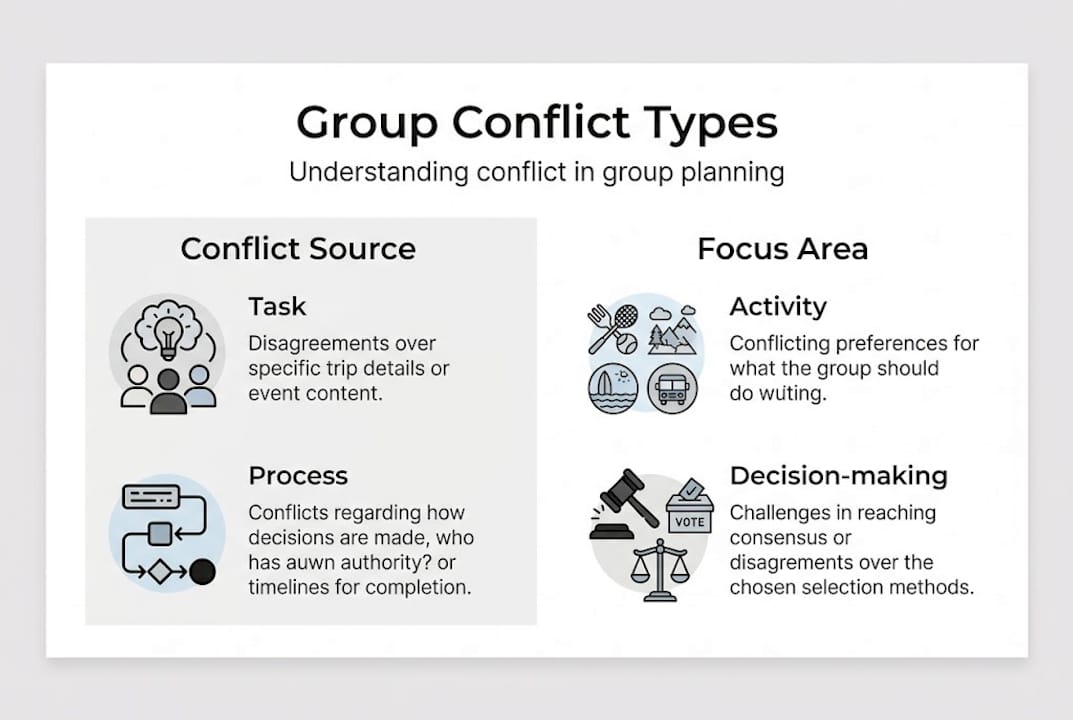
Task conflict is about what the group is doing. Think: one person wants a chill movie night, another wants to go out dancing, and a third is pushing for a hiking trip. Nobody is wrong, but everyone wants something different.
Process conflict is about how decisions get made. Who picks the restaurant? Who handles the group calendar? When nobody takes the lead, or when one person takes too much of it, things get messy fast.
Relationship conflict is the most personal kind. It's when tension between two people in the group bleeds into the planning itself. Maybe there's history, maybe someone feels ignored, and suddenly a simple hangout becomes loaded.
Here's a quick look at how each type tends to show up:
- Task conflict: Disagreements over activities, destinations, or budgets
- Process conflict: Confusion about who decides, unclear timelines, or overlapping roles
- Relationship conflict: Personal friction that makes group decisions feel charged or unfair
Young adults and students face these challenges more often because their social groups are larger, more fluid, and more diverse in preference than, say, a tight-knit family unit. You're also at a life stage where schedules shift constantly, priorities change, and friendships are still finding their shape.
"The goal isn't a conflict-free group. It's a group that knows how to handle conflict without letting it derail the fun."
Getting a handle on stress-free group coordination starts with recognizing which type of conflict you're actually dealing with. Once you name it, you can actually do something about it.
How conflict impacts group decisions and social satisfaction
After understanding the roots of conflict, it's crucial to see their actual effects on group outcomes. Not all conflict is created equal, and the type you're dealing with makes a huge difference in how things play out.
Moderate task conflict improves group plans by encouraging diverse perspectives and preventing premature consensus, while excessive relationship or process conflict reduces satisfaction and coordination. In plain terms: a little productive disagreement helps your group make smarter choices. Too much personal tension, or confusion about who's in charge, tanks the whole experience.
Here's a comparison to make this concrete:
| Conflict type | Managed well | Left unmanaged |
|---|---|---|
| Task conflict | Better decisions, more creative plans | Deadlock, no decision made |
| Process conflict | Clearer roles, smoother logistics | Confusion, resentment, dropped plans |
| Relationship conflict | Deeper understanding between friends | Damaged friendships, group fractures |
The stakes are real. Only 35% of high school friendships persist after graduation, and unmanaged planning conflicts can accelerate that dissolution. That's a sobering number. It means the way your group handles disagreement now has a direct impact on whether those friendships last.
On the flip side, groups that work through conflict together tend to feel more connected afterward. There's something about navigating a disagreement and coming out the other side with a plan everyone actually likes that builds real trust.
The communication challenges that come with group planning are often where relationship and process conflicts quietly grow. A message that goes unread, a decision made without checking in, a plan that gets changed last minute without explanation. These small things stack up. Catching them early keeps the group's energy positive and the plans on track.
Managing conflict constructively: Integrative strategies and psychological safety
Once you know the risks and rewards, the next step is learning how to actively manage conflict in your group. The good news is that the strategies that work best are also pretty simple to put into practice.
Integrative conflict management leads to better decisions, and in student teams, contribution conflicts negatively impact performance unless mediated by psychological safety. That phrase, psychological safety, basically means everyone in the group feels comfortable speaking up without fear of judgment or backlash. When that's in place, conflict becomes a conversation instead of a confrontation.
Here are six practical strategies your group can start using right now:
- Create a loose group charter. Even a casual agreement about how decisions get made (majority vote, rotating planner, etc.) removes a lot of process conflict before it starts.
- Do regular check-ins. A quick "everyone still good with Saturday?" prevents last-minute surprises and shows the group you value their input.
- Keep the focus on shared goals. Remind everyone what you're all actually trying to do: have fun together. That shared purpose can dissolve a lot of smaller disagreements.
- Use "I" statements. Instead of "you always pick boring places," try "I'd love to try something new this time." It's a small shift that keeps things from getting personal.
- Practice active listening. Let people finish their thoughts before responding. It sounds basic, but it changes the whole tone of a planning conversation.
- Address tension early. The longer a conflict sits, the bigger it feels. A quick, low-key conversation early on is almost always easier than a blowup later.
Pro Tip: If your group tends to avoid conflict rather than address it, try framing disagreements as "decisions we get to make together" rather than problems to solve. It shifts the energy from defensive to collaborative.
For stress-free hangout logistics, these strategies work best when they're baked into how your group operates, not just pulled out in a crisis. And if your group chat is where most planning happens, check out some group chat planning tips to keep things organized from the start.
Turning conflict into creative opportunities: Group innovation and compromise
With conflict management strategies in hand, it's time to see how these can fuel new possibilities and creativity in your plans. This is where things get genuinely exciting.
Conflict as a positive force for innovation is a well-documented idea. When two people push back on each other's suggestions, the result is often a third option that neither would have thought of alone. That's not just theory. It's what happens when your group debates between a beach trip and a city day and lands on a sunrise hike followed by brunch downtown.
Here's how to actively turn conflict into creative momentum:
- Brainstorm before deciding. Throw every idea on the table before evaluating any of them. This separates the creative phase from the critical phase and keeps people from getting defensive.
- Divide roles based on interest. If someone cares a lot about food and another person loves finding activities, let them each own their lane. Conflict over decisions often disappears when people feel ownership.
- Use a simple voting method. A quick poll or ranked-choice vote gives everyone a voice without turning the group chat into a debate.
- Celebrate the compromise. When the group lands on a plan that wasn't anyone's first choice but everyone can enjoy, name it. "This was a team effort" goes a long way.
Here's a quick look at how conflict can shift outcomes depending on how it's handled:
| Scenario | Avoided conflict | Managed conflict |
|---|---|---|
| Choosing a destination | One person decides, others feel unheard | Group votes, everyone feels included |
| Splitting costs | Awkward silence, resentment | Open conversation, fair split |
| Scheduling | First available date wins | Best date for most people wins |
Pro Tip: When your group hits a planning wall, try a "yes, and" approach borrowed from improv. Instead of shutting down an idea, build on it. It keeps energy positive and often leads to plans nobody expected.
The scheduling challenges that come with coordinating a group are real, but they're also solvable. And group apps for planning can take a lot of the logistical weight off, leaving your group free to focus on the fun parts.
The uncomfortable truth: Most group plans succeed not despite conflict, but because of it
After walking through the practical approaches and creative possibilities, here's a fresh take that most guides skip over entirely.
The best group experiences we've seen don't come from groups that avoided every disagreement. They come from groups that had the courage to work through one. When you push through a real conflict together, whether it's about money, timing, or what everyone actually wants, you come out knowing each other better. That's not a side effect. That's the point.
Most people try to sidestep group conflict because it feels uncomfortable. But avoidance just delays the tension and often makes it worse. The groups that prioritize psychological safety and early intervention are the ones that build plans everyone actually shows up for, and friendships that actually last.
The small group planning benefits of working through conflict early are real: stronger trust, better plans, and a group that knows it can handle whatever comes next. That's worth a slightly awkward conversation.
How Groop Labs supports stress-free group planning
Having learned how conflict can power better group plans, here's a resource to make coordination easier. Groop Labs built Grooop specifically for moments like these, when your group has opinions, different schedules, and a shared desire to actually make something happen without the chaos.
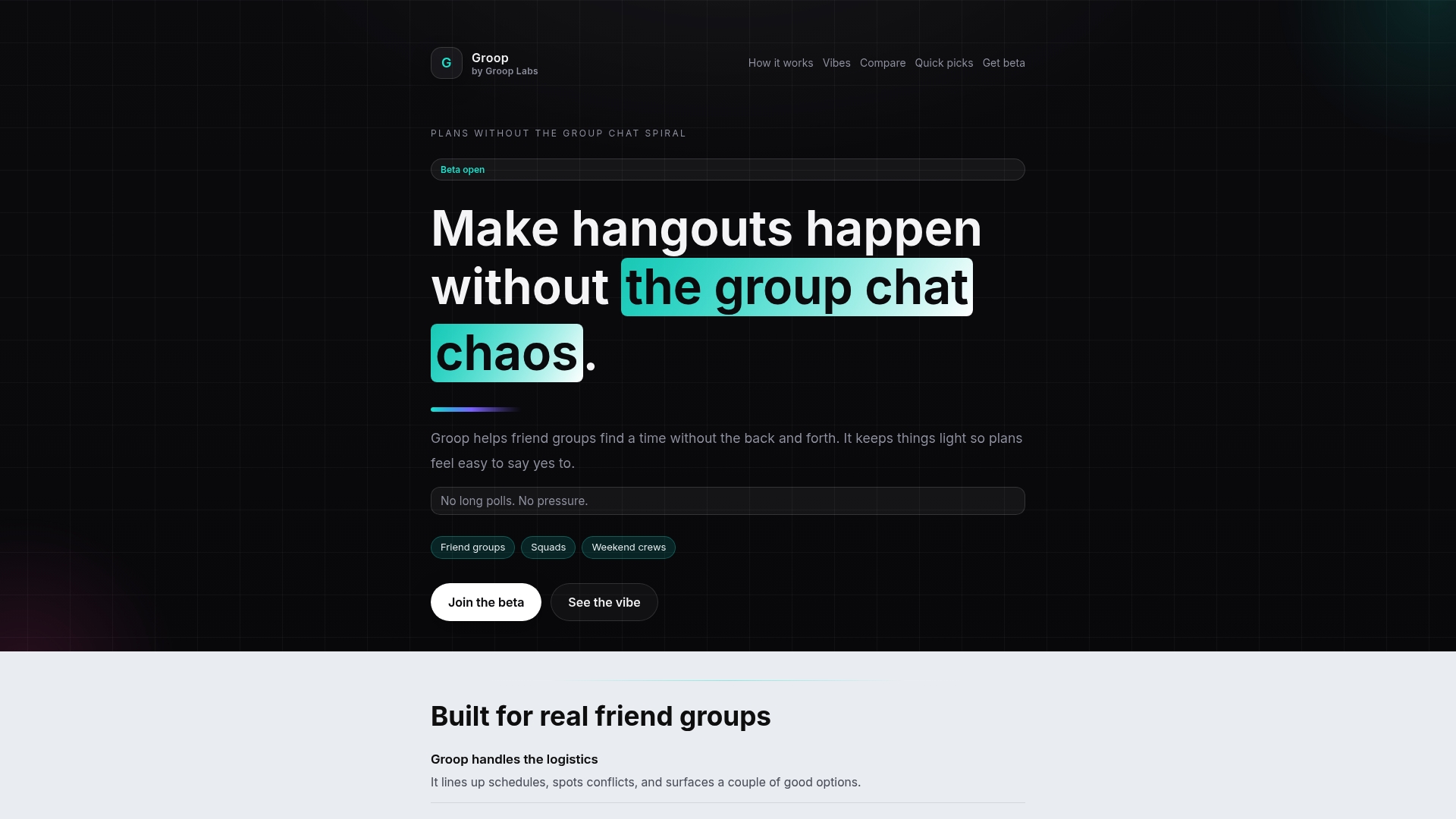
Groooop surfaces availability conflicts automatically, so your group spends less time on logistics and more time on the fun stuff. Instead of long polls and tangled group chats, you get clear, manageable options that keep everyone's preferences in the picture. Pair that with shareable group calendars and you've got a setup that handles the process conflict before it even starts. Head over to Groop Labs and see how much easier planning can feel when the right tools are doing the heavy lifting.
Frequently asked questions
What are the most common types of conflict in casual friendship groups?
Task disagreements, process issues, and relationship tensions are the most frequent sources of conflict during group planning, each requiring a slightly different approach to resolve.
Can conflict actually improve group plans?
Yes. Moderate task conflict boosts creativity and decision quality, making plans more satisfying when the group manages disagreement constructively rather than shutting it down.
What is psychological safety and how does it help resolve group conflict?
Psychological safety means every group member feels comfortable sharing opinions without fear of judgment. It transforms conflict from something destructive into something that actually improves how the group makes decisions together.
What are practical steps to avoid destructive conflict in group planning?
Early intervention, group charters, frequent check-ins, active listening, and focusing on shared goals are the most effective ways to keep conflict from turning destructive before it derails your plans.