
Articles
7 Steps for the Ultimate Friend Group Planning Checklist
Discover a 7-step friend group planning checklist to streamline hangouts and reduce planning stress. Learn practical tips for easy social coordination.

7 Steps for the Ultimate Friend Group Planning Checklist

Planning a get-together with friends always sounds exciting, but trying to find a time that works for everyone can leave you feeling stuck. Group chats fill up with messages, preferences get lost, and sometimes your plans fizzle out before they even begin. Coordinating a group outing shouldn't feel harder than the outing itself.
The good news is you can use proven methods and simple tools to make scheduling with friends much less stressful. You’ll discover how to create a shared group purpose, manage everyone’s availability, and avoid the usual scheduling headaches. Get ready for practical steps that will help your group make plans that actually happen—and enjoy the process.
Table of Contents
- 1. Define Your Group's Purpose And Preferences
- 2. Choose A Hassle-Free Scheduling Tool
- 3. Set Clear Availability And Time Options
- 4. Identify And Resolve Conflicts Quickly
- 5. Offer Simple Choices To Minimize Pressure
- 6. Confirm Plans In A Relaxed Group Chat
- 7. Review And Adjust For Future Outings
Quick Summary
| Takeaway | Explanation |
|---|---|
| 1. Define Your Group's Purpose | Establish a shared vision that reflects everyone's interests for stronger connections and alignment. |
| 2. Utilize a User-Friendly Scheduling Tool | Choose digital tools for easy coordination, reducing scheduling stress and eliminating unnecessary back-and-forth. |
| 3. Streamline Decision-Making | Limit choices to reduce decision fatigue and enhance engagement in group planning. |
| 4. Handle Conflicts Openly | Address disagreements promptly and constructively to strengthen group dynamics and promote understanding. |
| 5. Regularly Review Group Activities | Gather feedback after outings to improve future plans and to celebrate shared experiences and preferences. |
1. Define Your Group's Purpose and Preferences
Every awesome friend group starts with clarity about why you're hanging out and what you collectively enjoy. Understanding and articulating your group's core purpose transforms random meetups into meaningful connections.
Psychological research shows that successful social groups form around shared interests and clear objectives. When friends take time to discuss and align their preferences, they create a stronger foundation for future activities and interactions.
To effectively define your group's purpose, consider these key aspects:
- Identify shared passions: What activities genuinely excite everyone?
- Understand individual expectations: What does each person want from the group?
- Establish common goals: Are you a study group? Adventure seekers? Social support network?
The process of creating a group purpose statement involves collecting individual needs and distilling them into a shared vision. This helps ensure everyone feels heard and invested in the group's direction.
A well-defined group purpose acts like a social compass guiding your collective experiences.
Start by hosting an open conversation where everyone can share their perspectives. Ask questions like "What do we want to achieve together?" and "What makes our friendship unique?"
Pro tip: Keep the initial purpose discussion casual and fun. Consider making it part of a social gathering like a group dinner or video call to maintain a relaxed atmosphere.
2. Choose a Hassle-Free Scheduling Tool
Putting an end to endless group text threads and back-and-forth availability negotiations requires a smart scheduling approach. Digital scheduling tools can transform how friend groups coordinate activities and plan hangouts.
The right scheduling tool eliminates communication friction by providing a centralized platform where everyone can input their availability quickly and transparently. Alternative scheduling platforms have revolutionized how friend groups manage their social calendars.
When selecting a scheduling tool consider these critical features:
- Real-time availability tracking
- Easy mobile accessibility
- Simple invitation and response mechanisms
- Minimal setup requirements
- Cross-platform compatibility
A great scheduling tool feels like a helpful friend rather than another complicated app.
Key considerations include user interface simplicity user adoption ease and integration with existing communication channels. Some groups prefer tools that sync directly with popular calendar applications allowing seamless planning without multiple data entries.
Most modern scheduling platforms offer free basic versions that work perfectly for small friend groups. Look for tools that require minimal technical skills and provide intuitive interfaces.
Pro tip: Test the scheduling tool with a small pilot group before committing to ensure everyone finds it user-friendly and convenient.
3. Set Clear Availability and Time Options
Successful group hangouts start with crystal-clear scheduling that respects everyone's time and commitments. Effective time coordination transforms potential planning chaos into smooth social experiences.
Setting precise availability requires strategic thinking and best scheduling practices that accommodate diverse member constraints. Time zone differences and conflicting schedules can quickly derail group plans if not managed thoughtfully.
Consider these key strategies for defining time options:
- Establish a consistent planning window (48-72 hours)
- Use standardized time zone references
- Request multiple potential time slots from each member
- Allow flexible response mechanisms
- Create a visual representation of collective availability
Time management isn't about perfection. It's about finding windows where everyone can connect.
Most successful friend groups develop a flexible yet structured approach to scheduling. This means creating initial availability windows while remaining open to individual member constraints and unexpected changes.
Digital tools can significantly streamline this process by automatically converting time zones and highlighting overlapping availability windows. Look for platforms that minimize manual coordination efforts.
Pro tip: Always include a brief buffer time around proposed meetup windows to account for individual travel and preparation needs.
4. Identify and Resolve Conflicts Quickly
When friend groups gather, disagreements are inevitable. Conflict resolution skills transform potential tension into opportunities for deeper understanding and stronger connections.
Effective conflict management requires creating an environment where everyone feels safe expressing their perspectives without fear of judgment or retaliation.
Key strategies for navigating group conflicts include:
- Address issues immediately
- Listen without interrupting
- Seek understanding before solutions
- Focus on shared goals
- Avoid blame and defensiveness
- Use neutral language
- Validate each person's feelings
Conflicts are conversations waiting to strengthen your friendship.
Successful groups recognize that disagreements are normal and can actually improve group dynamics when handled constructively. The goal isn't to eliminate conflict but to transform it into productive dialogue.
Communication channels matter. Video calls or in-person discussions often work better than text messages for resolving complex misunderstandings. Choose a communication method that allows for nuanced expression and emotional context.
Pro tip: Create a group agreement about how you'll handle conflicts before they happen to establish trust and mutual respect.
5. Offer Simple Choices to Minimize Pressure
Decision fatigue can quickly derail friend group plans. Streamlining group choices helps everyone stay engaged and excited about hanging out.
Group decision-making frameworks reveal that too many options create stress and potential conflict. The key is offering clear but limited alternatives that make everyone feel heard.
Strategies for simplifying group decisions include:
- Provide 2-3 specific options
- Use quick polling mechanisms
- Set clear decision timeframes
- Rotate decision-making responsibilities
- Establish default options
- Encourage quick responses
- Avoid open-ended questions
Simplicity transforms group planning from a chore to a collaboration.
Successful friend groups understand that pressure kills spontaneity. When decisions feel overwhelming many people default to avoidance or passive agreement. Creating a low-pressure environment means making choices feel like a fun shared experience rather than a complex negotiation.
Digital tools can help by automatically suggesting times or activities based on group preferences and collective availability. This takes the cognitive load off individual members and makes planning feel effortless.
Pro tip: Create a rotating decision maker role to distribute planning responsibilities and keep group dynamics fresh.
6. Confirm Plans in a Relaxed Group Chat
The final step in friend group planning is transforming your carefully crafted plans into an actual hangout. Relaxed group chat confirmation turns potential meetups into real memories.
Using group chat dynamics strategically can transform your planning process from stressful to smooth. The right communication approach makes everyone feel included and excited about upcoming plans.
Key strategies for confirming plans effectively include:
- Keep messages light and positive
- Use emojis to convey enthusiasm
- Confirm specific details with minimal friction
- Allow easy opt-out options
- Celebrate the upcoming hangout
- Avoid pressuring reluctant members
- Maintain an inclusive tone
A good group chat feels like continuing a conversation, not starting an interrogation.
Digital communication tools have revolutionized how friend groups coordinate. Unlike traditional planning methods group chats allow instant feedback flexible responses and low-pressure interactions.
The most successful groups treat plan confirmation as a casual conversation rather than a formal commitment. This approach reduces anxiety and makes participation feel enjoyable rather than obligatory.
Pro tip: Create a fun group tradition like sharing a meme or inside joke when finalizing plans to keep the confirmation process entertaining.
7. Review and Adjust for Future Outings
Every great friend group evolves through reflection and continuous improvement. Learning from past experiences transforms good hangouts into unforgettable memories.
Group decision evaluation helps friends understand what works and what needs adjusting in their social planning approach. Think of it like a team retrospective where everyone contributes insights.
Strategies for effective group outing reviews include:
- Gather casual feedback within 24-48 hours
- Highlight positive moments
- Identify minor planning challenges
- Discuss what surprised or delighted everyone
- Celebrate group chemistry
- Note preferences for future activities
- Keep the conversation light and fun
Reflection is the bridge between good experiences and great memories.
Honest communication creates stronger connections. The goal isn't to criticize but to understand each other's preferences and make future hangouts even more enjoyable.
Successful groups treat these reviews as opportunities for bonding rather than formal evaluations. A relaxed approach encourages genuine sharing and prevents the review from feeling like a performance assessment.
Pro tip: Turn the review into a quick game or fun conversation starter to keep everyone engaged and comfortable sharing their thoughts.
Below is a comprehensive table summarizing the strategies and recommendations for organizing and enhancing activities in friend groups as discussed throughout the article.
| Main Strategy | Description and Actions | Benefits and Outcomes |
|---|---|---|
| Define Group's Purpose | Identify shared interests, establish goals, and articulate a common purpose. | Strengthens group connection and alignment. |
| Utilize Scheduling Tools | Implement digital platforms to coordinate availability and plans efficiently. | Reduces scheduling conflicts and streamlines coordination. |
| Establish Availability | Plan with clear timeframes, considering time zones and individual constraints. | Ensures equitable participation and avoids scheduling confusion. |
| Resolve Conflicts Constructively | Address disputes promptly, using empathetic communication methods. | Enhances group harmony and mutual understanding. |
| Simplify Decision-Making | Limit options, use polls, and rotate decision responsibilities. | Prevents decision fatigue and maintains group engagement. |
| Confirm Plans Relaxedly | Use light and inclusive group chats for finalizing arrangements. | Ensures clarity and excitement about upcoming events. |
| Review and Improve | Reflect on past activities, gathering feedback for future improvements. | Encourages continuous enhancement of group activities. |
Simplify Your Friend Group Planning with Grooop Today
The article highlights common challenges in friend group planning such as managing conflicting schedules, reducing decision fatigue, and keeping the process relaxed and fun. If you have ever felt overwhelmed by endless group chats or struggled to find meeting times that work for everyone Grooop offers a streamlined solution designed specifically for casual social squads. By focusing on clear availability, quick pressure-free choices, and conflict surfacing Grooop helps maintain your group's vibe without the typical back-and-forth chaos.
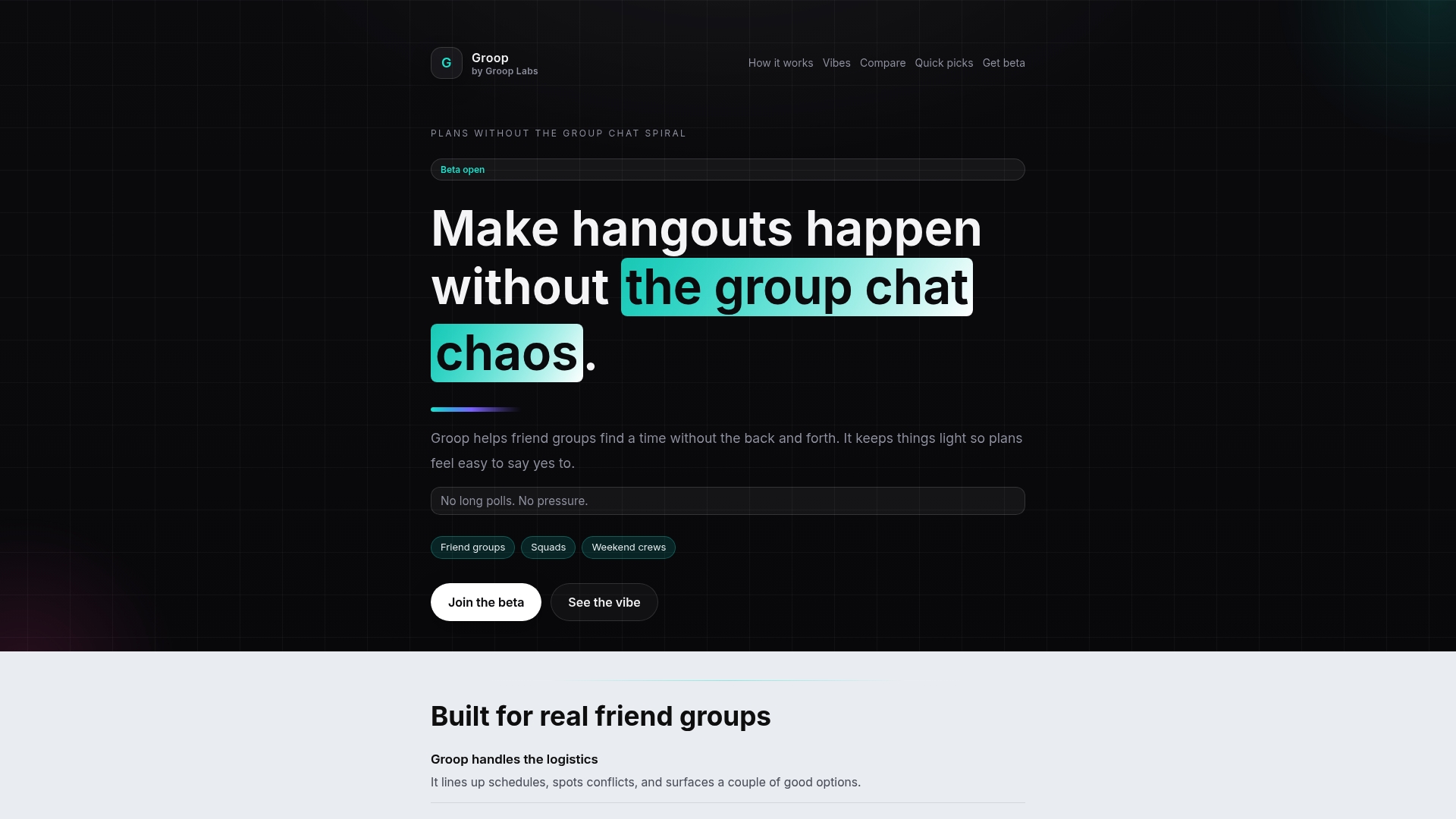
Take control of your friend group plans now and enjoy stress-free coordination. With Grooop you can start a plan, automatically align availability, and simplify decisions all in one easy-to-use mobile app. Don't let scheduling conflicts or complicated polls hold you back. Experience how Grooop turns planning into a relaxed and efficient process. Visit Grooop to get started and discover a new way to keep your group connected and ready to hang out. Learn more about how to reduce scheduling chaos and make friend group plans easy.
Frequently Asked Questions
How do I define my friend group's purpose?
To define your friend group's purpose, gather everyone for a casual discussion about shared interests and individual expectations. Focus on identifying common goals, such as being a study group or a social support network.
What is the best way to schedule group activities?
Utilize a digital scheduling tool that allows all members to input their availability in one place. Choose a tool with features like real-time tracking and easy mobile access to streamline the planning process and reduce back-and-forth communication.
How can I minimize conflicts when planning with friends?
To minimize conflicts, address any disagreements immediately and create a safe space for everyone to express their feelings. Use neutral language and focus on shared goals to strengthen understanding among group members.
What strategies can I use to simplify group decisions?
To simplify group decisions, offer two to three specific options for activities or times and use quick polling mechanisms. This approach reduces decision fatigue and keeps everyone engaged in the planning process.
How should I confirm plans in the group chat?
When confirming plans, keep the messages light and positive to generate excitement. Include specific details about the hangout while allowing for easy opt-out options to create a relaxed atmosphere.
How can we improve our future outings?
Gather casual feedback within 24-48 hours after an outing to discuss what everyone enjoyed and what could be improved. Highlight positive moments while noting preferences for future activities to continuously enhance the group's experience.