
Articles
How group vibes shape social planning for young adults
Discover how group vibes drive social planning success for young adults and friend groups, plus smart strategies to align mood, boost turnout, and keep the fun going.
How group vibes shape social planning for young adults
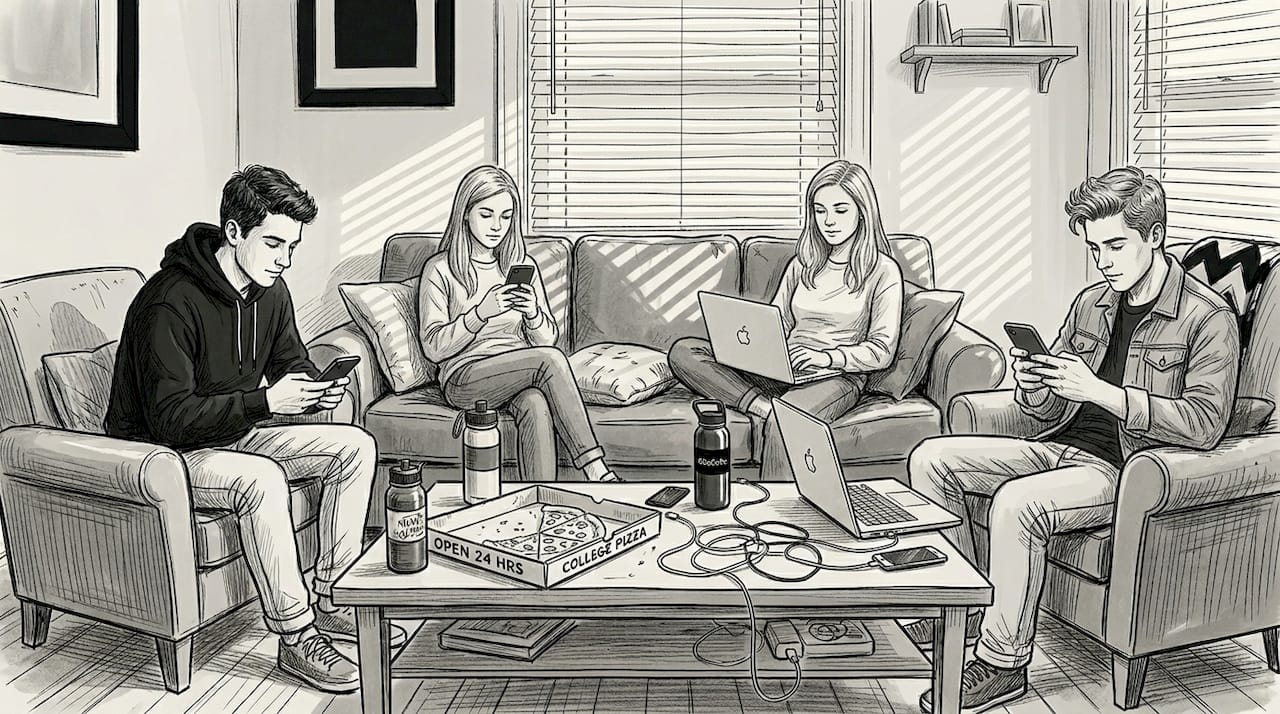
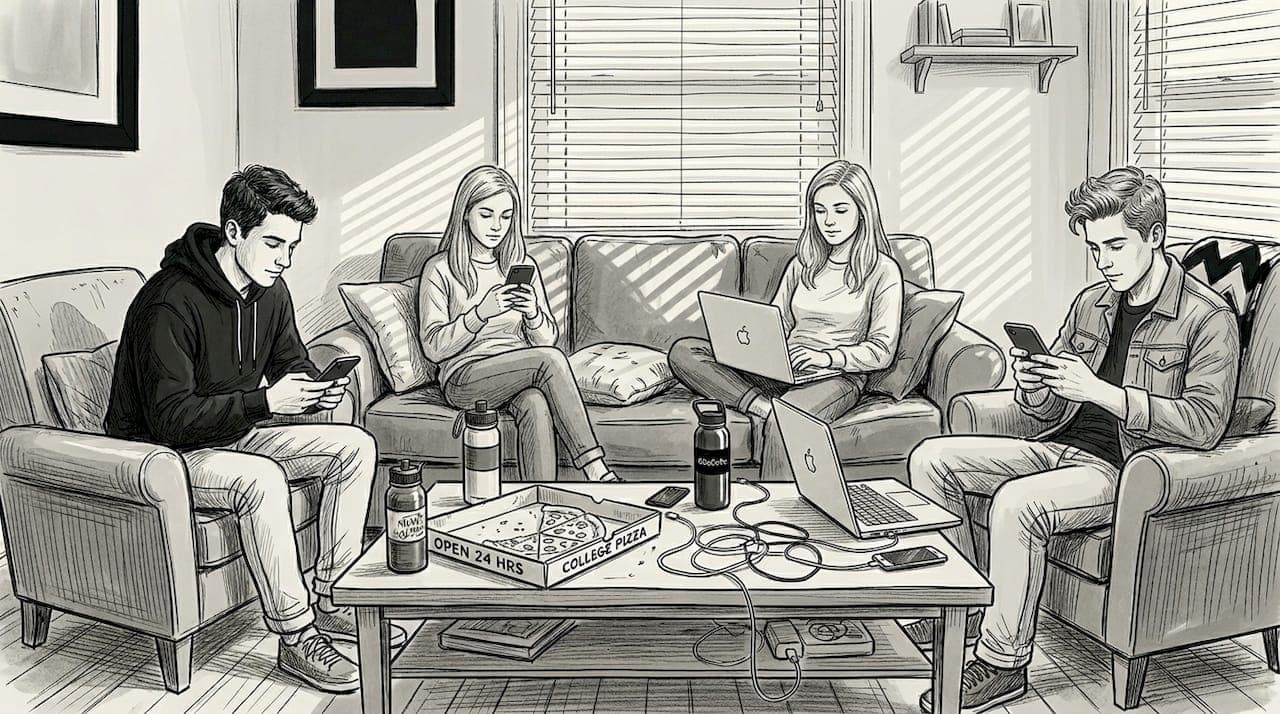
You've done everything right: you picked a date, shared the location, and sent the reminders. But somehow, the hangout still feels flat. Sound familiar? The real culprit usually isn't a scheduling conflict or a bad venue. It's the vibe. Group vibes, the shared emotional energy your friend group carries into any plan, can make or break a social event before it even starts. Understanding how they work gives you a genuine edge in planning get-togethers that people actually show up to, stay for, and talk about afterward. This guide breaks down what group vibes are, why they matter, and how to use them to plan smarter.
Table of Contents
- What are group vibes, and why do they matter?
- How group vibes influence social planning choices
- Smart strategies for vibe-first group planning
- Handling tricky vibe dynamics and edge cases
- Leveling up group vibes with inclusivity and campus resources
- Why most group plans fail — and how you can finally make them work
- Ready to vibe up your friend group planning?
- Frequently asked questions
Key Takeaways
| Point | Details |
|---|---|
| Group vibes come first | Your group’s mood and energy make or break planning far more than logistics or timing. |
| Align activities to energy | Match planned events with your group’s current vibe for max turnout and satisfaction. |
| Use tech to streamline | Chat polls, calendars, and chat apps can simplify planning without killing spontaneous fun. |
| Handle tricky dynamics early | Notice and adjust if cliques, low engagement, or mismatched energy start to affect your group. |
What are group vibes, and why do they matter?
Group vibes aren't just a feeling you can't describe. They're a real, measurable phenomenon. In social psychology, a group vibe refers to the collective emotional atmosphere shared among members of a social unit. It's the energy in the room when everyone is laughing together, and it's also the tension when one person is clearly checked out. It shapes how people interact, what they're willing to try, and how much fun they actually have.
For young adults and college students especially, this matters a lot. Your social life is often your stress relief. When a hangout lands right, it recharges you. When it misses, it can feel like a wasted night. Group vibes play a central role in social planning by influencing activity selection, participation levels, and overall enjoyment in friend groups.
Several factors feed into a group's vibe at any given moment:
| Vibe factor | What it looks like | Why it matters |
|---|---|---|
| Energy level | Hyped vs. low-key | Determines activity fit |
| Inclusivity | Everyone feels welcome | Drives participation |
| Anticipation | Excitement before the event | Predicts turnout |
| Mood matching | Shared emotional state | Boosts coordination |
When these factors align, something clicks. Emotional contagion and mood convergence enhance group coordination and overall satisfaction, meaning when your group is emotionally in sync, plans run smoother and people enjoy themselves more.
"The vibe isn't just background noise. It's the foundation your plans are built on. Get it right, and everything else falls into place."
The tricky part is that vibes shift. Someone has a rough week. A new person joins the group. The weather is miserable. Any of these can tilt the collective mood, and if you're not paying attention, your carefully planned event can feel off for reasons nobody can quite put their finger on. That's why reading and responding to your group's emotional state is just as important as nailing the logistics.
How group vibes influence social planning choices
With the power of vibes in mind, let's look at how they actually guide every decision in your group's planning process.
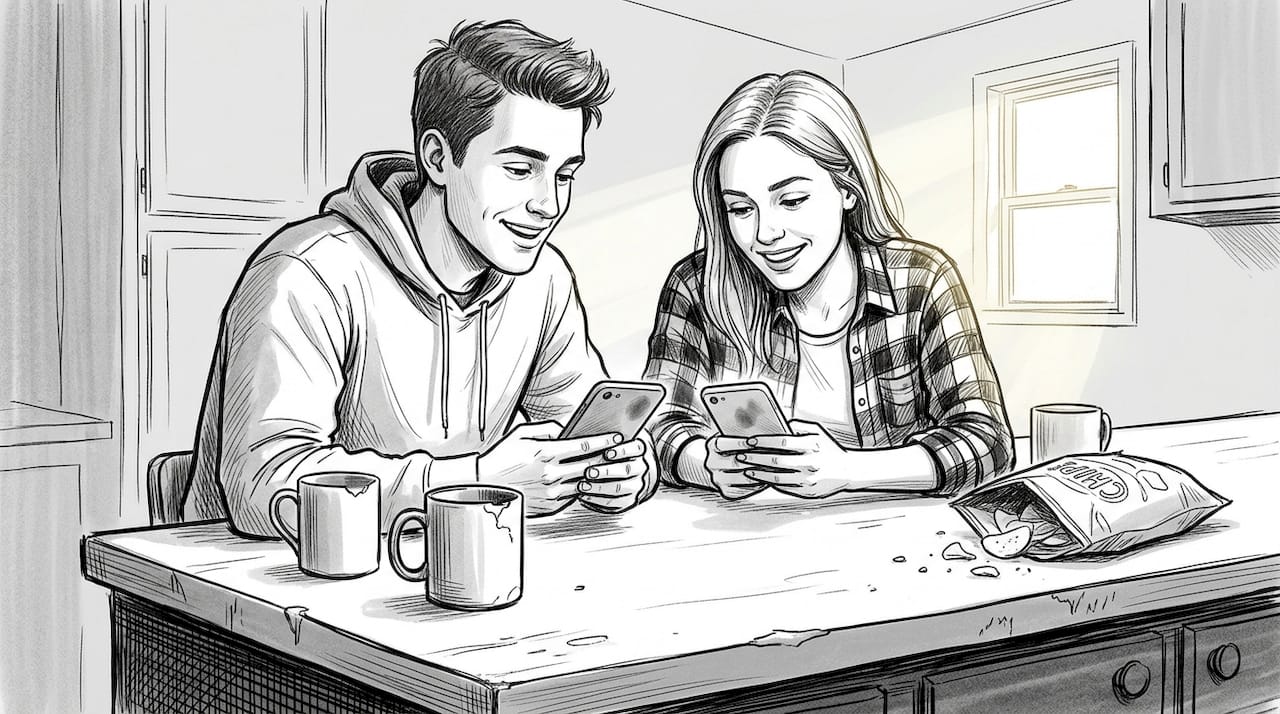
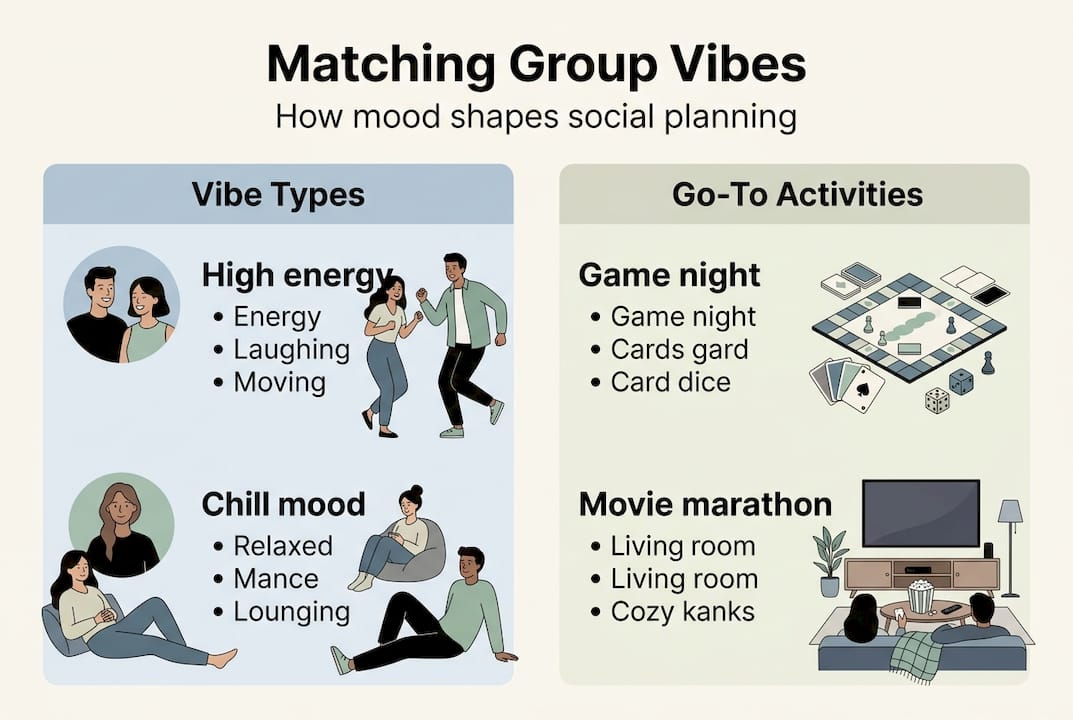
Before most friend groups even pick an activity, there's usually an informal mood check happening in the group chat. Someone drops a "what are we feeling tonight?" and the responses tell you everything. High-energy replies with lots of enthusiasm? That's a game night or bowling kind of crowd. Short, tired answers? That's a movie night or low-key dinner situation. Activity selection and participation are directly influenced by how well the chosen activity aligns with the group's current mood.
Here's a quick comparison of how vibe levels map to activity types:
| Group vibe | Best activity match | What to avoid |
|---|---|---|
| High energy, excited | Game night, karaoke, bowling | Quiet dinners, solo activities |
| Relaxed, low-key | Movie night, potluck, chill walk | Loud venues, competitive games |
| Mixed or uncertain | Flexible hangout, open-ended plan | Rigid itineraries |
| Stressed or distracted | Short, easy activity | Long events with lots of decisions |
Anticipation plays a huge role too. Anticipatory pleasure predicts engagement and enjoyment across group leisure activities, which means the excitement your group builds before an event directly affects how much fun they have during it. Hype matters.
Here's what happens when vibes go wrong:
- Clique energy: When subgroups form and the larger group fractures, participation drops and people disengage early.
- Vibe mismatch: Forcing a high-energy activity on a tired group leads to low enthusiasm and awkward silences.
- Unacknowledged tension: If there's an unresolved conflict in the group, it bleeds into the event and makes everything feel uncomfortable.
Staying tuned into planning trends for young adults can help you spot patterns in what works for your specific friend group. And if you're looking for tools to help manage this, checking out top group planning tools gives you a solid starting point.
Quick stat: Groups that align their activity choice with their collective mood report significantly higher satisfaction and are more likely to make plans again soon.
Smart strategies for vibe-first group planning
Knowing how influence works is great, but how do you actually plan with vibes in mind? Here's a breakdown of what works.
- Poll the group early. Before you commit to any activity, send a quick mood check. A simple "high energy or chill tonight?" gives you the data you need without making it feel like a meeting.
- Offer vibe-matched options. Instead of one rigid plan, present two or three choices that fit different energy levels. This keeps things democratic and reduces the chance of someone feeling dragged along.
- Use a group chat for ongoing mood checks. As the event gets closer, keep the conversation going. Excitement builds naturally, and you'll catch early signs of low energy or scheduling conflicts before they become problems.
- Try democratic voting. Platforms that support quick polls or thumbs-up reactions make it easy to surface the group's preference without long debates. Tech tools like polls and shared calendars streamline coordination while keeping the planning process fun.
- Build in flexibility. Polls, multi-option venues, and rotating activities are recommended to align group vibes and prevent planning fatigue.
- Add a quick icebreaker. Especially useful for mixed groups or when energy feels low at the start, a two-minute game or fun question can reset the room fast.
Exploring group chat app features can help you find the right tools to support this kind of flexible, vibe-aware planning. And for more on how apps fit into the process, event planning app tips covers practical ways to use them without overcomplicating things.
Pro Tip: Monitor your group's energy in real time during the event. If the vibe starts to dip, be ready to pivot: suggest a quick game, change the music, or move to a new spot. Small adjustments early make a big difference.
Handling tricky vibe dynamics and edge cases
Even the best plans can hit bumps, so here's how to troubleshoot and maintain a positive group vibe, even in tricky situations.
First, learn to recognize the warning signs before things go sideways:
- Disengaged members: People on their phones, giving one-word answers, or physically removed from the group.
- Side conversations: Small clusters forming and pulling away from the main group energy.
- Unusual silence: Not the comfortable kind, but the kind where nobody knows what to say next.
- Low turnout: Fewer people showing up than expected often signals a vibe problem in the lead-up to the event.
Once you spot these signs, act quickly. Rearranging seating, mixing groups, and activity rotation can fix negative or divisive vibes before they take over the whole event. Something as simple as moving people to different seats or introducing a group-wide activity can shift the energy noticeably.
When turnout is consistently low, the problem might be structural. Try alternative scheduling approaches, like asking the group what days work best rather than picking one and hoping for the best. Using a schedule planner can make this process much easier and help surface conflicts early. For a deeper look at why this keeps happening, scheduling challenges explained covers the most common patterns.
Balancing introverts and extroverts is another real challenge. Extroverts thrive in high-energy settings, while introverts may need quieter moments to feel comfortable. Building in a mix of structured and unstructured time helps both feel included.
Pro Tip: Watch body language throughout the event, not just at the start. If someone seems to be drifting, a simple check-in or a direct invitation to join an activity can bring them back into the group energy before the vibe fully drops.
Leveling up group vibes with inclusivity and campus resources
Beyond troubleshooting, your group can actually strengthen and grow its positive energy. Here's how to take your planning and fun to the next level.
One of the most underused strategies is leaning into diversity of activity. Campus leaders use inclusive initiatives and diverse activities to foster group energy and emotional resonance, and the same principle applies to your friend group. When everyone sees something they enjoy in the plan, buy-in goes up and the vibe naturally improves.
Here are some high-impact ideas for boosting group vibes through inclusivity:
- Outdoor movie nights: Low pressure, easy to organize, and universally enjoyable. Bring blankets, snacks, and a portable speaker.
- Inclusive potlucks: Everyone brings a dish, which means everyone has a stake in the event. It's a natural conversation starter too.
- Campus club events: Many colleges host free or low-cost events that your group can attend together, adding novelty without adding stress.
- Rotating activity picks: Let a different person choose the activity each time. This keeps things fresh and makes everyone feel valued.
- Outdoor leisure: Outdoor activities benefit youth mood and engagement, making them a reliable option when the group needs a reset.
Using stress-free group apps can help you coordinate these kinds of events without turning planning into a second job. And if your group relies heavily on chat for coordination, group chat planning walks through how to make those conversations more effective.
The goal is to make everyone feel like a real part of the group, not just a plus-one. When people feel included, the vibe takes care of itself.
Why most group plans fail — and how you can finally make them work
Here's the honest truth most planning guides skip: the two biggest vibe killers are over-planning and zero planning. Over-planning turns a hangout into a schedule. It removes the breathing room where real connection happens. But no planning at all creates confusion, and confusion kills excitement fast.
The sweet spot is structured flexibility. Structured tools help logistics but shouldn't override spontaneity, which is the real engine behind a great vibe. Use tools to handle the logistics, then step back and let the group lead.
Most groups also skip real-time mood checks entirely. They plan, they show up, and then they wonder why the energy feels off. The fix is simple: stay observant, stay flexible, and treat the vibe as a living thing that needs attention throughout the event, not just at the start.
The best planners we've seen aren't the ones with the most detailed itineraries. They're the ones who know when to follow the plan and when to throw it out. Comparing chat vs scheduling tools can help you figure out which approach fits your group's style best.
Facilitate, don't control. That's the mindset shift that changes everything.
Ready to vibe up your friend group planning?
Putting all of this into practice doesn't have to be complicated. The right tools make it genuinely easy to stay in tune with your group's mood while keeping logistics smooth and stress-free.
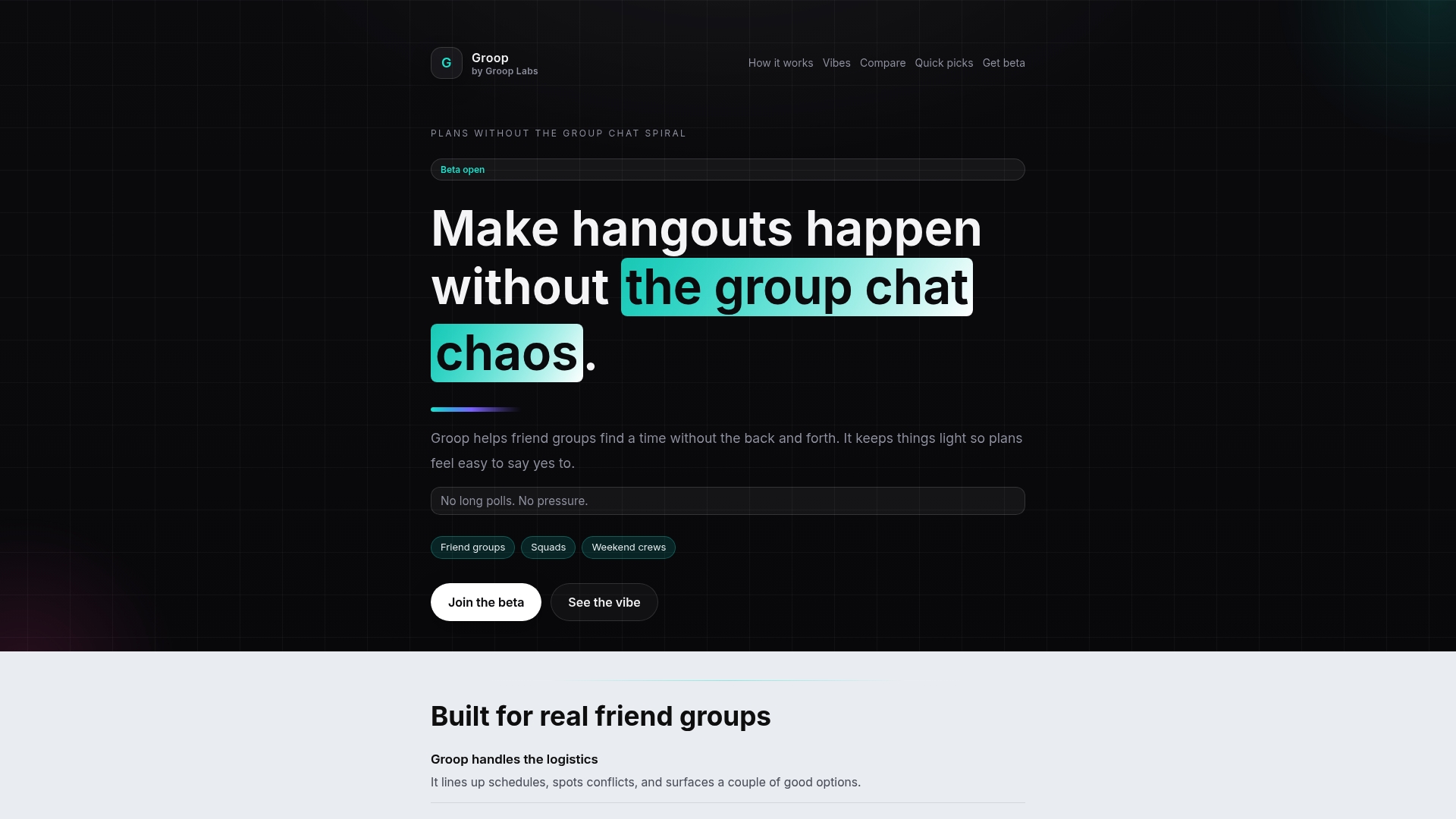
Groop Labs built Grooop specifically for friend groups who want to skip the back-and-forth and get straight to the fun. Grooop automatically lines up availability, surfaces conflicts, and gives your group simple, clear choices so planning feels as easy as the hangout itself. No long polls, no chaotic threads, just a clean path from "let's hang" to "we're there." Check out top group planning tips to see how Grooop fits into a smarter, vibe-first approach to social planning.
Frequently asked questions
How do I check my group's vibe before planning?
Polling for group mood is an effective way to align activities with the current vibe, so start with a quick group chat question asking for activity preferences or energy levels before you commit to any plan.
What are some easy activities that improve group vibes?
Multi-option, interactive activities like games and shared meals foster group cohesion, so interactive games, potlucks, and casual outdoor outings are reliable go-to options that get everyone involved quickly.
What if my group has cliques or negative energy?
Rearranging group flows and activities can counter negative energy or cliques, so try mixing up seating, introducing a group-wide activity, or switching venues to reset the atmosphere.
Do planning apps kill spontaneity in group outings?
Tech tools support organization while letting spontaneity thrive, so when used flexibly, apps can streamline the logistics without making your hangout feel like a scheduled meeting.
How can college clubs improve group vibes in events?
Inclusive, diverse group events foster high energy and strong vibes, so promoting a mix of activity types and making sure everyone feels welcome goes a long way toward boosting mood and participation.