
Articles
Group planning tips: top tools and strategies 2026
Discover proven group planning tips, compare top scheduling apps, and learn strategies that make coordinating hangouts with friends stress-free and efficient in 2026.

Group planning tips: top tools and strategies 2026

Coordinating hangouts with friends shouldn't feel like herding cats, yet most groups spend more time debating when to meet than actually enjoying each other's company. Between conflicting schedules, endless group chat threads, and the inevitable last-minute cancellations, social planning can quickly turn from exciting to exhausting. This guide cuts through the noise by providing clear criteria to evaluate planning tools, comparing top apps designed for casual groups, and sharing proven strategies to make scheduling stress-free. You'll discover how to pick the right platform for your squad's needs and implement practical tips that transform chaotic coordination into seamless hangouts.
Table of Contents
- How To Evaluate Group Planning Tools: Essential Criteria
- Top Group Planning Apps And How They Simplify Scheduling
- Comparing Group Planning Apps: Side-By-Side Features And Usability
- Practical Tips For Stress-Free Group Planning And Hangouts
- Try Groop Labs For Effortless Group Planning
Key takeaways
| Point | Details |
|---|---|
| Evaluation criteria matter | Choosing tools based on interface, calendar integration, and polling features reduces planning friction |
| Top apps simplify coordination | Modern group planning platforms cut stress by streamlining communication and availability tracking |
| Side-by-side comparisons help | Comparing features across apps reveals which platform fits your group's specific habits and preferences |
| Practical strategies boost success | Clear deadlines, assigned roles, and smart notification settings keep plans moving forward smoothly |
How to evaluate group planning tools: essential criteria
Before downloading yet another app your group will abandon in two weeks, you need a clear framework for what actually makes a planning tool worth using. The right criteria help you cut through marketing hype and focus on features that genuinely simplify coordination for casual friend groups and student squads.
Start with interface intuitiveness. If your group needs a tutorial to schedule a coffee meetup, the tool is already too complicated. Look for apps where creating an event, inviting participants, and viewing responses takes three taps or less. The best platforms feel natural from the first use, matching how your group already thinks about making plans.
Integrated calendar functionality separates useful apps from time wasters. Your planning tool should sync with personal calendars to surface conflicts automatically rather than forcing everyone to manually check their schedules. This feature alone eliminates the back-and-forth of "Are you free Saturday?" followed by ten individual responses.
Group polling capabilities rank equally important. Choosing group planning tools based on ease of use, scheduling features, and communication options greatly improves coordination. Quick polls for date options, activity preferences, or location choices let groups make decisions democratically without endless debate.
Consider these essential criteria when evaluating options:
- Notification management that keeps you informed without overwhelming your phone
- Cross-platform support so Android and iPhone users can participate equally
- Minimal setup requirements that don't demand creating yet another account
- Clear visibility into who's responded and who's still deciding
- Flexibility to adjust plans without starting from scratch
The right mix of these features transforms planning from a chore into a quick task that happens in the background while your group focuses on the fun ahead. Now that you know what to look for, let's look at some top group planning tools and how they align with these criteria.
Top group planning apps and how they simplify scheduling
The group planning app landscape offers several solid options tailored specifically for social coordination rather than corporate project management. Understanding what each platform does best helps you match tools to your group's specific communication style and planning needs.
When stress reduction from group planning apps reaches 70% for friends in 2026, you know the technology has matured beyond basic scheduling. Modern platforms integrate multiple coordination functions into streamlined interfaces designed for quick decisions.
Grooop stands out for friend groups wanting lightweight coordination without overwhelming features. The app automatically surfaces availability conflicts and offers clear time options without requiring lengthy polls or complex voting systems. Its strength lies in maintaining your group's natural vibe while handling logistics efficiently.
Doodle remains popular for its straightforward polling approach. Users create time slot options, participants mark their availability, and the organizer picks the slot with maximum attendance. The simplicity works well for one-off events, though it lacks ongoing group management features that regular friend squads need.
When2Meet appeals to student groups juggling academic schedules. Its visual grid interface lets everyone shade their available times, creating an instant heatmap of when the group overlaps. The free tier handles most casual planning needs, though the interface feels dated compared to mobile-first alternatives.
GroupMe combines messaging with basic planning features, offering a familiar chat experience with added coordination tools. Built-in polls and calendar integration work adequately for simple plans, though the notification volume can overwhelm users in active groups.
Consider these highlights when exploring group planning app picks 2026:
- Apps emphasizing quick decisions over comprehensive features suit spontaneous friend groups
- Platforms with calendar sync eliminate manual schedule checking
- Mobile-optimized interfaces matter more than desktop features for on-the-go coordination
- Notification customization prevents app fatigue in active groups
- Free tiers often provide sufficient functionality for casual use
Each platform balances different strengths, so matching app capabilities to your group's planning frequency and complexity determines success. With several apps on the table, let's compare them side-by-side to pinpoint best fits for different group needs.
Comparing group planning apps: side-by-side features and usability
Seeing features laid out in direct comparison reveals which apps deliver on their promises and which fall short for casual group coordination. This breakdown focuses on the capabilities that actually matter when you're trying to organize weekend plans, not enterprise-level project management.
| App | Polling | Calendar Sync | Mobile Quality | Free Tier | Notification Control |
|---|---|---|---|---|---|
| Grooop | Simplified choices | Automatic conflict detection | Excellent | Full featured | Customizable |
| Doodle | Grid-based voting | Manual entry | Good | Limited participants | Basic |
| When2Meet | Visual availability | None | Fair | Unlimited | Minimal |
| GroupMe | Basic polls | External calendar | Excellent | Full featured | Limited |
Usability extends beyond feature checklists to how naturally an app fits your group's existing habits. If your squad lives in group chats, platforms that layer planning onto messaging feel more intuitive than standalone scheduling apps requiring context switching. Efficient group chats and apps streamline social planning, reducing confusion and forgotten details.
Mobile app quality deserves special attention since most casual planning happens on phones between classes or during commutes. Apps designed for mobile first rather than desktop-ported experiences load faster, display information more clearly, and handle spotty connections better. Test how quickly you can view plan details, respond to invitations, and check who's confirmed on a small screen.

Pro Tip: Choose apps offering trial periods or robust free tiers to test fit with your group's habits before committing. Run a few real hangouts through the platform to see if it actually reduces coordination stress or just adds another notification source.
Your group's preferred communication style heavily influences which app works best. Text-heavy groups might prefer chat-integrated planning, while visual thinkers appreciate calendar heatmaps showing availability at a glance. Groups that avoid group chat chaos tips often benefit from dedicated planning spaces separate from general conversation threads.
Consider whether your group makes plans spontaneously or prefers advance scheduling. Apps optimized for quick decisions with minimal input suit impromptu hangouts, while platforms with detailed event pages and RSVP tracking work better for planned activities requiring more coordination. Knowing the comparisons, let's explore practical decisions and situational recommendations based on different group types and use cases.
Practical tips for stress-free group planning and hangouts
Even the best planning app can't compensate for unclear communication or indecisive groups. These strategies work alongside your chosen platform to keep coordination smooth and ensure plans actually happen rather than fizzling out in endless discussion.
-
Set clear decision deadlines for each planning stage. Give your group 48 hours to mark availability, then 24 hours to confirm the final plan. Deadlines create urgency that prevents plans from lingering indefinitely in the "maybe" zone.
-
Assign a point person for each hangout who finalizes details and sends reminders. Rotating this role prevents burnout while ensuring someone takes ownership of seeing plans through to completion.
-
Use polls for objective decisions like dates and times, but keep activity choices conversational. Over-polling every minor detail slows momentum and makes planning feel like a committee meeting rather than friends organizing fun.
-
Limit initial options to three or four realistic choices. Too many possibilities paralyze decision-making, while a curated shortlist moves groups toward consensus quickly.
-
Communicate changes immediately through your planning platform and primary group chat. Assuming everyone checks the app regularly leads to confusion and no-shows.
-
Build in buffer time for late arrivals and plan changes. Scheduling activities with 15-minute flexibility reduces stress when someone runs behind or the group decides to adjust plans on the fly.
Pro Tip: Leverage app notification settings to stay updated without overwhelm by enabling alerts only for final confirmations and time-sensitive changes while muting general discussion notifications.
Hassle-free group apps combined with clear planning reduce social planning stress and improve attendance. The combination of smart tools and intentional coordination habits creates a system where organizing hangouts feels effortless rather than exhausting.
Balance flexibility with decisiveness by staying open to input during initial planning but committing firmly once the group reaches consensus. Reopening settled decisions frustrates participants who've already adjusted their schedules and undermines confidence in future plans. When someone can't make the finalized time, handle it gracefully without derailing plans for everyone else.
Successful group planning also means knowing when to keep things simple. Not every coffee meetup needs a formal poll and calendar invite. Reserve your planning tools for coordination that genuinely benefits from structure while letting spontaneous hangouts happen organically through quick messages. Having explored tools and strategies, here's where you can turn next for easy, streamlined group planning.
Try Groop Labs for effortless group planning
After comparing features and learning coordination strategies, you might wonder which platform brings everything together in one intuitive package designed specifically for casual friend groups and student squads.
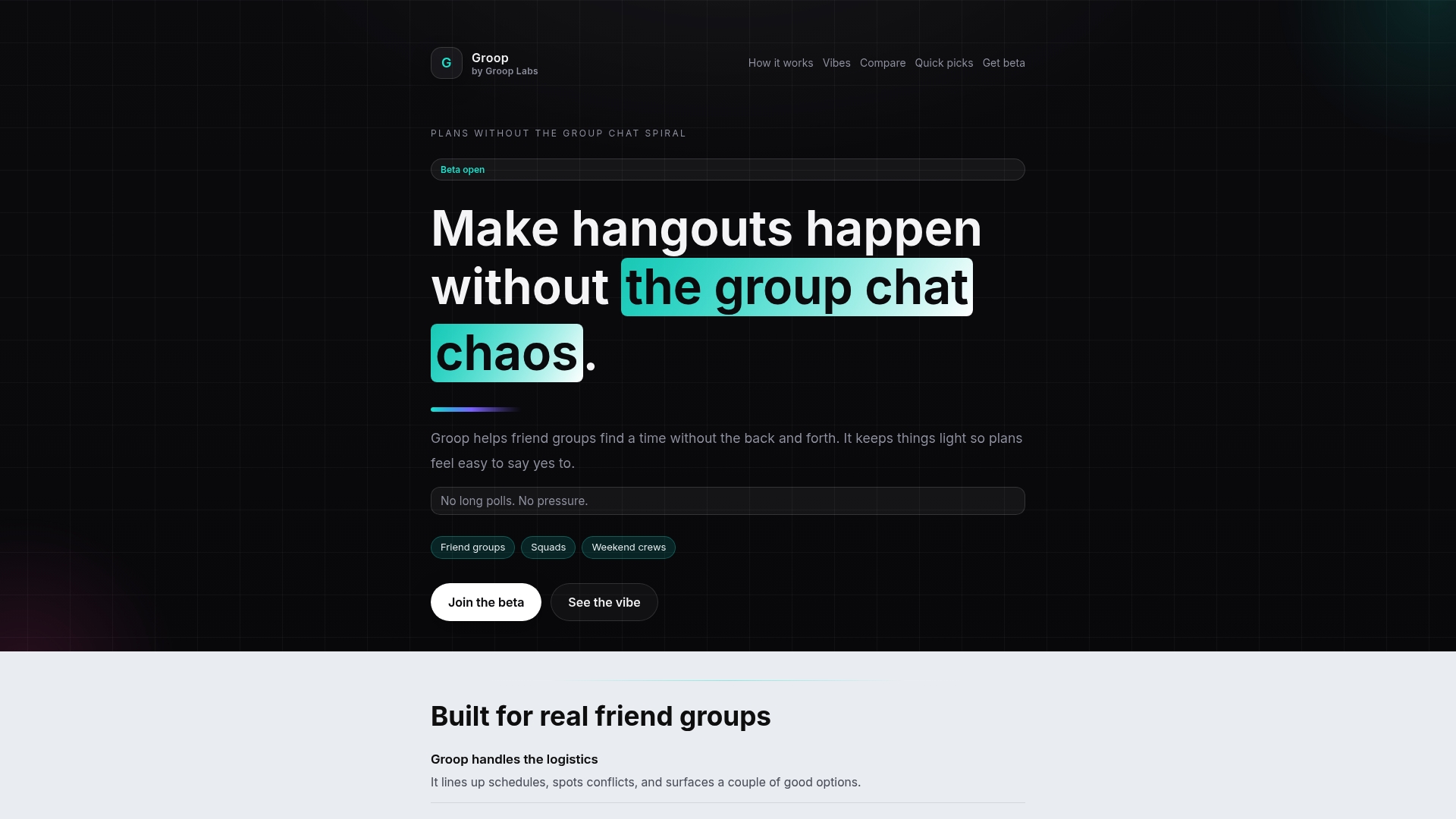
Groop Labs offers a modern approach to social coordination that aligns perfectly with the criteria and tips covered throughout this guide. The platform automatically handles availability checking, surfaces scheduling conflicts, and presents clear options without overwhelming your group with complex polls or endless chat threads. Features like pressure-free decision-making and natural plan acceptance keep coordination feeling relaxed rather than like a logistical project.
The mobile app emphasizes quick interactions that fit naturally into your daily routine. Starting a plan, reviewing options, and confirming attendance each take seconds rather than minutes of navigation through cluttered interfaces. This efficiency matters when you're coordinating between classes, during work breaks, or while commuting.
Visit the Groop Labs homepage to explore how this group planning tool can reduce coordination stress and make organizing hangouts as easy as deciding what to do. The platform's focus on maintaining your group's vibe while handling logistics efficiently makes it worth testing for your next few hangouts.
FAQ
What is the best app for casual group planning?
No single app works perfectly for every group since the ideal choice depends on your squad's size, preferred features, and communication habits. Apps with integrated calendars and polling capabilities tend to work best for casual plans because they eliminate manual schedule checking and streamline decision-making. Test a few options with your group to see which platform feels most natural for your coordination style.
How can we avoid misunderstandings in group plans?
Use clear, specific messages when proposing plans and confirm details through polls or calendar invites rather than assuming everyone interpreted casual chat messages the same way. Assign one person to finalize logistics and communicate any changes immediately through both your planning app and primary group chat. Written confirmation of time, location, and activity eliminates ambiguity that causes confusion and no-shows.
Are free group planning apps good enough?
Many free apps offer sufficient features for casual use, including basic polling, calendar integration, and group messaging that handles typical friend group coordination. Upgrading to paid versions becomes worthwhile mainly for larger groups needing advanced features like unlimited participants, detailed analytics, or premium customization options. Start with free tiers to test functionality before investing in subscriptions.
What's the easiest way to coordinate busy schedules?
Use shared calendar features and scheduling polls to identify common availability quickly without requiring everyone to manually compare their personal schedules. Set clear deadlines for marking availability and finalizing plans so coordination doesn't drag on indefinitely. Planning group hangouts becomes significantly easier when you combine automated availability checking with decisive timeline management.