Articles
Peer Group Scheduling Cuts Planning Time 50% for Students
Discover how peer group scheduling apps cut planning time by 50% for students and young adults. Learn benefits, features, and tips to streamline social coordination.

Peer Group Scheduling Cuts Planning Time 50% for Students

Using a peer group scheduling app can cut your social planning time in half, transforming endless group chat threads into organized meetups in minutes. If you're tired of the back and forth chaos that derails your plans, you're not alone. Young adults and students waste hours coordinating simple hangouts, often leading to frustration and missed opportunities. This article explores how peer group scheduling apps resolve these issues efficiently, delivering measurable time savings, stress reduction, and better social participation. You'll discover the features that matter, the benefits you can expect, and practical tips to make social planning hassle-free.
Table of Contents
- Understanding Peer Group Scheduling
- Core Benefits of Peer Group Scheduling for Young Adults and Students
- How Peer Scheduling Apps Work: Key Features That Drive Success
- Common Misconceptions About Peer Scheduling Apps
- Practical Application: Tips for Using Peer Scheduling Tools Effectively
- Psychological and Social Mechanisms Behind Peer Scheduling Benefits
- Bridging Understanding to Practice: Making the Most of Peer Group Scheduling
- Discover Grooop: Your Partner in Effortless Social Planning
- Frequently Asked Questions
Key Takeaways
| Point | Details |
|---|---|
| Time Savings | Peer scheduling apps reduce planning time by up to 50% compared to manual coordination methods. |
| Stress Reduction | Automated availability syncing and conflict surfacing lower social planning stress by approximately 40%. |
| Increased Attendance | Clearer communication through scheduling tools boosts event participation by around 30%. |
| Essential Features | Automatic availability synchronization, conflict surfacing, and lightweight options drive app success. |
| Misconception Correction | Scheduling apps enhance spontaneity rather than killing it by removing logistical friction. |
Understanding Peer Group Scheduling
Peer group scheduling refers to tools and apps that help friends coordinate plans by automatically syncing availability and surfacing optimal meeting times. Instead of drowning in endless group chat messages asking "When works for everyone?", these platforms streamline the entire process. Manual social planning involves high communication overhead and frequent confusion among young adults, creating a barrier to getting together.
The challenges are real and measurable. Traditional coordination methods force one person to become the unofficial organizer, chasing down responses and managing conflicts. Group chats balloon with dozens of messages as availability changes and preferences shift. This complexity creates decision fatigue, where the effort required to plan an event outweighs the desire to attend.
When scheduling becomes too complicated, social participation drops. Students cancel study sessions because coordinating feels harder than studying alone. Friend groups abandon weekend plans because no one wants to tackle the logistics. Simplifying social plans through dedicated scheduling tools addresses this fundamental problem. These apps matter because they remove friction from the coordination process, letting you focus on actually spending time together rather than planning to spend time together.
Key challenges of manual social planning include:
- Endless message threads where critical information gets buried
- Difficulty tracking who responded and who hasn't
- Time zone confusion for distributed friend groups
- Last minute changes that restart the entire coordination cycle
- Decision fatigue from too many options and preferences
Core Benefits of Peer Group Scheduling for Young Adults and Students
The evidence is clear. Peer scheduling tools reduce planning time by up to 50% and decrease social planning stress by 40%. These aren't marginal improvements. They represent a fundamental shift in how you coordinate with friends, transforming what used to take hours into a process that takes minutes.

Time savings come from automation replacing repetitive coordination tasks. Instead of manually checking with each person about their availability, apps aggregate this information instantly. You see conflicts immediately rather than discovering them after several rounds of discussion. The result is faster decisions and quicker transitions from idea to execution.
Stress reduction stems from clarity and transparency. When everyone's availability is visible, there's no guilt about being the person who can't make a particular time. Conflicts are framed as scheduling realities rather than personal rejections. This psychological shift makes coordination feel collaborative rather than burdensome. Peer scheduling benefits extend beyond logistics into improved group dynamics.
Event attendance can increase by 30% with clearer communication via scheduling apps. This happens because reduced friction lowers the barrier to participation. When joining an event requires simply clicking "yes" on a clear proposal rather than wading through chat history, more people say yes. Small group planning advantages become especially pronounced for tight-knit friend circles where maintaining regular contact matters.
The communication clarity benefit mirrors advantages seen in other group coordination contexts. Just as group benefits parallels demonstrate improved outcomes when structure reduces confusion, peer scheduling creates an environment where social plans succeed more often.
Statistic Spotlight: Studies show planning time drops from an average of 45 minutes per event to just 20 minutes when using automated scheduling tools, a 55% reduction that adds up significantly over multiple events.
Core benefits include:
- Dramatically reduced time spent on coordination logistics
- Lower stress levels around social planning responsibilities
- Higher event attendance rates due to clearer communication
- Improved group satisfaction and relationship quality
- More frequent social interactions enabled by easier planning
How Peer Scheduling Apps Work: Key Features That Drive Success
Understanding which features actually matter helps you evaluate and use these tools effectively. The top three features improving peer scheduling efficiency are automatic availability synchronization, conflict surfacing, and lightweight options presentation. Each addresses a specific pain point in traditional coordination.
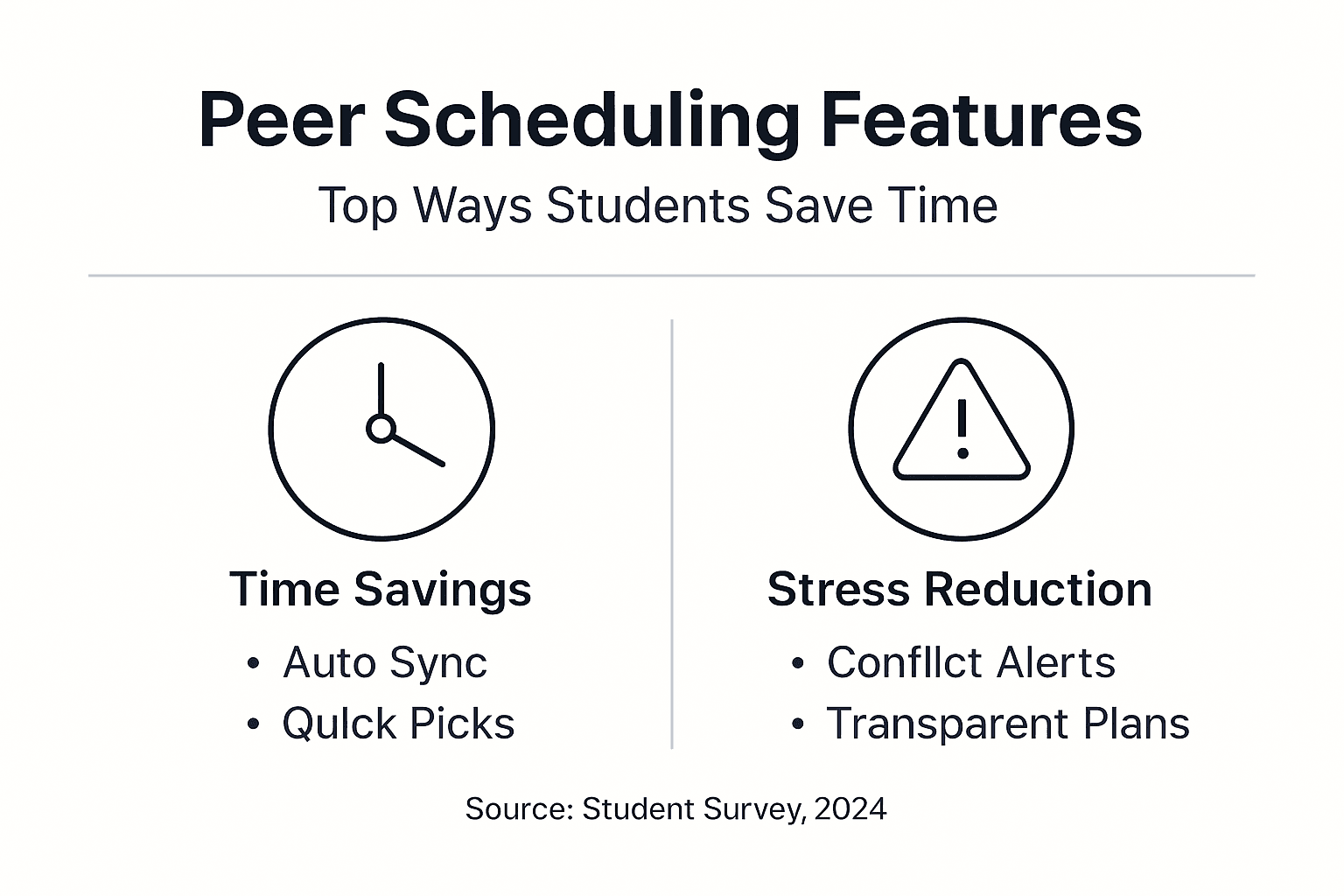
Automatic availability synchronization eliminates the guesswork. Instead of asking everyone when they're free, the app pulls this information from calendars or quick availability inputs. You see a unified view of when the group can actually meet. This single feature alone accounts for much of the time savings, as it replaces dozens of individual check-in messages.
Conflict surfacing mechanisms highlight scheduling clashes before they derail plans. When someone's availability doesn't align with the proposed time, the app flags this immediately. You can then adjust the proposal or find alternatives without losing momentum. This transparency prevents the common scenario where plans fall apart because one crucial person couldn't make it and nobody knew until the last minute.
Lightweight options presentation combats decision fatigue by offering clear, limited choices. Instead of asking "When should we meet?" with infinite possibilities, the app presents two or three viable options based on group availability. This constraint paradoxically increases decision speed and satisfaction. Key features of scheduling apps work together to create a streamlined experience.
| Method | Time Required | Stress Level | Decision Quality |
|---|---|---|---|
| Manual Group Chat | 45-60 minutes | High | Variable, often suboptimal |
| Complex Polls | 30-40 minutes | Medium-High | Better but overwhelming |
| Lightweight Apps (Grooop) | 15-20 minutes | Low | Optimized for group needs |
Pro Tip: When presenting options to your group, limit choices to two or three times. Research shows that offering fewer options actually increases participation rates by reducing decision paralysis. More choices create anxiety, while focused options enable quick consensus.
Essential features that drive success:
- Calendar integration for automatic availability detection
- Visual conflict highlighting that makes scheduling issues obvious
- One-tap response options for quick decision-making
- Automatic reminders that keep everyone in the loop
- Flexible rescheduling when plans need to change
Common Misconceptions About Peer Scheduling Apps
Several false beliefs prevent people from trying peer scheduling tools. Addressing these misconceptions head-on helps you make informed decisions about whether these apps fit your social planning needs.
Myth: Scheduling apps kill spontaneity. Reality: Scheduling apps do not reduce spontaneity; they enable more last-minute opportunities by removing logistical friction. When coordination takes minutes instead of hours, impromptu plans become more feasible. You can decide to grab dinner tonight and have everyone confirm within minutes. The reduced planning overhead actually supports spontaneous gatherings rather than hindering them.
Myth: Apps force rigid plans and remove user autonomy. Reality: Quality scheduling tools present options rather than dictating decisions. You maintain complete control over when and where to meet. The app simply surfaces information to help your group decide together. Nothing is locked in until the group agrees. Misconceptions about scheduling apps often stem from confusion with corporate scheduling software that has different design goals.
Myth: Peer scheduling apps are just complex polls causing decision fatigue. Reality: Modern peer scheduling apps specifically design against poll fatigue by limiting options and streamlining responses. Unlike traditional polls with dozens of time slots, these apps use availability data to present only viable choices. The experience feels more like accepting an invitation than filling out a survey. Group chat vs scheduling tools comparison reveals how purpose-built solutions avoid poll pitfalls.
Pro Tip: Use scheduling apps for the logistics while keeping your group chat for the social discussion. Let the app handle "when and where" questions, freeing your chat for the fun stuff like what to do, who's bringing what, and sharing excitement about upcoming plans. This division of labor maintains the social vibe while eliminating coordination headaches.
Common misconceptions debunked:
- Apps enhance rather than restrict spontaneous planning
- Users retain full control over decisions and commitments
- Modern tools avoid poll fatigue through smart design
- Automation supports rather than replaces social interaction
- Scheduling apps complement rather than replace group chats
Practical Application: Tips for Using Peer Scheduling Tools Effectively
Getting the most from peer scheduling apps requires understanding how to integrate them into your group's existing habits. These practical steps help you transition smoothly from chaotic coordination to streamlined planning.
-
Start small with a single upcoming event. Don't try to coordinate everything at once. Pick one hangout or study session and use the app for that. This lets your group learn the tool without overwhelming anyone.
-
Set basic availability preferences once. Most apps let you indicate general availability patterns like "free most weekday evenings" or "weekends work best." Spending five minutes on this setup saves time on every future plan.
-
Keep participation voluntary and pressure-free. Frame the app as a convenience tool, not a requirement. Some people will adapt faster than others, and that's fine. The benefits become obvious quickly without needing to force adoption.
-
Balance automation with conversation. Let the app handle logistics while your group chat stays active for discussing what to actually do. Technology should facilitate connection, not replace it.
-
Review and adjust regularly. After using the app for a few weeks, check in with your group. What's working? What feels awkward? Most apps let you customize settings, so tailor the experience to your group's preferences.
-
Use the app for both regular and one-time events. Weekly study sessions benefit from recurring scheduling, while spontaneous movie nights work great as one-off plans. The flexibility supports different social planning needs.
Pro Tip: Designate one person as the "plan starter" who proposes times in the app, but rotate this role regularly. This prevents coordination burnout while ensuring someone takes initiative. Even with great tools, groups function better when someone kicks off the process. Tips for group scheduling use provide additional implementation guidance.
Psychological and Social Mechanisms Behind Peer Scheduling Benefits
Understanding why these apps improve social experiences helps you appreciate their value beyond simple convenience. The benefits stem from fundamental psychological and social principles.
Automation reduces cognitive load by limiting choices and simplifying decisions. Your brain expends mental energy evaluating options and making decisions. When scheduling presents three clear choices instead of infinite possibilities, you make faster decisions with less stress. This cognitive load reduction leaves more mental capacity for anticipating and enjoying the actual social event.
Communication overhead decreases when information is centralized and transparent. Traditional group chat coordination requires tracking multiple conversation threads, remembering who said what, and mentally assembling a complete picture. Scheduling apps present all relevant information in one place, reducing the mental effort required to stay informed.
Positive effects on group cohesion emerge when conflicts are resolved transparently. Seeing everyone's constraints visualized removes the personal element from scheduling conflicts. When you can't make a proposed time, it's framed as a calendar conflict rather than a social rejection. This transparency builds trust and reduces tension around coordination. Psychological benefits of peer scheduling extend into improved relationship satisfaction.
The cognitive load reduction model explains much of the stress decrease. Studies in decision science show that reducing option complexity and presenting clear choices improves both decision quality and user satisfaction. Peer scheduling apps apply these principles to social coordination.
Psychological and social benefits include:
- Reduced mental effort required for coordination decisions
- Lower anxiety around scheduling conflicts and availability
- Improved group trust through transparent information sharing
- Enhanced social anticipation when planning is quick and easy
- Stronger relationships supported by more frequent interactions
Bridging Understanding to Practice: Making the Most of Peer Group Scheduling
You now understand how peer scheduling apps save time, reduce stress, and increase social participation. The technology works through automatic availability synchronization, conflict surfacing, and lightweight options presentation. These features combine to deliver measurable benefits while supporting rather than replacing the social aspects of coordination.
The key misconceptions around spontaneity, rigidity, and complexity have been addressed. Modern scheduling apps enhance flexibility, maintain user control, and actively combat decision fatigue. They're designed specifically for casual social planning, not corporate meeting management.
Moving forward, the opportunity is clear. You can continue spending hours coordinating simple hangouts, or you can adopt tools that handle logistics in minutes. The choice isn't between technology and human connection. It's between wasting time on coordination mechanics or spending that time actually connecting with friends.
Integrating peer scheduling into your social life doesn't require abandoning existing habits. These tools complement your group chat, handling the "when and where" questions while conversation focuses on the fun stuff. Start with one event, experience the difference, and expand from there.
Key insights to remember:
- Time savings of up to 50% are real and significant
- Stress reduction improves both planning and social experiences
- Essential features work together to streamline coordination
- Misconceptions about rigidity don't reflect modern app design
- Practical implementation is straightforward and low-pressure
Discover Grooop: Your Partner in Effortless Social Planning
Grooop embodies the best practices and features discussed throughout this article. Our lightweight scheduling tool eliminates the back-and-forth chaos of coordinating hangouts, letting you spend less time planning and more time together. Automatic availability alignment, clear conflict surfacing, and simple option presentation combine to cut your planning time in half.
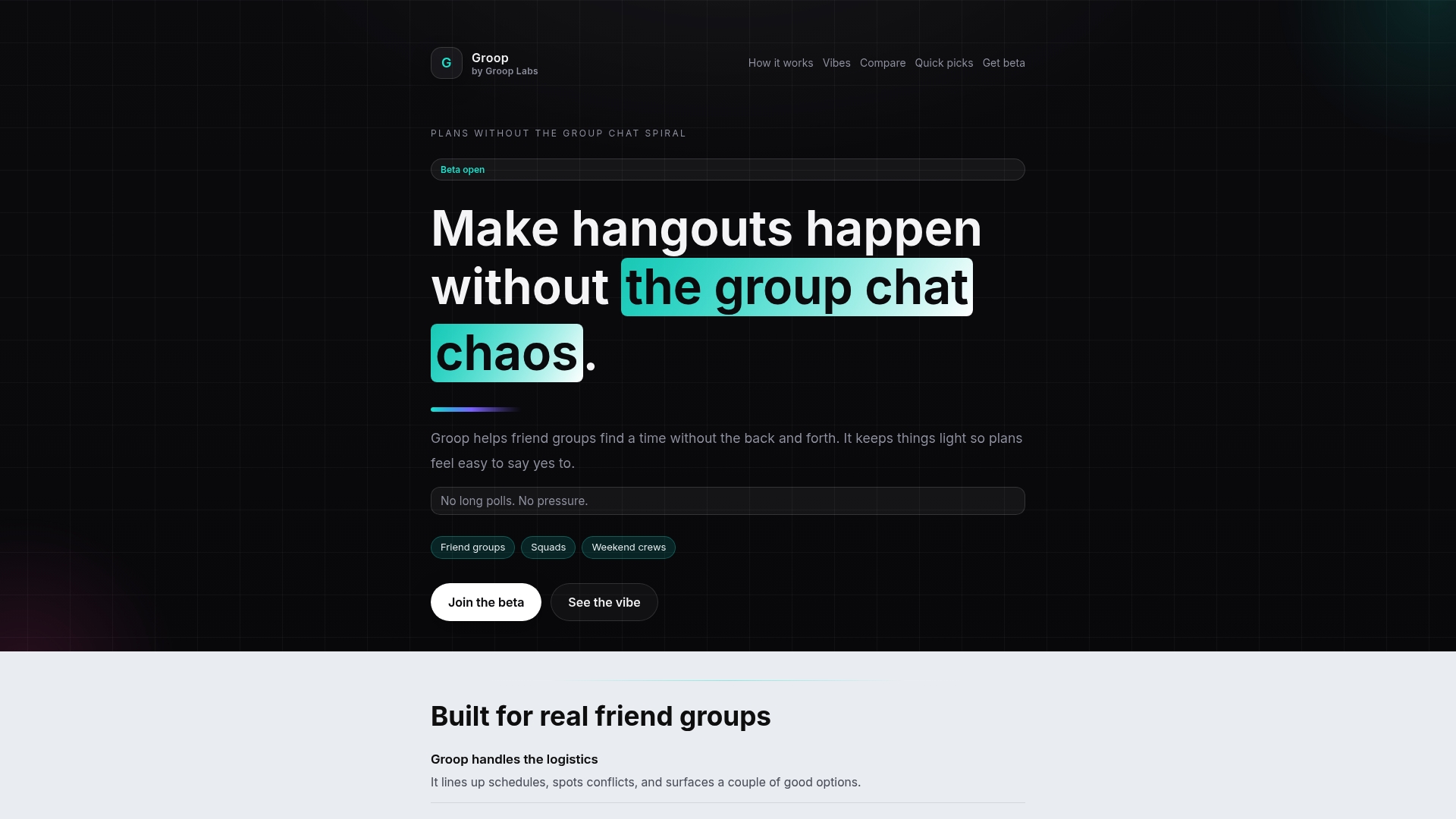
The app maintains your group's natural vibe while handling logistics efficiently. Start a plan, see who's available, surface conflicts, and present easy choices for your friends. No complex polls, no endless chat threads, just straightforward coordination that respects everyone's time and preferences. Whether you're organizing study sessions, weekend adventures, or casual hangouts, Grooop makes it hassle-free.
Ready to transform your social planning? Visit our blog to learn more about group scheduling strategies and download the app to experience the difference. Try Grooop now and discover how easy friend coordination can be.
Frequently Asked Questions
How does peer group scheduling save time compared to group chats?
Peer scheduling apps aggregate availability automatically instead of requiring dozens of individual messages. You see everyone's constraints in one view, identify optimal times instantly, and make decisions in minutes rather than hours. The automation eliminates repetitive coordination tasks.
What features make peer scheduling apps more effective than polls?
Automatic availability synchronization, conflict surfacing, and lightweight options presentation work together to avoid poll fatigue. Instead of presenting dozens of time slots, apps use availability data to show only viable choices, making decisions faster and less overwhelming.
Do scheduling apps reduce spontaneity in social planning?
No, they enhance spontaneity by removing logistical friction. When coordination takes minutes instead of hours, last-minute plans become more feasible. The reduced overhead actually supports impromptu gatherings rather than hindering them.
How can I get my friend group to start using a scheduling app?
Start with a single upcoming event rather than trying to change everything at once. Keep participation voluntary and pressure-free, framing the app as a convenience tool. The benefits become obvious quickly, encouraging natural adoption without forced commitment.
Why do scheduling apps reduce stress around social planning?
They provide transparency and clarity, removing the personal element from scheduling conflicts. When constraints are visualized, conflicts feel like calendar realities rather than social rejections. This transparency builds trust and reduces coordination anxiety significantly.
Recommended
- Group Scheduling: Simplifying Social Plans Together | Groop Blog
- Group Planning Apps Cut 70% Stress for Friends in 2026 | Groop Blog
- Group Scheduling Challenges – Navigating Social Planning Chaos | Groop Blog
- Small Group Planning Benefits for Social Life | Groop Blog
- Staff Scheduling im Catering: Effizienz und Vorteile
- How to Balance School and 11 Plus Preparation Effectively | 11+ Tuition