
Articles
Why prioritize group preferences? Build stronger friend groups
Discover why prioritizing group preferences builds stronger friend groups and learn practical strategies to coordinate hangouts without the drama or endless back-and-forth.

Why prioritize group preferences? Build stronger friend groups

You've been there: the group chat blows up with 47 messages, nobody can agree on where to eat, and somehow the hangout never happens. Group indecision is one of the most relatable frustrations for friend squads everywhere. But here's the thing: when you actually tune in to what everyone wants, outings become easier, more fun, and way less stressful. This article walks you through what group preferences really are, how to gather them without drama, and what to do when your pick doesn't win the vote. By the end, you'll have real strategies to keep your crew connected and your plans actually happening.
Table of Contents
- The power of group preferences in friend dynamics
- How group decision-making works: Benefits and pitfalls
- Methods to prioritize group preferences efficiently
- Real life: When group preferences clash with individual wants
- Perspective: Why prioritizing group preferences is worth the effort, but only if you avoid these traps
- Want to make your group outings drama-free and easy?
- Frequently asked questions
Key Takeaways
| Point | Details |
|---|---|
| Boost belonging | Prioritizing group preferences helps everyone feel included and strengthens friendships. |
| Better decisions | Group input leads to higher quality choices and more satisfying activities. |
| Efficient coordination | Using polls, rotating choosers, and group chats makes planning simple and fair. |
| Watch for pitfalls | Avoid groupthink or exclusion by ensuring all voices are heard, not just the loudest. |
| Actively include everyone | Making space for quieter members and suggesting rotations keeps the group dynamic healthy. |
The power of group preferences in friend dynamics
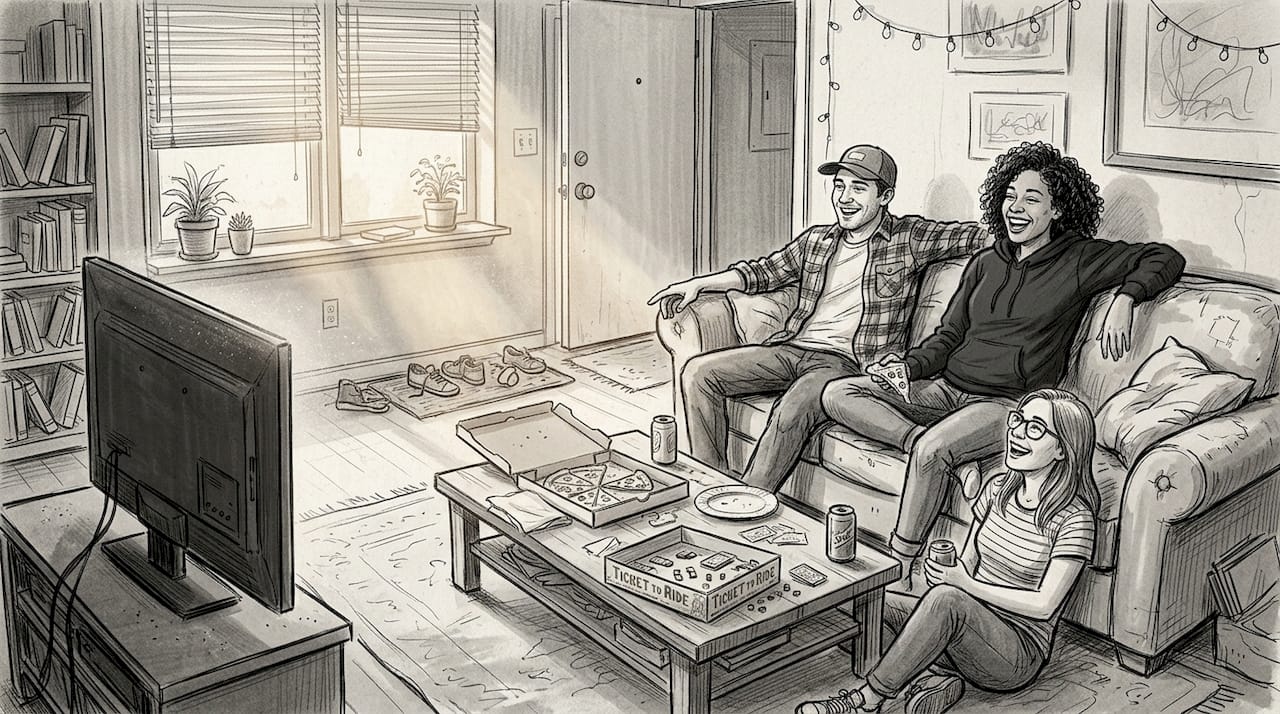
So what exactly are "group preferences"? Simply put, they're the collective choices and priorities that most members of a friend group tend to support. Think of them as the shared taste your squad develops over time, like always gravitating toward late-night food runs or preferring chill hangouts over loud parties. These preferences aren't random. They form through repeated experiences, inside jokes, and the gradual understanding of what makes your specific group feel good together.
Why does this matter? Because when a group's choices feel aligned, everyone benefits in real ways. Peer support research shows that prioritizing group preferences among young adults and teens enhances sense of belonging and emotional well-being. That's not a small thing. Feeling like your crew "gets you" is a genuine emotional anchor, especially during the social ups and downs of your teens and twenties.
Here are the core benefits of honoring group preferences:
- Stronger group identity: Shared choices reinforce what makes your friend group unique.
- Emotional support: When people feel heard, they show up more consistently for each other.
- Reduced conflict: Fewer surprise vetoes mean less friction before plans even start.
- Friendship longevity: Groups that respect each other's input tend to stay close longer.
You can also see how group planning trends among young adults reflect a growing desire for low-effort, high-satisfaction coordination.
"There's an important distinction between emotional influence and norm-setting influence in peer groups. Emotional influence shapes how someone feels in the moment, while norm-setting influence shapes what the group considers acceptable over time. Both matter for healthy group dynamics." — Social development research on peer group behavior
When group harmony is treated as a priority rather than a side effect, friendships naturally last longer and feel more rewarding. The goal isn't perfection. It's making sure everyone feels like they belong.
How group decision-making works: Benefits and pitfalls
Once you understand why group preferences matter, the next question is: how does your group actually make choices? Most friend groups fall into one of three patterns. Voting means everyone picks an option and the majority wins. Consensus means the group keeps talking until everyone can live with the decision. Leader-decides means one person (often the most vocal) just picks something and everyone goes along.
Each approach has real trade-offs. Aggregating diverse perspectives leads to higher quality group decisions, but risks process losses like groupthink, where the group rushes to agree just to avoid conflict. You can explore consensus methods for socials to find what fits your crew.
| Method | Pros | Cons | Best for | Watch outs |
|---|---|---|---|---|
| Consensus | Everyone feels heard | Can take forever | Small, close groups | Endless back-and-forth |
| Majority rule | Fast and clear | Minority feels ignored | Larger groups | Resentment over time |
| Leader-decides | Quickest option | Feels unfair | Time-sensitive plans | Kills group buy-in |
Common risks to watch for:
- Groupthink: Everyone agrees too fast to avoid awkwardness, leading to a mediocre plan nobody loves.
- Vocal domination: One or two loud personalities consistently override quieter members.
- Decision fatigue: Too many options or too many rounds of voting leaves everyone exhausted and annoyed.
Pro Tip: Use anonymous polls before group discussion. When people vote privately first, they're less likely to just echo whoever spoke up first. A neutral facilitator, even just a rotating role, also helps keep things balanced.
Teens and young adults tend to be more utilitarian in group settings, meaning they lean toward whatever benefits the most people. But that cooperation drops noticeably when personal interest clashes with the group outcome. Knowing this ahead of time helps you design fairer processes.
Methods to prioritize group preferences efficiently
Now that you know the pitfalls, here's what actually works. The good news is that gathering group input doesn't have to be a whole production. There are fast, fair methods that fit naturally into how friend groups already communicate.
Popular tools and techniques include:
- Doodle polls: Great for scheduling, lets everyone mark availability without a back-and-forth.
- Group chat polls: Built into most messaging apps, quick for simple yes/no or option-based questions.
- Color card voting: Each person holds up a color to signal agreement, hesitation, or disagreement in real time.
- Rotating chooser: One person picks this time, someone else picks next time. Simple and surprisingly fair.
Consensus methods like color cards or group polls make coordination fast while keeping everyone on board. The key is matching the method to the situation.
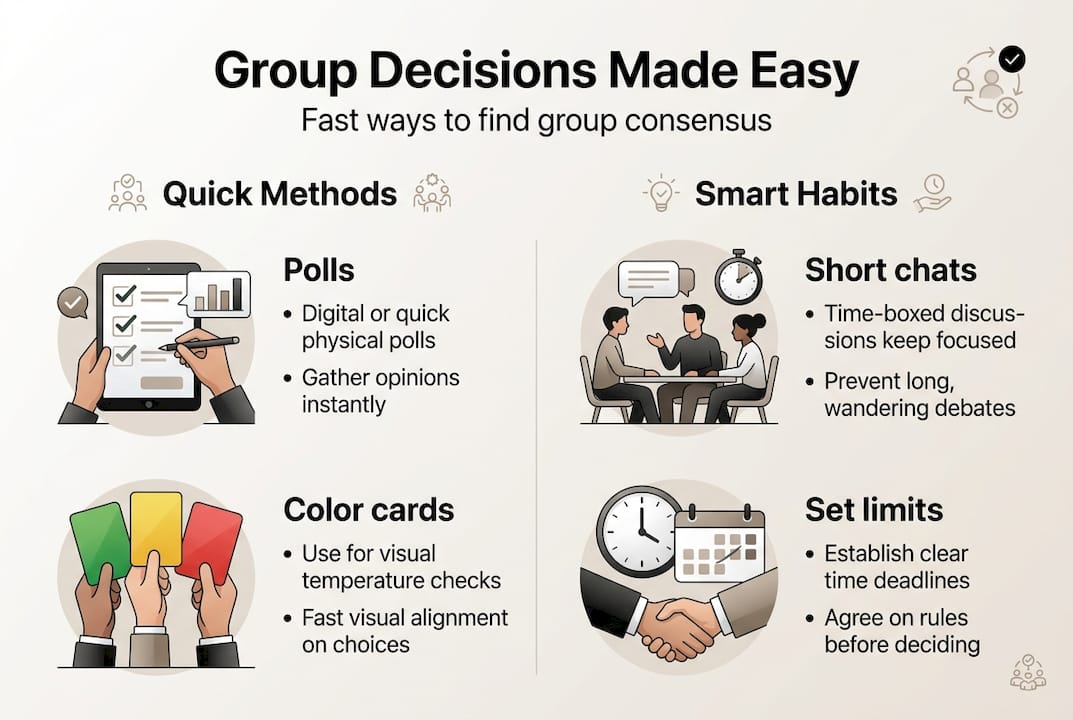
| Method | Speed | Fairness | Tech needed | Works best for |
|---|---|---|---|---|
| Doodle poll | Medium | High | Yes | Scheduling across busy calendars |
| Chat poll | Fast | Medium | Yes | Quick activity votes |
| Color cards | Fast | High | No | In-person decisions |
| Rotating chooser | Instant | High | No | Recurring hangouts |
Thinking about UX in group apps matters here too. The easier the tool is to use, the more likely everyone actually participates. And when you streamline planning with group chats, you cut down on the endless thread chaos that kills momentum.
Pro Tip: Combine a quick poll with a short open chat window afterward. The poll gives you fast data, and the chat lets people flag concerns before the plan is locked in. This two-step approach is the fastest and fairest combo for most friend groups.
Decision fatigue is real. Keep your options to three or fewer whenever possible, and set a clear deadline for responses so the group doesn't spiral into a week-long thread.
Real life: When group preferences clash with individual wants
Here's the honest part: sometimes the group picks something you're just not that into. Maybe everyone wants to go bowling and you'd rather grab food. Or the squad votes for a movie night when you were hoping for something more active. This tension is completely normal, and how you handle it says a lot about the health of your friend group.
Adolescents are more utilitarian in group moral decisions but less cooperative when self-interest conflicts with the group outcome. In plain terms: it's easy to go along when it doesn't cost you much, but harder when it does. Recognizing that pattern in yourself and others is the first step to navigating it well.
Smart approaches for handling disagreement:
- Find a midpoint: Suggest an activity that overlaps both interests, like a food spot near the bowling alley.
- Propose alternatives early: Speak up before the vote, not after. It's easier to influence a decision in progress than to reverse one already made.
- Rotate favorite picks: Agree as a group that each person gets to choose the activity once every few hangouts.
- Name your preference without pressure: "I'd actually love to try that new taco place, but I'm down for whatever" is honest without being demanding.
- Know when to let it go: Not every hangout needs to be your ideal. Showing up for your crew even when it's not your top pick builds real trust.
"When individuals consistently suppress their own preferences to maintain group harmony, it can lead to quiet resentment and gradual withdrawal from the group. Healthy groups make space for individual voices without losing collective direction."
You can also check out best group practices that help squads cut planning time while keeping everyone genuinely on board. The goal is a group where speaking up feels safe, not risky.
Perspective: Why prioritizing group preferences is worth the effort, but only if you avoid these traps
Here's something most articles won't tell you: consensus isn't passive. It doesn't just happen because you asked everyone to vote. Real consensus is an active process where someone in the group makes sure the quieter members are actually heard, not just present.
The biggest trap we see is when group preferences quietly become the preferences of the loudest or most popular members. Everyone else just goes along to avoid friction. That's not a group preference. That's a popularity contest with extra steps. And over time, it pushes people out.
Digital tools help a lot, but they can't fix a culture problem. If your group has a habit of ignoring certain voices, a poll won't change that unless someone intentionally creates space for those voices first. The tools for better coordination are only as good as the intention behind them.
The mindset shift worth making: be the friend who checks in with the quiet ones before the vote closes. Ask directly. "Hey, what do you actually want to do?" That one habit changes the whole dynamic. Groups that practice this consistently are more fun, more durable, and honestly just better to be part of.
Want to make your group outings drama-free and easy?
Pulling all of this together in real life is where most groups struggle. You know the theory, but the group chat is already a mess and nobody wants to be the one to organize everything. That's exactly what Grooop was built for.
Groop Labs group planning tools take the back-and-forth out of scheduling by automatically surfacing everyone's availability and offering simple choices your group can act on fast. No endless polls, no guilt trips, no drama. You can also grab the free group chat guide to see how smarter chat habits make coordination feel effortless. If your squad is ready to spend less time planning and more time actually hanging out, Grooop is the move.
Frequently asked questions
What are group preferences in friend groups?
Group preferences are the collective activity or decision priorities that most group members support, helping everyone feel included. Prioritizing group preferences enhances sense of belonging for teens and young adults.
Why does prioritizing group preferences matter for teens?
Prioritizing group preferences boosts emotional well-being and belonging, areas where peer support and group norms have the strongest influence on teens.
What are effective ways to balance different preferences in a group?
Consensus methods like polls, color cards, and group chats help balance everyone's input efficiently. Consensus methods like color card systems or group polls enable fast, fair coordination.
How can groups avoid groupthink or exclusion?
Use anonymous polls, rotate who suggests ideas, and encourage quieter members to share before decisions are finalized. Groupthink leads to premature agreement that can seriously impair group decisions.
What if my group always picks what I don't like?
Speak up early, suggest rotating who chooses, or propose new activities so everyone's preferences get a fair turn. Adolescents may be less cooperative when group and personal interests conflict, so naming your needs early makes a real difference.