
Articles
Easy group consensus methods for casual socials in 2026
Learn simple consensus methods for friend groups in 2026. Discover color cards, polls, and leader roles to streamline social planning and reach agreement fast.

Easy group consensus methods for casual socials in 2026

Deciding where to meet, what to do, or when to hang out with friends shouldn't feel like negotiating a peace treaty. Yet endless group chats and clashing schedules often turn simple plans into exhausting debates. In 2026, casual friend groups need efficient, relaxed consensus methods that respect everyone's input without dragging decisions out for days. This guide introduces practical techniques to help your squad agree on plans quickly and fairly, so you can spend less time coordinating and more time actually enjoying each other's company.
Table of Contents
- Understanding Group Consensus And Voting
- Preparing For Group Consensus: Tools And Roles
- Executing Easy Consensus Methods For Casual Groups
- Verifying Outcomes And Handling Common Challenges
- Discover Tools To Simplify Your Social Plans
Key takeaways
| Point | Details |
|---|---|
| Consensus builds stronger bonds | Everyone agreeing or accepting a plan creates group cohesion, though it may take longer than simple voting. |
| Color cards simplify input | Using green, yellow, and red signals lets minority voices share concerns without blocking progress. |
| Designate roles and deadlines | Appointing a planner and setting firm response times prevents endless discussions and decision fatigue. |
| Short deliberation boosts equality | Just 10 minutes of group discussion can shift preferences toward fairness and cooperation. |
| Apps streamline casual decisions | Polling tools and scheduling platforms help groups finalize plans faster with less back and forth. |
Understanding group consensus and voting
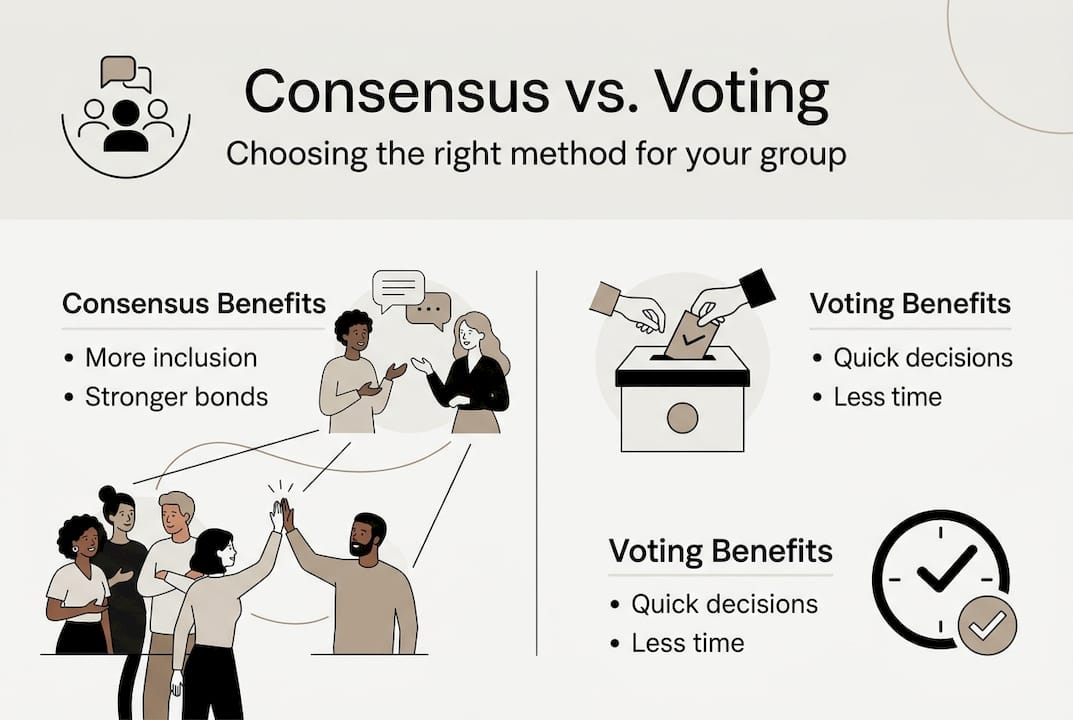
Before diving into methods, you need to understand what separates consensus from voting and when each approach works best for your friend group. Consensus seeks unanimous acceptability, meaning everyone agrees or at least no one strongly objects to the decision. This approach takes more time but ensures all needs get addressed. Voting, on the other hand, relies on majority rule to reach decisions faster, though it may leave some friends feeling unheard.
Both methods have clear strengths and weaknesses for casual groups. Voting is faster and efficient for time-sensitive decisions but risks marginalizing minorities, while consensus builds satisfaction and cohesion but can lead to paralysis in large or diverse groups. Small friend squads typically benefit from consensus when planning activities like weekend trips or choosing a new series to binge together, since everyone's buy-in matters for the vibe. Quick decisions like picking tonight's restaurant or settling on a game during a hangout often work better with voting.
Here's when to use each approach:
- Consensus works best for important plans where everyone's happiness matters, like choosing vacation destinations or planning someone's birthday celebration
- Voting suits time-crunched scenarios where you need a quick answer, such as deciding between two movies starting in 30 minutes
- Hybrid approaches combine both, using polls to narrow options then consensus for the final choice
- Consider group chat vs scheduling tools to understand which platform supports your decision style
The key is matching your method to the situation. Casual friend groups planning regular hangouts can explore best social group practices 2026 to find approaches that balance speed with inclusivity. Understanding these fundamentals helps you choose the right tool for each decision your squad faces.
Preparing for group consensus: tools and roles
Successful consensus starts long before anyone votes or voices an opinion. Your group needs the right tools and clearly defined roles to avoid the planning chaos that derails so many friend gatherings. Setting up this structure takes minimal effort but pays huge dividends in smoother decisions.
Start by gathering these essential tools:
- Polling apps like WhatsApp polls, Google Forms, or dedicated scheduling platforms for collecting preferences quickly
- Color cards or emoji equivalents for visual consensus methods that show agreement levels at a glance
- RSVP checklists or shared calendars to track who's confirmed and who's still deciding
- Group chat platforms with reminder features to nudge stragglers without manual follow-ups
Next comes the game changer: appointing a planner to suggest options and dates with firm RSVP deadlines. This single step prevents the endless group chat spiral where everyone waits for someone else to take charge. The planner doesn't dictate the decision but organizes the process, proposes concrete options, and enforces deadlines so discussions actually conclude.
Research shows that encouraging teams to select a leader improves performance by 25% in solving complex tasks. For casual groups, this leadership role enhances organization without killing spontaneity or reducing originality. Your designated leader simply keeps everyone focused and moving toward a decision.
| Role/Tool | Primary Function | Best For |
|---|---|---|
| Planner | Proposes options and enforces deadlines | Preventing decision drift |
| Polling Apps | Collects preferences quickly | Large groups or multiple options |
| Color Cards | Shows agreement levels visually | Small groups seeking consensus |
| Shared Calendar | Tracks availability and commitments | Scheduling-heavy decisions |
Pro Tip: Keep your plans simple whenever possible. Suggesting a potluck instead of choosing a restaurant eliminates half the decisions and makes consensus easier since everyone contributes what they want. Simple plans naturally generate faster agreement.
Once you've established these tools and roles, your group can cut planning time 40 percent compared to unstructured decision-making. The preparation phase might feel formal for a casual friend group, but it's actually what enables the relaxed, pressure-free planning you're after. Check out step-by-step group scheduling for detailed implementation guidance.
Executing easy consensus methods for casual groups
With your tools ready and roles assigned, it's time to run an actual consensus process that feels natural and keeps everyone engaged. The color card method stands out as particularly effective for small, casual groups who want genuine input without endless debate.
The color card consensus method uses green (agree), yellow (can live with), and red (work to improve) to suit casual groups and address minority concerns. In practice, you present an option like "Saturday brunch at 11am," and everyone responds with their color. Greens mean you're good to go, yellows indicate mild reservations but willingness to participate, and reds signal serious concerns that need discussion before finalizing.

For groups preferring digital methods, appointing a planner and using polls avoids endless chats and helps finalize casual plans. WhatsApp polls with firm 24-hour deadlines work brilliantly for quick decisions, while more complex choices benefit from Google Forms that let people rank preferences.
| Method | Speed | Inclusivity | Satisfaction | Best Use Case |
|---|---|---|---|---|
| Color Card Consensus | Moderate | High | Very High | Small groups, important decisions |
| Simple Voting | Fast | Moderate | Moderate | Time-sensitive, larger groups |
| Ranked Choice Poll | Moderate | High | High | Multiple options, diverse preferences |
| Leader Decision | Very Fast | Low | Variable | Urgent situations, trusted leader |
Follow these steps for smooth consensus building:
- Gather 2 to 4 concrete options with specific details like time, location, and cost so people know exactly what they're choosing
- Distribute color cards physically or use emoji reactions in your group chat as digital equivalents
- Collect responses within your stated deadline, sending one reminder to stragglers halfway through
- Discuss any yellow or red concerns briefly, asking those people what would move them to green
- Finalize the plan once you've addressed major concerns or reached clear majority support
This process typically takes 24 to 48 hours for casual plans, much faster than the week-long group chat marathons many friend groups endure. The key is respecting the structure: group scheduling social plans works best when everyone commits to responding within the timeframe.
Pro Tip: Set discussion time limits of 10 to 15 minutes for addressing concerns. This prevents planning fatigue while ensuring everyone feels heard. If concerns can't be resolved quickly, table that option and move to your backup choice.
The beauty of these methods lies in their flexibility. You can adapt the color card approach using thumbs up, thumbs sideways, and thumbs down in video calls, or create custom emoji reactions in your group chat. What matters is having a clear system that captures agreement levels beyond simple yes or no. Explore hassle-free group apps benefits and group chats streamline planning to discover platforms that support these consensus methods natively.
Verifying outcomes and handling common challenges
Reaching a decision is one thing, but confirming genuine consensus and navigating inevitable obstacles separates successful group planning from plans that fall apart. You need to verify that your outcome truly reflects group agreement and have strategies ready for common pitfalls.
Signs your group achieved real consensus include:
- General buy-in where most people express enthusiasm or at least contentment with the plan
- No major objections remaining after discussion, even if some mild preferences went unmet
- Positive mood in the group chat with people actively engaging about logistics rather than relitigating the decision
- Quick confirmation of attendance without hedging or vague "maybe" responses
Common challenges threaten even well-structured consensus processes. Endless discussion happens when groups lack clear facilitators or time limits, turning every decision into a philosophical debate. Dominant voices can steamroll quieter friends who hesitate to voice concerns publicly. Decision fatigue sets in when you've been planning for days and everyone just wants it over with, leading to rushed choices nobody really likes. Group paralysis strikes larger or more diverse friend groups where finding common ground feels impossible.
Practical fixes for these issues:
- Impose strict time limits of 10 to 15 minutes for discussing each option, using a timer if needed
- Rotate the facilitator role so different people guide discussions and no single voice dominates
- Collect anonymous votes through private polls when you sense social pressure affecting responses
- Break large groups into smaller decision-making units, then reconcile preferences
- Have a designated tiebreaker method agreed upon in advance, like the planner makes the final call
Group deliberation for just 10 minutes shifts preferences toward more equality through persuasion and social identity, making brief focused discussions surprisingly powerful for building genuine consensus.
This research validates keeping deliberations short and focused. You don't need hours of discussion to reach fair outcomes. In fact, extended debates often reduce decision quality as people dig into positions rather than genuinely considering alternatives.
Pro Tip: Balance inclusion with efficiency by recognizing when quick voting with leader input works better than full consensus. For larger groups or less critical decisions, a trusted planner making the call after brief input often satisfies everyone more than forced consensus that drags on.
Remember that consensus may risk paralysis in large or diverse groups, while voting is quicker but risks marginalizing minority views. Knowing this trade-off helps you choose the right approach for each situation. Sometimes the most inclusive choice is recognizing when consensus isn't working and switching to a faster method.
For persistent challenges, review group scheduling challenges explained and revisit step-by-step group scheduling to troubleshoot specific issues your squad faces. The goal isn't perfect consensus every time but a process that feels fair and keeps your friend group actually enjoying time together rather than dreading the planning phase.
Discover tools to simplify your social plans
You've learned powerful consensus methods, but implementing them consistently takes the right technology. Groop Labs offers a mobile app specifically designed to make group scheduling and consensus-building effortless for casual friend groups in 2026. The platform handles the logistics that bog down group chats while keeping the social vibe intact.
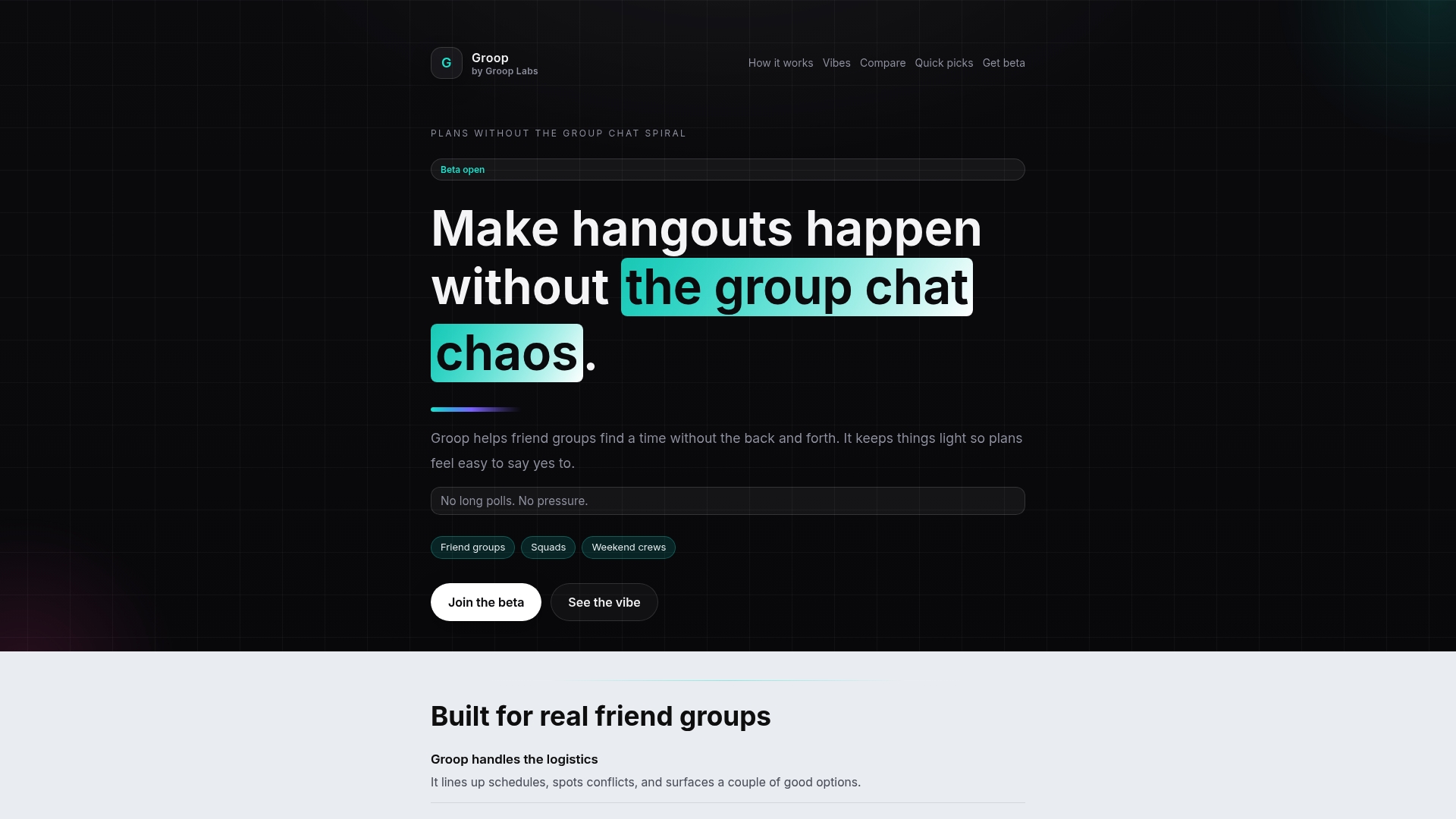
Grooop's lightweight scheduling tool reduces typical back-and-forth chaos by automatically lining up availability, surfacing conflicts, and presenting clear options for participants. You start a plan, the app handles the coordination complexity, and your friends get simple choices they can quickly accept. Features like built-in polls, smart reminders, and plan tracking eliminate the stress and last-minute scrambles that plague traditional group chat planning.
The interface focuses on keeping decisions relaxed and efficient, exactly what casual squads need for hangouts, study sessions, or weekend adventures. Instead of scrolling through hundreds of messages to figure out who said yes to what, everyone sees the current status at a glance. Explore best social group practices 2026 and hassle-free group apps benefits to see how the right tools transform social planning from a chore into a smooth experience.
FAQ
What is the easiest method for a small group to reach consensus?
The color card method is simple and inclusive for small groups, allowing everyone to express agreement or concerns easily. Using green for agree, yellow for can live with it, and red for needs work, you quickly see where the group stands without lengthy discussion. This visual approach addresses minority opinions while keeping decisions moving forward.
How can I avoid endless discussions when deciding with friends?
Set clear deadlines and assign a planner or leader to keep group discussions on track and decisions timely. Use polls to narrow down options quickly, giving people specific choices rather than open-ended questions. Implementing firm response windows of 24 to 48 hours with one reminder prevents the multi-day chat spirals that exhaust everyone. Check out best social group practices 2026 for additional time-saving strategies.
When should we use voting instead of consensus?
Voting is better for time-sensitive decisions or larger groups to avoid decision paralysis. Consensus suits smaller groups where inclusivity and cohesion matter more, like planning a close friend's birthday or choosing a shared vacation destination. If you're deciding something in the moment or your group exceeds six to eight people, voting typically produces faster, satisfactory results.
What role does a group leader play in social planning?
A leader organizes options, sets deadlines, and steers discussions to help finalize plans faster and keep everyone engaged. This person doesn't dictate decisions but facilitates the process, ensuring conversations stay focused and productive. Selecting a leader improves performance by 25% in solving group tasks, making it a simple change with significant impact on planning efficiency.