
Articles
Why group coordination matters: streamlining plans in 2026
Discover why 40% of social events fail due to poor coordination and learn proven strategies to streamline group planning, reduce stress, and get friends together effortlessly.

Why group coordination matters: streamlining plans in 2026

Coordinating social plans with friends shouldn't feel like solving a puzzle. Yet 40% of planned events are abandoned due to scheduling conflicts and communication breakdowns. This article reveals why coordination struggles happen and shares proven strategies to make planning effortless. You'll discover how lightweight tools and clear choices transform chaotic group chats into smooth, stress-free scheduling that gets everyone together.
Table of Contents
- Why Group Coordination Matters In Friend Groups
- Psychological Barriers And Decision Fatigue In Group Planning
- Common Misconceptions About Group Planning
- Effective Coordination Strategies And Tools
- Conceptual Framework For Understanding Coordination
- Conclusion: Making Coordination Work For You And Your Friends
- Streamline Your Social Plans With Groop Labs
Key takeaways
| Point | Details |
|---|---|
| Coordination failures are common | Poor scheduling causes 40% of social events to fall apart before they happen. |
| Decision fatigue blocks progress | Endless group chats create mental exhaustion that delays or derails plans entirely. |
| Structure improves outcomes | Clear scheduling methods boost attendance rates and preserve positive group dynamics. |
| Simple tools save time | Lightweight apps reduce planning friction and help groups decide faster with less stress. |
| Respect drives harmony | Honoring individual preferences while achieving collective goals maintains friendship quality. |
Why group coordination matters in friend groups
Effective coordination directly impacts how often you actually see your friends. When scheduling falls apart, social bonds weaken as missed hangouts accumulate. Friend group coordination isn't just about logistics; it shapes relationship quality and group satisfaction.
Research confirms that scheduling conflicts reduce participation significantly, with nearly half of intended gatherings never materializing. This pattern creates a cycle where people disengage from planning entirely, assuming events won't happen anyway. Breaking this cycle requires intentional coordination practices that respect everyone's time.
Consistent attendance strengthens friendships through shared experiences and reliability. When coordination works smoothly, groups maintain momentum and build traditions. Poor scheduling erodes trust as people feel their availability isn't valued or considered.
Key coordination benefits include:
- Reduced friction in scheduling conversations
- Higher show-up rates for planned activities
- Less frustration during the planning phase
- Stronger social connections through regular gatherings
- Better respect for individual schedules and preferences
The benefits of small group planning multiply when everyone feels heard and accommodated. Clear processes signal that the group values each member's participation equally. This foundation supports long-term friendship health and makes future coordination easier as trust builds.
Psychological barriers and decision fatigue in group planning
Your brain treats every scheduling decision as work, depleting mental energy with each exchange. Long group chats force dozens of micro-decisions about availability, preferences, and compromises. This cognitive load accumulates quickly, causing the frustration you feel after scrolling through 50 unread messages.

Studies show extended discussions increase misunderstandings by at least 35%, damaging the social atmosphere before anyone meets up. Each additional message thread creates opportunities for confusion about dates, times, or expectations. Groups often abandon plans simply because continuing the conversation feels harder than giving up.
Decision fatigue manifests as:
- Delayed responses to scheduling questions
- Preference for "whatever works" answers that don't actually help
- Irritation with seemingly simple coordination tasks
- Reduced enthusiasm for the planned activity itself
- Avoidance of initiating future plans
Pro Tip: Limit initial scheduling options to three specific choices rather than asking open-ended availability questions. This structure reduces cognitive load while still respecting preferences.
"The paradox of choice shows that too many options decrease satisfaction and increase anxiety, even in social contexts where flexibility seems desirable."
Simplifying decisions protects mental energy for enjoying the actual event. When planning feels effortless, people engage more willingly and maintain positive associations with group activities. Organizing group plans for stress-free hangouts starts with recognizing these psychological realities and designing around them.
Common misconceptions about group planning
Many people believe that leaving scheduling completely open yields better results. In reality, open-ended questions like "when is everyone free?" generate overwhelming response variety and prolong decision-making. Structured options paradoxically create more genuine flexibility by narrowing choices to workable solutions.
The assumption that more flexibility equals higher satisfaction doesn't hold up in practice. Research on decision-making shows that excessive options increase regret and second-guessing. Three well-chosen time slots outperform asking about general availability across two weeks.
Another myth suggests that lengthy group discussions build consensus and buy-in. Extended chats actually dilute commitment as people lose track of decisions or feel their input gets lost in noise. Clear proposals with simple yes/no responses create stronger agreement than debate-style planning.
Common false beliefs include:
- "Everyone needs to weigh in on every detail" (creates bottlenecks)
- "Spontaneous planning feels more authentic" (actually causes more cancellations)
- "Polls are too formal for casual friends" (structure reduces stress for everyone)
- "The person who cares most should just decide" (breeds resentment over time)
- "We'll figure it out closer to the date" (guarantees last-minute chaos)
These misconceptions lead groups to repeat ineffective patterns despite repeated frustration. Recognizing them helps break cycles of abandoned plans and coordination burnout. Better practices emerge when you challenge assumptions about how planning should work versus how it actually functions in practice.
Effective coordination strategies and tools
Lightweight scheduling apps transform group planning by automating the tedious parts of coordination. These tools surface conflicts immediately, eliminating the back-and-forth required to manually compare everyone's calendars. Group planning apps reduce stress by presenting clear options rather than forcing manual schedule reconciliation.
| Strategy | Traditional Method | Optimized Approach | Time Saved |
|---|---|---|---|
| Availability check | Group chat thread | Automated conflict detection | 75% |
| Option selection | Open discussion | Preset time slot voting | 60% |
| Final confirmation | Follow-up messages | Single acceptance click | 80% |
| Reminder sending | Manual texts | Automated notifications | 90% |
Clear communication paired with smart tools yields the best outcomes. Set a polling window with a deadline to prevent indefinite deliberation. This creates healthy urgency without pressure, helping groups commit faster.
Pro Tip: When introducing a scheduling tool to your friend group, frame it as "trying something to save everyone time" rather than criticizing current methods. Positive framing increases adoption.
Implementing best practices for social groups means:
- Starting with 2-3 specific date/time proposals
- Setting a 48-hour decision window for casual plans
- Using tools that show everyone's input transparently
- Respecting "no" responses without requiring explanations
- Confirming plans once with a simple reminder before the event
The key features of group chat apps include visual availability displays and one-tap responses. These elements remove friction from coordination while maintaining the personal feel of organizing with friends. Tools work best when they enhance rather than replace natural group dynamics.
Research demonstrates that scheduling tools reduce stress by handling logistics so people can focus on anticipating the gathering itself. The right approach balances structure with flexibility, creating space for spontaneity within a reliable framework.
Conceptual framework for understanding coordination
Group coordination fundamentally involves balancing collective goals with individual constraints. Every scheduling decision negotiates between what works for the group as a whole and what respects each person's circumstances. This tension isn't a problem to solve but a reality to manage thoughtfully.
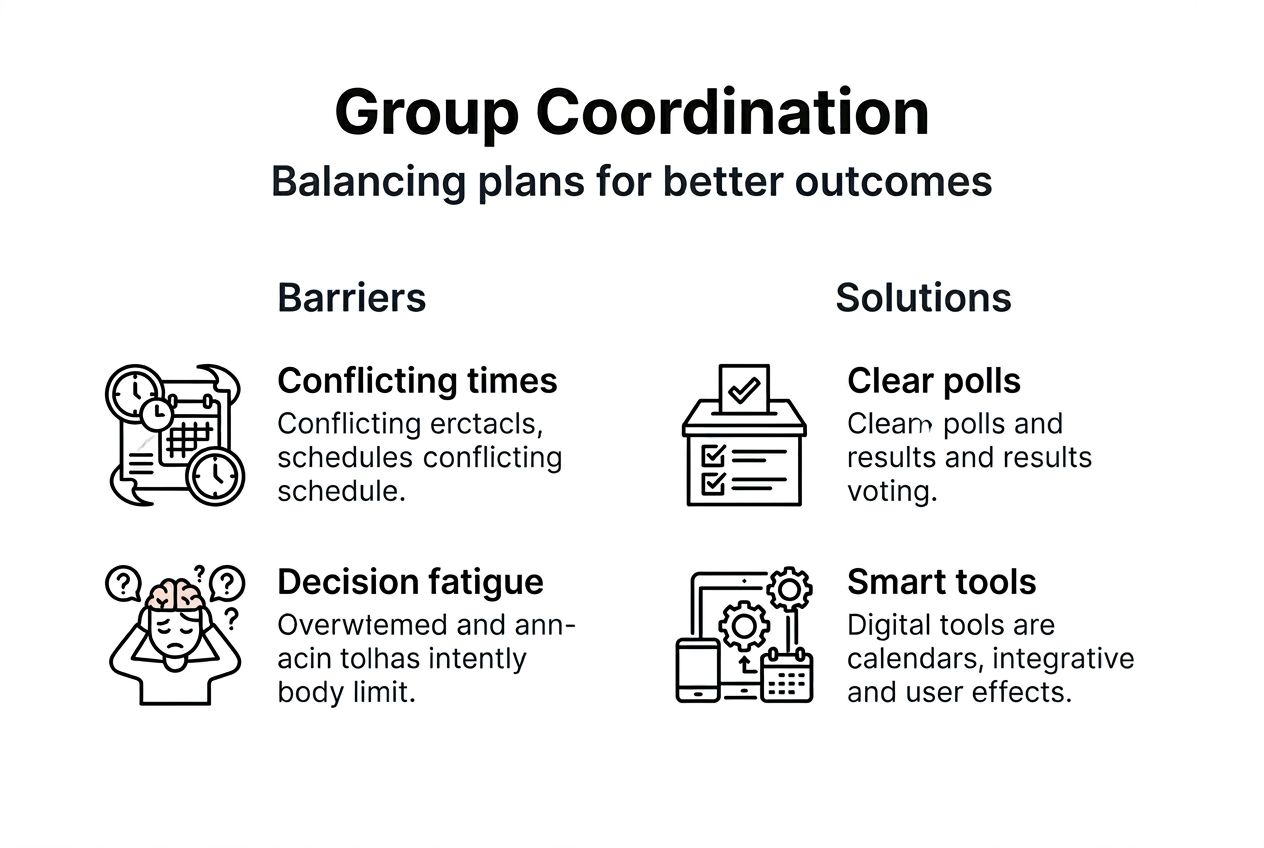
Effective frameworks make trade-offs explicit rather than hidden. When someone sees that a proposed time conflicts with two people's availability, they understand the context for choosing an alternative. Transparency reduces feelings of being ignored or devalued during planning.
| Coordination Element | Individual Impact | Collective Impact | Balance Point |
|---|---|---|---|
| Time flexibility | Personal schedule respect | Group momentum | Limited preset options |
| Decision authority | Voice in planning | Efficient outcomes | Structured input methods |
| Commitment level | Authentic availability | Reliable attendance | Clear yes/no responses |
| Preference sharing | Feeling heard | Reduced complexity | Priority ranking systems |
Think of coordination as a negotiation where success means everyone feels reasonably satisfied rather than perfectly happy. Seeking unanimous enthusiasm for every detail creates impossible standards. Accepting "good enough" unlocks progress while maintaining positive group dynamics.
Explicit preferences help groups converge on solutions faster than vague statements. Saying "I strongly prefer weekends" provides more useful information than "I'm pretty flexible." Clear communication about constraints and priorities enables better collective decision-making.
This framework applies across different group sizes and relationship types. Whether coordinating siblings, college friends, or activity partners, the same principles of transparent negotiation and balanced consideration create smoother planning experiences. Understanding these dynamics helps you design coordination processes that work with human psychology rather than against it.
Conclusion: making coordination work for you and your friends
Effective group coordination transforms social planning from a source of stress into a simple step before enjoyable experiences. By reducing decision fatigue through clear options, respecting individual preferences within structured processes, and using lightweight tools to handle logistics, you create space for genuine connection. Better coordination means more actual gatherings and stronger friendships.
Apply these insights to your next group plan:
- Propose 2-3 specific options instead of asking open questions
- Set a decision deadline to prevent endless deliberation
- Use tools that make availability transparent
- Accept that good enough beats perfect every time
- Focus mental energy on the event itself, not the planning
Your friend group deserves coordination that works as smoothly as your conversations. Small changes to planning habits yield significant improvements in how often you gather and how much everyone enjoys the process.
Streamline your social plans with Groop Labs
If coordination challenges have kept your friend group from hanging out as often as you'd like, Groop Labs offers purpose-built solutions designed specifically for casual social planning. Their lightweight scheduling tools eliminate the back-and-forth chaos while preserving your group's natural vibe and decision-making style.
Groop Labs' approach focuses on surfacing availability conflicts automatically and presenting clear choices that respect everyone's preferences. The platform handles logistics so you can focus on enjoying time together rather than managing endless message threads. Thousands of friend groups have discovered how stress-free hangout planning transforms their social lives.
Discover how group planning apps deliver measurable benefits by trying tools designed for exactly the coordination challenges your group faces. Simple changes to planning processes create dramatically better outcomes and more quality time with the people who matter most.
FAQ
How can casual friend groups reduce scheduling conflicts?
Identify common available times early using tools that automatically highlight conflicts across everyone's calendars. Limit initial options to three specific proposals rather than exploring all possibilities, which speeds consensus and reduces the mental load of comparing dozens of potential times.
What is decision fatigue and how does it affect group planning?
Decision fatigue occurs when prolonged discussions or too many choices exhaust your mental energy for making decisions. In group planning contexts, this manifests as delayed responses, reduced engagement, and eventual abandonment of coordination efforts as continuing feels harder than giving up.
Are more flexible scheduling options always better for group plans?
No, excessive flexibility actually increases decision fatigue and confusion among group members. Clear, limited choices help groups reach agreement faster and with less stress than open-ended availability questions that generate overwhelming response variety and prolong deliberation.
What tools work best for coordinating social activities among friends?
Lightweight scheduling apps with polling features streamline decisions by showing availability transparently and surfacing conflicts automatically. Choose platforms with intuitive interfaces that encourage participation from all members rather than complex systems that create new barriers to coordination.