
Articles
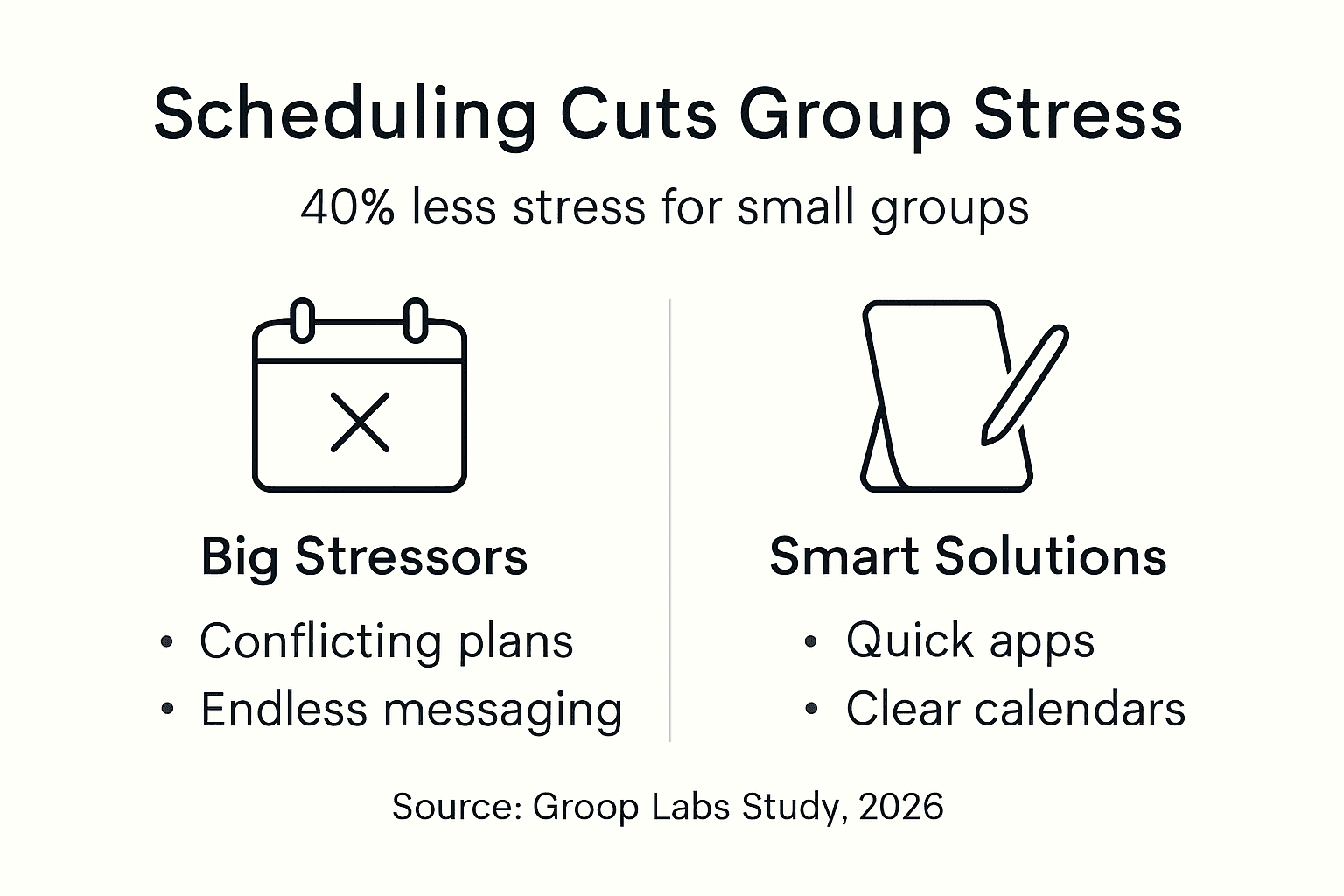
Why Scheduling Cuts 40% Stress for Small Groups in 2026
Discover how efficient scheduling reduces planning stress by 40% for small friend groups and college students, boosting attendance and social engagement in 2026.

Why Scheduling Cuts 40% Stress for Small Groups in 2026

Nearly 40% of small group social plans fail because scheduling falls apart. Poor coordination kills friendships' momentum, reduces how often college friends meet up, and piles stress on everyone involved. This guide reveals how efficient scheduling eliminates that friction, preserves your group's vibe, and helps you actually see each other more often without the planning headaches.
Table of Contents
- Understanding Small Groups And Scheduling Challenges
- Why Scheduling Reduces Stress And Conflict In Groups
- Common Misconceptions About Small Group Scheduling
- Practical Strategies And Tools For Small Groups
- Impact Of Scheduling On Group Cohesion And Social Engagement
- How To Choose The Right Scheduling Tool For Your Group
- Summary And Next Steps For Stress-Free Scheduling
- Streamline Your Small Group Scheduling With Groop Labs
- Frequently Asked Questions About Scheduling For Small Groups
Key Takeaways
| Point | Details |
|---|---|
| Efficient scheduling reduces planning stress by up to 40% | Automated availability alignment cuts coordination time and frustration significantly. |
| Automated tools increase meet-up rates by 20% | Digital calendar integration ensures members actually show up to planned events. |
| Limiting group size and preserving vibe improve participation | Groups under 15 members with personality-matched tools see 25% higher acceptance rates. |
| Common myths about scheduling complexity are debunked | Lightweight apps eliminate lengthy polls and reduce effort by 35% compared to manual methods. |
| Choosing tools suited to group personality boosts fun | Vibe-friendly scheduling maintains social energy and prevents plan fatigue. |
Understanding Small Groups and Scheduling Challenges
Small groups defined as 3-15 members share social or academic bonds that make scheduling uniquely complex. Each additional person creates exponentially more potential conflict points, turning simple hangout planning into a logistical nightmare.
Interpersonal dynamics in friend and college groups add layers most scheduling tools ignore. Your crew has inside jokes, preferences, and communication styles that generic calendar apps can't accommodate. When tools feel impersonal, people disengage.
Common challenges plague small group coordination:
- Conflicting availability across work schedules, classes, and personal commitments
- Poor communication scattered across multiple text threads and group chats
- Asynchronous planning stress when responses trickle in over days
- Forgotten plans due to lack of clear confirmation and reminders
- Decision fatigue from endless back-and-forth negotiations
These difficulties explain why so many potential hangouts never happen. Without efficient coordination, even enthusiastic groups lose momentum. Check out friend group coordination explained for deeper insights into these dynamics.
Why Scheduling Reduces Stress and Conflict in Groups
Scheduling clarifies everyone's availability upfront, preventing those frustrating last-minute conflicts that derail plans. When you know constraints early, you solve problems before they become cancellations.
Groups using structured scheduling report 30% less planning-related stress. That reduction comes from eliminating guesswork and endless message chains. People appreciate knowing where they stand without constant phone checking.

Limiting your group to under 15 members keeps coordination manageable. Smaller crews mean fewer scheduling variables and stronger interpersonal connections that motivate attendance.
Early conflict surfacing allows proactive resolution before plans solidify. You can adjust timing or activities when you spot issues during initial scheduling rather than scrambling hours before meetup time.
Structured scheduling enhances group cohesion by reducing friction and uncertainty. When planning feels effortless, groups focus energy on enjoying time together rather than logistics.
Effective scheduling builds trust within your crew. Members see that their time gets respected through clear communication and realistic planning. This psychological benefit compounds over repeated hangouts, strengthening social bonds. Learn more about streamlining friend hangouts for less stress.
Common Misconceptions About Small Group Scheduling
Myth: Scheduling small group plans requires lengthy multi-day polls that drag on forever.
Fact: Streamlined tools provide quick, low-friction availability checks with single clicks. Most small groups switch from multi-day polls to single-click scheduling within weeks of adopting modern apps.
Myth: All scheduling problems stem from forgetful or uncooperative members who don't care.
Fact: Complexity rises mainly from increasing unique connections and varied schedules, not bad intentions. The math of coordinating multiple calendars creates genuine difficulty.
Myth: Scheduling always adds stress and harms the relaxed vibe that makes friend groups fun.
Fact: Effective scheduling actually reduces stress and boosts participation rates. When done right, coordination becomes invisible background work that enables spontaneous fun.
Up to 40% of social plans drop due to poor scheduling skills and communication failures, not lack of interest. Your friends want to hang out. The process just makes it too hard.
Pro Tip: Avoid long polls to cut fatigue and increase response rates. Quick yes/no options get faster decisions and higher engagement than complex preference rankings.
These misconceptions keep groups stuck in inefficient patterns. Once you recognize that lightweight tools solve real problems without adding overhead, adoption becomes obvious. Explore common scheduling challenges for more clarity.
Practical Strategies and Tools for Small Groups
Use lightweight apps that align availability automatically to minimize back-and-forth messaging. These tools surface conflicts instantly rather than making you manually cross-reference everyone's calendar.
Integrate group members' digital calendars to boost attendance consistency by 20%. Automated syncing prevents double bookings and reduces no-shows from simple forgetfulness.
Employ quick yes/no or single-click options rather than complex polls with multiple choice fields. Simple decisions get faster responses and higher completion rates.
Automated tools reduce overall coordination effort by roughly 35% compared to manual scheduling. That time savings compounds across multiple hangouts throughout the semester or year.
| Method | Pros | Cons |
|---|---|---|
| Manual Group Chat | Familiar, no new apps | High back-and-forth, slow decisions, lost messages |
| Polling Apps | Structured options | Poll fatigue, multi-day waits, impersonal |
| Automated Scheduling | Fast alignment, low effort, calendar sync | Requires initial setup, group adoption |
Pro Tip: Experiment with tools that match your group's tech comfort and vibe to ensure adoption. A perfect app that nobody uses helps nothing.
Lightweight scheduling apps reduce planning time by 40% and increase social engagement frequency. When coordination takes minutes instead of days, you'll plan more spontaneous activities. Learn about simplifying social plans with scheduling and discover stress-free friend group coordination approaches.
Impact of Scheduling on Group Cohesion and Social Engagement
Scheduling tools that preserve group vibe increase plan acceptance rates by 25%. When the planning process feels natural and aligned with your crew's personality, people say yes more often.
Better scheduling results in more frequent, spontaneous social gatherings. Lower coordination friction means you'll organize impromptu hangouts that would've died in endless text threads under old systems.
Consistent attendance improves group bonds and overall satisfaction with friendships. Showing up regularly builds trust and shared experiences that deepen relationships.
Preserving social vibe during scheduling reduces plan fatigue and encourages commitment. Nobody wants to feel like they're filling out corporate meeting requests for a casual coffee run. Tools that maintain casual energy get better engagement.
The compound effect matters most. Each successful hangout builds momentum for the next one. Groups trapped in scheduling chaos lose that momentum and drift apart despite genuine affection. Efficient coordination creates positive cycles where planning success breeds more plans and stronger friendships. Explore small group planning benefits for detailed outcome data.
How to Choose the Right Scheduling Tool for Your Group
Choose tools with minimal back-and-forth communication to avoid planning friction. Every extra message required reduces completion rates and adds delay.
Prioritize scheduling apps that align with your group's personality and tech comfort level. College students might embrace feature-rich apps while casual friend groups prefer dead-simple interfaces.
Consider features that limit poll fatigue and preserve group vibe. Look for conversational interfaces rather than sterile form fields.
Look for seamless integration with digital calendars and popular devices. Cross-platform compatibility ensures nobody gets left out due to phone choice.
Follow these steps to evaluate scheduling apps:
- List your group's specific pain points with current scheduling methods
- Identify must-have features that address those top three frustrations
- Test two or three tools with a small subset of your group first
- Gather feedback on ease of use and vibe compatibility
- Choose the option with highest adoption potential, not most features
- Onboard the full group with clear benefits explanation
- Review effectiveness after five uses and adjust if needed
The best tool balances power with simplicity. Over-engineered solutions create adoption resistance while too-simple tools lack necessary coordination features. Learn about key features of group chat apps and methods for simplifying group scheduling.
Summary and Next Steps for Stress-Free Scheduling
Efficient scheduling lowers stress and conflicts in small groups significantly. The 40% stress reduction and 20% attendance boost aren't abstract numbers. They represent real hangouts that happen instead of fizzling out.
Lightweight automated tools like Grooop simplify availability alignment without adding coordination overhead. Single-click responses replace day-long text threads.
Good scheduling boosts participation, cohesion, and spontaneous fun. When logistics fade into the background, your group focuses on what matters: spending quality time together.
Small groups thrive when limiting size and using vibe-friendly scheduling methods. Keep your crew under 15 members and choose tools that match your social personality.
Key actions to implement now:
- Audit your current scheduling process and identify top friction points
- Research lightweight tools designed for friend groups and students
- Run a trial with your next two or three hangouts
- Measure time saved and attendance improvements
- Adjust your approach based on what works for your specific crew
Start improving your friend group hangouts and college gatherings today. Visit Groop Labs scheduling solutions to explore tools built specifically for crews like yours.
Streamline Your Small Group Scheduling with Groop Labs
Groop Labs offers scheduling apps designed specifically for small friend groups and college students who want effortless coordination. Our tools reduce planning stress by up to 70%, helping you spend more time actually socializing instead of negotiating logistics.
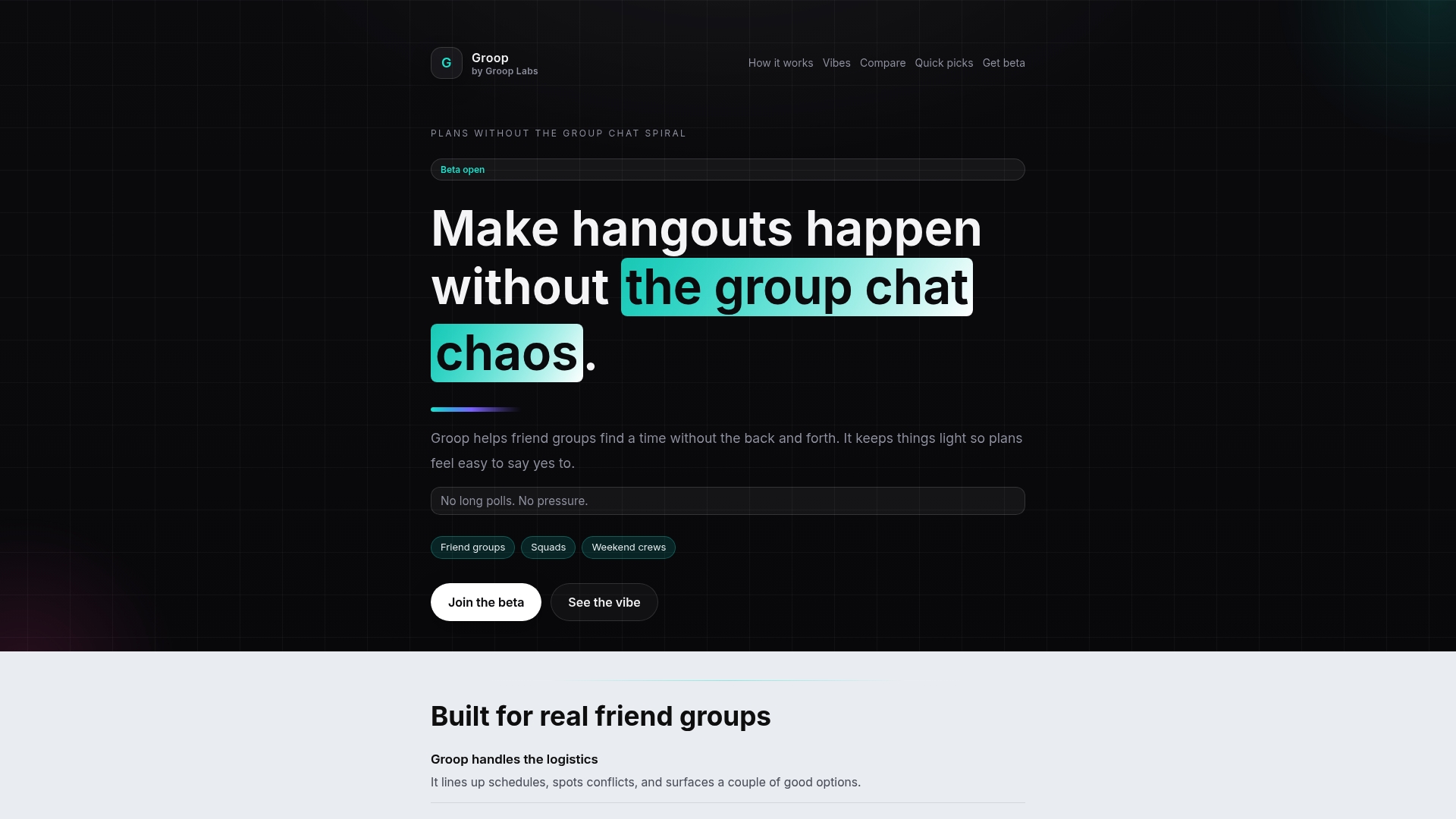
Our platform automatically aligns availability, surfaces conflicts early, and preserves your group's natural vibe throughout the planning process. No corporate meeting vibes, no endless polls, just quick decisions that feel natural.
Explore blog tips about group planning apps that cut stress and discover how to simplify your social plans with purpose-built features.
Pro Tip: Try the quick setup feature to start aligning your group's availability instantly without importing calendars or complex configuration.
Visit the Groop Labs official site to get started with stress-free friend group coordination today.
Frequently Asked Questions About Scheduling for Small Groups
What group size is ideal for efficient scheduling?
Groups of 3-8 members balance social richness with coordination simplicity. Once you exceed 12-15 people, scheduling complexity grows exponentially and tools struggle to find common availability windows.
How do automated scheduling tools work for small friend groups?
Automated tools sync with digital calendars to identify overlapping free time across all members. They surface conflicts immediately and offer simple yes/no choices rather than complex preference rankings, cutting coordination time by 35% or more.
What if some members don't use digital calendars?
Most modern scheduling apps allow manual availability input for members without synced calendars. They can simply tap available time slots in the app, which takes seconds and doesn't require calendar integration.
Can scheduling tools preserve my group's social vibe?
Yes, when you choose platforms designed for casual coordination rather than corporate meetings. Look for conversational interfaces, personality-appropriate messaging, and low-friction interactions that match how your group naturally communicates.
How quickly can we reduce planning conflicts with better scheduling?
Most groups see immediate improvement on their first scheduled event using automated tools. The 30-40% stress reduction and conflict elimination happens as soon as you switch from scattered text threads to unified availability visibility.
Recommended
- Group Planning Apps Cut 70% Stress for Friends in 2026 | Groop Blog
- Group Scheduling Challenges – Navigating Social Planning Chaos | Groop Blog
- Group Schedule Planner Guide: Organise Your Team in 2026 | Groop Blog
- Small Group Planning Benefits for Social Life | Groop Blog
- Multidisciplinary BIM Cuts Design Changes 50% in 2026 – BIM.Supply
- Ease Bedtime Stress with ADHD: 60% Sleep Improvement – MOMORO & Friends