
Articles
Why Streamline Friend Hangouts: Less Stress, More Fun
Streamlining friend hangouts saves time, boosts connections, and reduces group chat chaos. See how social scheduling apps reshape group plans.

Why Streamline Friend Hangouts: Less Stress, More Fun

Trying to gather friends for a group hangout at your university often turns into endless messages and conflicting schedules. Planning becomes stressful when everyone has different commitments, leaving social time squeezed by busy lives. Digital coordination gives American students a way to simplify these plans, making group hangouts less complicated and more enjoyable. You’ll see how modern methods help cut planning stress, strengthen group bonds, and create space for more fun connections.
Table of Contents
- What Streamlining Friend Hangouts Means
- Common Planning Issues in Friend Groups
- Core Features of Social Scheduling Apps
- Impact on Friend Group Cohesion
- Risks, Downsides, and Alternatives
Key Takeaways
| Point | Details |
|---|---|
| Streamlined Coordination Enhances Enjoyment | Simplifying planning logistics allows friends to focus more on social experiences rather than organization. |
| Social Scheduling Apps Improve Inclusivity | Utilizing digital tools promotes equal participation and clear communication among group members. |
| Risks of Digital Interaction Should Be Managed | Balancing technology use with spontaneous, in-person interactions is crucial to maintain genuine friendships. |
| Shared Planning Responsibilities Foster Engagement | Rotating planning duties among friends helps build a sense of community and investment in group activities. |
What Streamlining Friend Hangouts Means
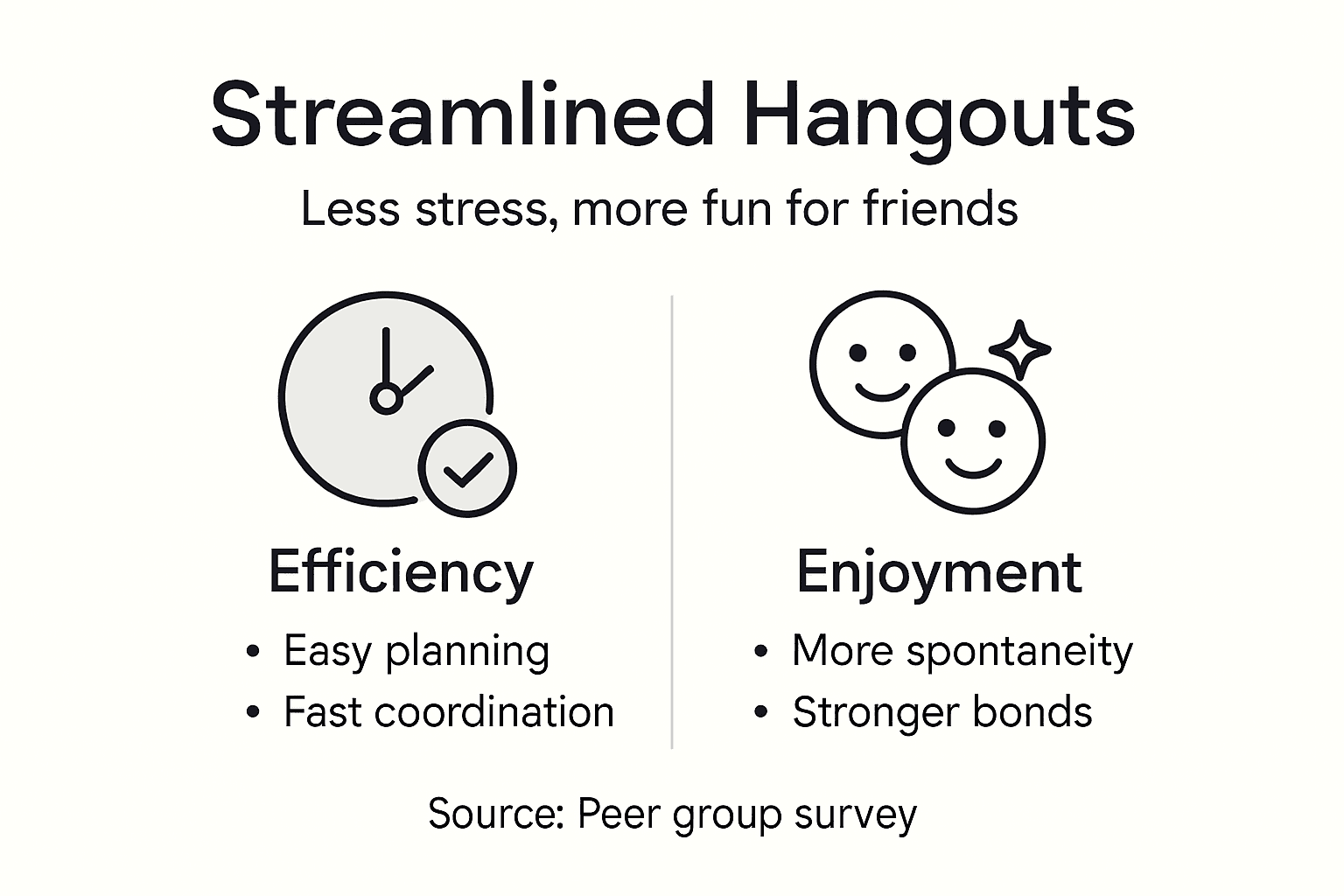
Streamlining friend hangouts represents a modern approach to social coordination that transforms how young adults plan and experience group activities. At its core, streamlining means simplifying social logistics to reduce stress and maximize enjoyment. Digital coordination now allows friends to connect and plan more efficiently than ever before.
The concept involves several key elements that make group planning smoother:
- Reducing communication complexity
- Minimizing scheduling conflicts
- Enabling faster decision-making
- Creating more flexible social interactions
Digital social coordination has revolutionized how friend groups interact, allowing them to navigate busy schedules and diverse preferences with unprecedented ease. Rather than spending hours in group chats or endless text exchanges, modern friend groups can quickly align their availability and interests.
The ultimate goal of streamlining isn't just efficiency—it's about preserving the fun and spontaneity of hanging out. By reducing logistical friction, friends can spend more time enjoying each other's company and less time negotiating plans. Social technology now acts as a bridge, not a barrier, connecting people more seamlessly than traditional communication methods.
Pro tip: Start using shared digital tools that allow real-time availability tracking to cut down on planning time and increase actual hangout moments.
Common Planning Issues in Friend Groups
Friend groups encounter numerous challenges when trying to coordinate social gatherings, creating significant barriers to smooth and enjoyable interactions. Complex scheduling dynamics often derail even the most well-intentioned plans, making group hangouts feel more like a logistical nightmare than a fun experience.
The most prevalent planning issues typically include:
- Conflicting personal schedules
- Varied individual preferences and interests
- Uneven participation levels
- Communication breakdowns
- Financial constraints
- Transportation challenges
Undergraduate social groups particularly struggle with coordination complexity. Different commitment levels, varying availability windows, and diverse personal interests create significant friction in planning. Some group members might be highly motivated to meet, while others remain passive or noncommittal, leading to frustrating planning cycles that often result in canceled or poorly attended gatherings.

Technology has attempted to address these challenges, but human dynamics remain complicated. Communication platforms can help, but they don't automatically solve deeper issues like misaligned expectations or inconsistent social engagement. Understanding these underlying dynamics is crucial for groups hoping to maintain strong social connections and enjoyable shared experiences.
Pro tip: Establish a rotating planning responsibility system where different group members take turns organizing hangouts to distribute the coordination burden and increase collective investment.
Core Features of Social Scheduling Apps
Social scheduling apps have revolutionized how friend groups coordinate and plan gatherings by offering powerful digital tools that simplify the complex process of group organization. Cross-platform scheduling capabilities transform the way young adults manage their social interactions, providing intuitive solutions to age-old coordination challenges.
The most critical features of effective social scheduling apps include:
- Visual content calendars for plan overview
- Real-time availability tracking
- Automated group notifications
- Conflict resolution mechanisms
- Flexible rescheduling options
- Multi-platform integration
- Personalized preference settings
Undergraduate social networks particularly benefit from collaborative planning tools that allow seamless communication and decision-making. These apps go beyond simple scheduling by creating interactive environments where group members can propose times, vote on preferences, and reach consensus without endless text message chains or email threads.
Modern scheduling platforms understand that social coordination is more than just picking a time and place. They incorporate smart features like preference matching, budget considerations, and transportation logistics to make hangout planning feel less like a chore and more like an exciting social experience. The goal is to reduce friction, increase spontaneity, and ultimately help friends spend more quality time together.
Pro tip: Choose a scheduling app that allows custom preference settings and integrates with multiple communication platforms to maximize group participation and minimize planning stress.
Here's a concise summary of how social scheduling apps impact group coordination compared to traditional planning methods:
| Criterion | Traditional Planning | Social Scheduling Apps |
|---|---|---|
| Coordination Speed | Slow, manual | Instant, automated |
| Inclusivity | Prone to exclusion | Promotes equal participation |
| Decision-Making Process | Lengthy discussions | Quick consensus features |
| Adaptability to Changes | Difficult rescheduling | Flexible adjustment tools |
| Communication Clarity | Possible misunderstandings | Clear, centralized updates |
Impact on Friend Group Cohesion
Social coordination plays a critical role in maintaining and strengthening friend group dynamics. Group communication dynamics significantly impact how friends perceive their sense of belonging and connection, making streamlined planning more than just a logistical convenience.
The key elements of group cohesion influenced by effective scheduling include:
- Reducing communication barriers
- Preventing feelings of exclusion
- Creating shared decision-making experiences
- Establishing transparent planning norms
- Encouraging more frequent interactions
- Supporting individual and collective preferences
Undergraduate social networks are particularly sensitive to group coordination challenges. When planning becomes complicated or opaque, some members might feel marginalized or less valued. Streamlined scheduling tools help democratize the planning process, ensuring that every group member has an equal opportunity to contribute, propose ideas, and feel heard.
Moreover, consistent and fair planning mechanisms build trust and mutual respect within friend groups. By removing friction from social organizing, these tools transform hangout planning from a potential source of stress into an inclusive, collaborative experience. The result is not just more frequent gatherings, but deeper, more meaningful connections that extend beyond simple logistical coordination.
Pro tip: Rotate planning responsibilities among group members to ensure everyone feels equally involved and valued in the social coordination process.
Risks, Downsides, and Alternatives
Digital tools for social coordination offer tremendous benefits, but they are not without significant potential drawbacks. Technology-mediated social interactions can introduce complex challenges that undermine the very connections they aim to enhance, creating unexpected social dynamics that require careful navigation.
Key risks and potential downsides include:
- Loss of spontaneous interaction
- Reduced in-person communication skills
- Privacy and data security concerns
- Digital interaction fatigue
- Potential for misunderstandings
- Over-reliance on technological mediation
- Diminished emotional nuance in communication
Digital social coordination represents a double-edged sword for undergraduate friend groups. While these tools can streamline planning, they may simultaneously erode the rich, unscripted moments that define genuine friendships. The convenience of scheduling apps can inadvertently replace organic, surprise-driven social interactions with overly structured, algorithm-driven encounters.
Alternatives to pure digital coordination require a balanced approach. This might involve implementing "tech-free" hangout windows, establishing group communication norms that prioritize face-to-face interactions, or creating deliberate spaces where digital tools take a backseat to spontaneous, unmediated social experiences. The goal is not to abandon technology, but to use it strategically without letting it completely dictate social dynamics.
Pro tip: Establish periodic "analog hangouts" where digital scheduling tools are completely forbidden, forcing more organic, spontaneous group interactions.
Use this table to understand potential drawbacks of digital social coordination and ways to mitigate them:
| Risk/Downside | Impact on Group | Balancing Strategy |
|---|---|---|
| Loss of Spontaneity | Less unexpected fun | Schedule "tech-free" hangouts |
| Digital Fatigue | Social burnout | Limit app use per gathering |
| Privacy Concerns | Data vulnerability | Adjust app privacy settings |
| Over-Reliance on Technology | Weakened real interactions | Prioritize face-to-face plans |
Simplify Your Friend Hangouts with Grooop and Enjoy More Fun
The article highlights common challenges in coordinating friend group hangouts like conflicting schedules, communication breakdowns, and planning fatigue. If you want to reduce the typical stress of deciding when and where to meet while keeping things spontaneous and pressure-free, Grooop offers a practical solution. This lightweight mobile app focuses on streamlining social planning by giving your group clear, straightforward options, automatically tracking everyone's availability, and handling conflicts before they become headaches. It preserves the group's vibe by making decision-making easy and natural for every member.
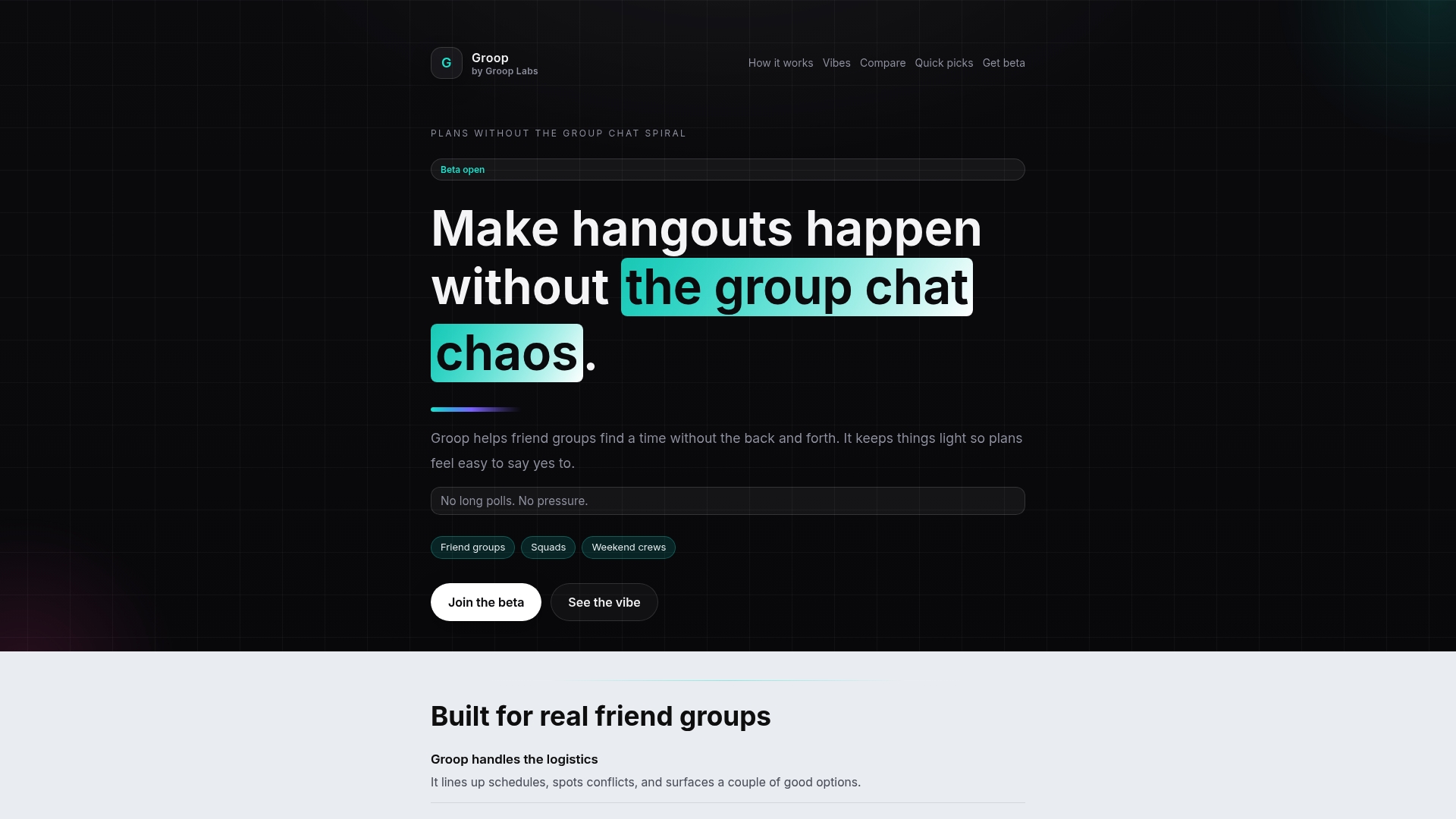
Ready to spend less time planning and more time enjoying your get-togethers? Discover how Grooop can transform your friend hangouts by cutting down the back-and-forth chaos and helping you organize casual meetups, study sessions, or outings effortlessly. Visit Grooops official site now to experience hassle-free coordination. Learn more about how Grooop keeps social planning light and effective on the landing page. Start streamlining your friend group’s plans today—because hangouts should be about fun, not frustration.
Frequently Asked Questions
What does streamlining friend hangouts mean?
Streamlining friend hangouts involves simplifying the process of planning and coordinating group activities to reduce stress and enhance enjoyment through digital tools and better communication.
What common issues do friend groups face when planning hangouts?
Friend groups often experience conflicting schedules, varied interests, uneven participation levels, communication breakdowns, and financial constraints, making coordination challenging.
How can social scheduling apps improve group coordination?
Social scheduling apps enhance coordination by offering features like real-time availability tracking, conflict resolution mechanisms, and automated notifications, making it easier for friends to plan and organize gatherings.
What are some potential downsides of relying on digital coordination for social interactions?
While digital tools streamline planning, they may reduce spontaneous interactions and in-person communication skills, lead to digital fatigue, and create privacy concerns. It's important to maintain a balance between technology and genuine social experiences.