
Articles
Small group planning checklist: easy steps for stress-free gatherings
Use this small group planning checklist to organize stress-free hangouts and study sessions with easy, actionable steps your whole crew can follow.

Small group planning checklist: easy steps for stress-free gatherings

TL;DR:
- Using a structured checklist improves coordination and reduces last-minute chaos in group plans.
- Clarifying roles, preferences, and backup options ensures a smooth and inclusive experience.
- Tools like apps and polls streamline logistics and help accommodate everyone's needs.
Getting everyone on the same page for a group hangout can feel like herding cats. Someone's always busy, another person hasn't checked the group chat in days, and suddenly a simple outing turns into a week-long negotiation. Sound familiar? The good news is that a structured, field-tested planning checklist can completely change how your crew organizes activities, whether it's a study session, a weekend hike, or a casual dinner. In this guide, we break down every actionable step you need to coordinate small group plans smoothly, reduce last-minute chaos, and actually enjoy the process of getting together.
Table of Contents
- Define the group and set your purpose
- Nail down logistics: Dates, interests, and budgets
- Distribute roles, responsibilities, and backup plans
- The ultimate small group planning checklist (with comparison table)
- Why most group planning checklists miss the human factor
- Make group planning easy with Groop Labs
- Frequently asked questions
Key Takeaways
| Point | Details |
|---|---|
| Keep your group small | Groups of 3 to 5 make coordination and participation easy and fun. |
| Clarify plans early | Agree on the purpose, date, and costs upfront to prevent confusion. |
| Divide tasks for success | Assign roles and have backup plans to keep things running smoothly. |
| Prioritize communication | Using group chats and polls helps include all voices and avoids misunderstandings. |
Define the group and set your purpose
With the goal of smoother social plans in mind, begin by setting the foundation: figure out who's involved and what you actually want to do. This first step sounds obvious, but skipping it is where most group plans fall apart before they even start.
Before you send a single message, get clear on the why behind the gathering. Is this a chill hangout, a birthday celebration, a study group, or an outdoor adventure? Knowing your purpose shapes every decision that follows, from the venue to the vibe. It also prevents that awkward moment when half the group shows up expecting a low-key night and the other half wants to go all out.
Group size matters more than people realize. The benefits of small group planning are real: smaller groups communicate better, make decisions faster, and generally have more fun together. Research shows that the ideal group size is 3 to 5 members for effective coordination and participation in both social and study settings. Larger groups introduce more scheduling conflicts, more opinions, and more chances for someone to feel left out.
Trios, in particular, come with their own quirks. They can be incredibly close-knit, but they also risk leaving one person feeling like the odd one out if communication isn't intentional. Larger groups of six or more often split into smaller cliques naturally, which can dilute the shared experience.
Here's a quick numbered checklist to lock in your group foundation:
- Decide who's in. Name every person you want to invite before reaching out.
- Set the purpose. Write one sentence describing what you want this gathering to be.
- Check initial availability. A quick pulse check before full planning saves wasted effort.
- Confirm buy-in. Make sure everyone actually wants to participate, not just feels obligated.
- Set expectations early. Share the general idea so no one is surprised by the plan.
"The best group plans start with clarity, not a group chat. Know who's in and what you're doing before the logistics begin."
Confirming buy-in early is especially important. People are far more likely to show up and stay engaged when they feel genuinely included in the planning process from the start.
Nail down logistics: Dates, interests, and budgets
Now that you have your group set and purpose in mind, the next step is to align everyone on the practical details. This is where most plans either come together or quietly fall apart.

Collecting availability doesn't have to be painful. Simple tools like Doodle polls or even a well-organized group chat thread can surface the best dates quickly. The key is to give people a limited set of options rather than asking open-ended questions like "when are you free?" Open questions lead to endless back-and-forth. Narrow it down to two or three date options and let people vote.
Beyond dates, you need to align on interests and budget. Not everyone has the same financial comfort level, and assuming everyone can spend the same amount is a fast track to awkward tension. Setting a clear budget early prevents surprises and helps you choose activities that actually work for everyone.
Here's what to cover during the logistics phase:
- Preferred dates and times: Use polls or group chat apps to collect votes quickly.
- Activity preferences: Ask for two or three ideas from each person to keep options realistic.
- Budget range: Set a per-person range everyone agrees on before booking anything.
- Transportation needs: Who needs a ride? Who's driving? Settle this early.
- Dietary or physical considerations: Note any food allergies, mobility needs, or preferences upfront.
- Backup activity: Always have a plan B in case the first choice falls through.
Pro Tip: When using a group chat for planning, pin the key details like date, location, and budget at the top of the thread. This way, no one has to scroll back through 200 messages to find the basics.
Choosing inclusive activities is also worth the extra thought. An escape room is fun for most people, but it might not work for someone with anxiety. A long hike sounds great until you realize one friend has a knee issue. Asking upfront takes two minutes and saves a lot of discomfort later.
Distribute roles, responsibilities, and backup plans
With logistics set, the real secret to stress-free planning is knowing who's doing what and preparing for the unexpected. When everyone assumes someone else is handling the details, things slip through the cracks.
Assigning roles doesn't have to feel formal or corporate. Think of it as just making sure the bases are covered. A few key roles go a long way:
- The coordinator: One person owns the overall plan and keeps things moving. This doesn't mean doing everything, just making sure nothing gets dropped.
- The activity lead: This person researches and confirms the main activity, whether that's booking a restaurant, finding a trail, or setting up a movie night.
- The budget tracker: Someone keeps an eye on costs and makes sure the group stays within the agreed range.
- The reminder person: Group chats get noisy. Having one person send a friendly reminder 24 hours before the event dramatically reduces no-shows.
Smart group event workflows always include a backup plan. Weather changes, venues close last minute, and people cancel. Having a ready alternative means the whole plan doesn't collapse when one thing goes sideways.
Pro Tip: When building your backup plan, choose something that requires zero additional coordination, like a home hangout or a nearby park. The simpler the backup, the easier it is to pivot.
Handling personality conflicts is another piece of this puzzle. Some people in your group might be introverts who get drained by loud, high-energy settings. Others might thrive on that energy. Assigning tasks thoughtfully and choosing activities with built-in downtime helps balance these dynamics without making anyone feel singled out. The best group plans leave room for people to engage at their own comfort level.
Using the right group planning tools can also make role distribution much easier, especially when everyone can see who owns what without a long explanation.
The ultimate small group planning checklist (with comparison table)
To make this process foolproof, here's a complete step-by-step checklist you can use for any small group plan, plus a table to help you prioritize the essentials.
Using a dedicated group planning app can help you track these steps without losing anything in a crowded chat thread. That said, even a simple shared note or doc works if your group prefers it.
Full small group planning checklist:
- Define the group and confirm everyone's in.
- Set the purpose and general vibe of the gathering.
- Collect availability using a poll or group chat.
- Agree on a budget range per person.
- Choose an inclusive activity with a backup option.
- Assign roles: coordinator, activity lead, budget tracker, reminder person.
- Confirm the venue or location and make any necessary reservations.
- Share logistics with the full group: date, time, location, what to bring.
- Send a reminder 24 hours before.
- Follow up after the event to celebrate what worked and note what to improve.
Now, not every step carries equal weight. Some are absolutely mission-critical, while others are nice to have. Here's a quick comparison:
| Planning step | Priority level | Why it matters |
|---|---|---|
| Confirm attendees | Mission-critical | No group, no plan |
| Set a budget | Mission-critical | Prevents awkward surprises |
| Collect availability | Mission-critical | Locks in the date |
| Assign roles | High value | Prevents tasks from slipping |
| Choose inclusive activity | High value | Keeps everyone comfortable |
| Build a backup plan | High value | Saves the day when things shift |
| Send reminders | Good to have | Reduces last-minute dropouts |
| Post-event follow-up | Good to have | Improves future plans |
Research on trio and group dynamics shows that some groups thrive with structured agendas and clear roles, while others prefer a more flexible, delegated approach. The checklist above works for both styles. You can follow every step tightly or use it as a loose guide, depending on what fits your crew.
Why most group planning checklists miss the human factor
Here's the honest truth: a checklist is only as good as the people using it. You can follow every step perfectly and still end up with a group hangout that feels off. That's because most planning guides focus entirely on logistics and completely ignore group chemistry.
Trio dynamics, for example, are often uneven by nature. Without open communication, one person can quietly feel excluded even when the plan looks great on paper. The same goes for mixed-personality groups where one person's idea of fun is another person's source of stress.
The fix isn't a better checklist. It's building in low-pressure moments where people can opt in or out without feeling guilty. Structured but relaxed settings, like a picnic or a casual game night, tend to work better for bonding than high-energy events that demand constant participation.
We've seen groups follow a near-perfect planning process and still have a rough time because no one checked in on how people were actually feeling about the plan. Staying tuned into group planning trends shows that younger adults increasingly prioritize comfort and authenticity over elaborate outings. The most memorable hangouts are usually the ones where everyone felt genuinely welcome, not the ones with the most impressive itinerary.
So yes, use the checklist. But also ask your people how they're feeling about the plan. That two-minute check-in does more than any spreadsheet ever could.
Make group planning easy with Groop Labs
Ready for your next group hangout to go off without a hitch? Here's how Groop Labs can help.
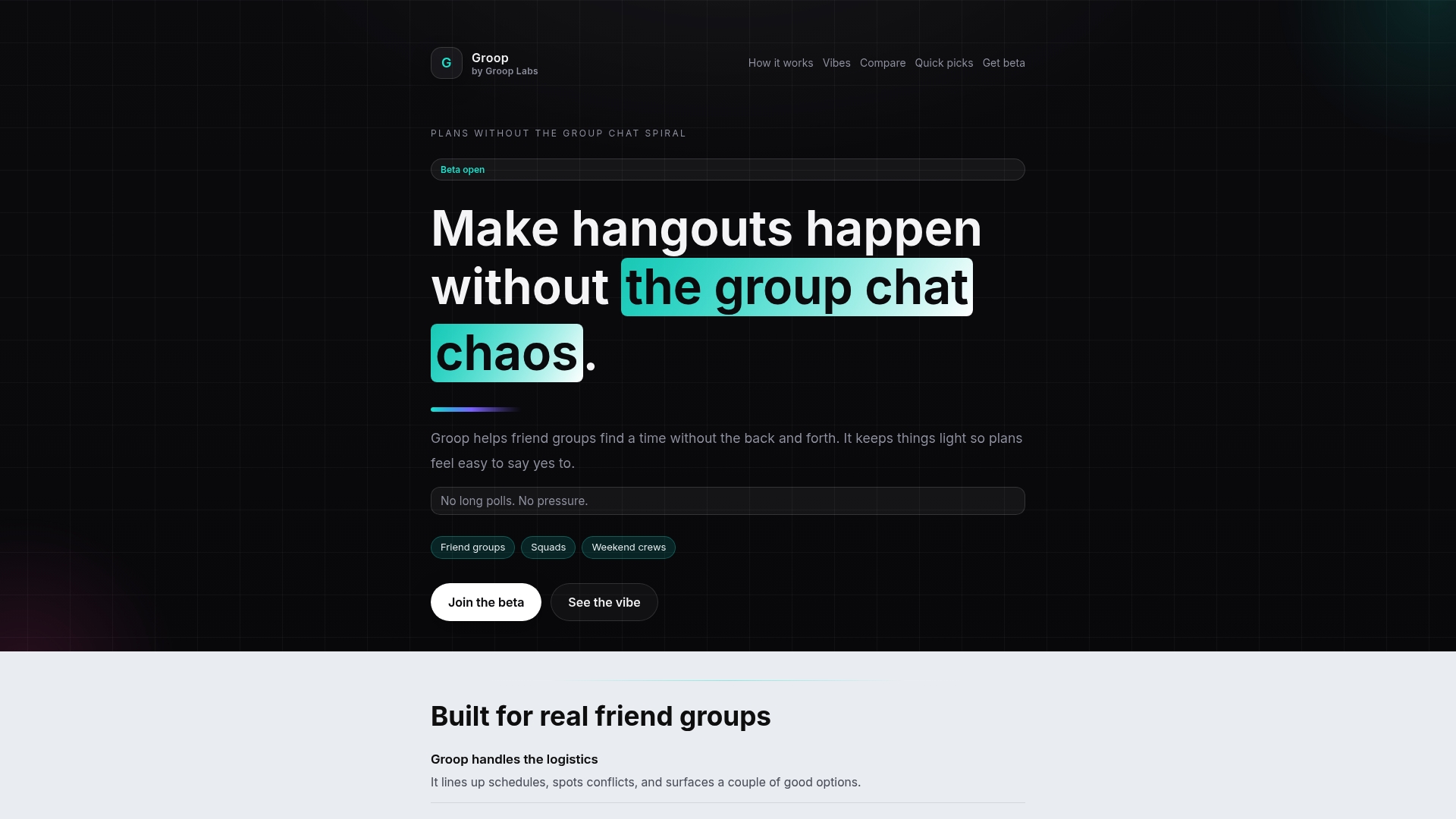
Grooop, the mobile app from Groop Labs, is built specifically for friend groups who want to skip the chaos and get straight to the fun. It automatically lines up everyone's availability, surfaces scheduling conflicts, and gives your group simple, clear choices without the endless back-and-forth. Every step from this checklist, from confirming attendees to aligning on timing, becomes faster and easier inside the app. If you're tired of losing plans in a noisy group chat, check out the recommended chat and planning apps that work best alongside Grooop. Your next hangout is closer than you think.
Frequently asked questions
What is the ideal number of people for a small group activity?
Aim for 3 to 5 members to maximize participation and coordination while keeping things fun and manageable for everyone involved.
How do you make sure everyone's preferences are included?
Use polls and group chats to collect input on dates, activities, and budgets before locking in any decisions, so no one feels left out of the process.
What if someone can't agree or there's a personality conflict?
Split into smaller groups or host separate events, and always communicate openly to avoid leaving anyone feeling excluded or overlooked.
How structured should a friend group plan be?
It depends on your crew. Some groups do better with clear roles and agendas, while others prefer a looser approach. The key is keeping communication open so everyone stays comfortable with the plan.