
Articles
7 Group Chat Best Practices for Smooth Social Planning
Discover 7 essential group chat best practices to streamline social planning, reduce chaos, and make coordinating meetups easier and more fun for young adults.

7 Group Chat Best Practices for Smooth Social Planning

Trying to plan anything with a group often turns messy fast. Messages pile up, people talk over each other, and simple decisions get lost in a sea of notifications. Without a thoughtful approach, your group chat can become more confusing than helpful.
The good news? Small changes to your group chat habits can make a huge difference. This list offers practical, clear steps that keep conversations organized, respectful, and productive, so everyone feels comfortable participating.
You are about to unlock proven techniques that will help you set the right tone, communicate efficiently, and keep your group moving forward together. Get ready to discover smarter ways to manage your chats and see your next group plan come together with less stress.
Table of Contents
- 1. Set A Clear Purpose For Each Group Chat
- 2. Use Polls And Scheduling Tools To Decide Faster
- 3. Keep Messages Short And Direct
- 4. Respect Everyone's Availability And Preferences
- 5. Surface Conflicts Early And Find Simple Solutions
- 6. Limit Notifications To Important Updates
- 7. Encourage Friendly And Supportive Communication
Quick Summary
| Takeaway | Explanation |
|---|---|
| 1. Define a clear purpose for group chats | Establishing a specific goal streamlines communication and reduces unnecessary notifications, fostering participation and group coherence. |
| 2. Utilize scheduling tools for efficient planning | Use polls and scheduling apps to facilitate transparent decision-making, minimizing decision fatigue among group members. |
| 3. Communicate concisely to enhance clarity | Keep messages short and direct to prevent confusion, maintain engagement, and ensure that key points are easily understood. |
| 4. Respect members' availability and preferences | Be aware of different time zones and personal boundaries, which fosters a more inclusive and considerate group atmosphere. |
| 5. Promote positive and supportive communication | Encourage kindness and active listening, which builds trust, enhances engagement, and strengthens interpersonal relationships within the group. |
1. Set a Clear Purpose for Each Group Chat
Ever been stuck in a group chat that feels like a total mess? You know the one - where random memes, work updates, and weekend plans all collide in one chaotic stream. The secret to avoiding this digital pandemonium is setting a crystal clear purpose for each group chat.
When creating a new group chat, your first step should be defining its specific goal. Is this a chat for planning a weekend trip? Coordinating a work project? Sharing study notes? Group chat organization strategies can help transform potential chaos into streamlined communication.
Here are key reasons why defining purpose matters:
- Reduces Unnecessary Notifications: Members only engage when truly relevant
- Increases Participation: Clear goals encourage more focused contributions
- Minimizes Confusion: Everyone understands the chat's primary objective
- Maintains Group Dynamics: Prevents social friction from off-topic discussions
A purposeful group chat is like a well-organized meeting - everyone knows why they're there and what to expect.
To set a clear purpose, create a brief description or pinned message explaining the chat's specific goal. This acts as a reference point for all members and helps maintain focus.
Pro tip: Create a group chat name that instantly communicates its purpose, like "Summer Road Trip 2024" or "Marketing Project Q3 Team".
2. Use Polls and Scheduling Tools to Decide Faster
Say goodbye to endless back-and-forth text threads trying to coordinate plans. Group scheduling tools are your secret weapon for cutting through planning chaos and making decisions lightning fast. Real-time group scheduling transforms how friend groups and teams collaborate.
Polls and scheduling tools solve several critical planning challenges:
- Eliminate decision fatigue
- Provide instant visual availability comparisons
- Allow everyone to vote without overwhelming chat threads
- Create transparent, democratic decision-making processes
When everyone can see options simultaneously, planning becomes dramatically simpler.
Modern scheduling tools let you quickly propose multiple date and time options. Group members can vote in real time, showing their preferences with a simple click. This approach removes the mental load of constantly checking everyone's individual responses.
Key features to look for in scheduling tools include:
- Multiple voting options
- Visual calendar integration
- Easy sharing capabilities
- Automatic time zone conversions
- Notification systems for updates
Pro tip: Select a scheduling tool that integrates directly with your preferred group chat platform to minimize app switching and streamline your planning process.
3. Keep Messages Short and Direct
In the world of group chats, less is definitely more. Concise communication is an art form that can save everyone time and prevent massive confusion. Effective group chat communication demands clarity and brevity.
When you send a message in a group chat, think of it like a text message elevator pitch. You want to convey your entire point quickly and clearly without losing your audience in a wall of text.
Why brevity matters in group chats:
- Reduces information overload
- Increases message readability
- Prevents chat fatigue
- Keeps everyone engaged
- Minimizes misunderstandings
Your goal is to communicate, not write a novel.
Strategies for keeping messages short and direct include:
- State your main point first
- Use bullet points for complex information
- Avoid unnecessary details
- Be specific and actionable
- Proofread before sending
Remember that written communication lacks vocal tone and non-verbal cues. This means your words need to be extra precise to prevent misinterpretation.
Pro tip: Before hitting send, ask yourself: "Could I explain this in one sentence?" If not, you might need to revise.
4. Respect Everyone's Availability and Preferences
Not everyone lives on the same schedule or has the same communication style. Group chat respect means understanding that each member has unique availability and personal boundaries. Why saying "any time works" complicates planning reveals the complexity of coordinating diverse schedules.
Respecting availability goes beyond just being polite. It creates a more inclusive and considerate group dynamic where everyone feels valued and heard.
Key considerations for respecting group members:
- Recognize different time zones
- Avoid sending messages during typical sleep hours
- Ask about preferred communication times
- Be mindful of work and personal commitments
- Allow flexible response expectations
Thoughtful communication is the foundation of strong group relationships.
Practical strategies for demonstrating consideration include:
- Use do-not-disturb settings
- Ask about notification preferences
- Provide context before demanding immediate responses
- Acknowledge members might not always be available
- Create inclusive planning windows
Notification management helps prevent overwhelming group members. Consider using tools that allow members to set their own alert preferences and response times.
Pro tip: Create a brief, shared document outlining the group's communication expectations and preferred contact windows to set clear boundaries from the start.
5. Surface Conflicts Early and Find Simple Solutions
Conflicts are inevitable in any group dynamic. Proactive communication is your secret weapon for turning potential disagreements into opportunities for understanding. Conflict resolution strategies reveal that early intervention can transform challenges into collaborative moments.
When tensions start brewing in a group chat, waiting only makes things worse. Addressing issues immediately prevents misunderstandings from snowballing and helps maintain positive group relationships.
Why surfacing conflicts early matters:
- Prevents long-term relationship damage
- Reduces emotional escalation
- Creates space for mutual understanding
- Demonstrates respect for different perspectives
- Builds group trust and resilience
Small problems addressed quickly become opportunities for growth.
Strategies for navigating group conflicts:
- Acknowledge different viewpoints
- Use neutral, non-confrontational language
- Ask clarifying questions
- Focus on shared goals
- Seek compromise over being right
Conscious communication means listening to understand rather than listening to respond. This approach transforms potential arguments into constructive dialogues.
Pro tip: Create a group agreement that outlines how you'll handle disagreements respectfully, and refer to it when tensions arise.
6. Limit Notifications to Important Updates
Notification overload is the silent productivity killer of modern group communication. Digital distraction management means being strategic about which updates actually deserve your immediate attention. Best practices for notifications reveal that selective alerting can dramatically improve focus and reduce stress.
Every ping and notification fragments your attention. By limiting updates to truly important information, you protect your mental bandwidth and maintain genuine connection with your group.
Why notification management matters:
- Prevents constant digital interruptions
- Reduces stress and anxiety
- Improves overall group communication quality
- Respects individual focus and personal time
- Creates more intentional interactions
Not every message requires an immediate response.
Strategies for smart notification control:
- Mute non-critical conversations
- Set specific notification times
- Use priority settings
- Communicate your availability
- Establish group communication norms
Notification settings are your first line of defense against digital overwhelm. Consider them your personal communication firewall.
Pro tip: Create a group agreement that specifies what constitutes an "urgent" notification, helping everyone understand when they should truly interrupt each other's day.
7. Encourage Friendly and Supportive Communication
Your group chat is more than just a messaging platform. It is a digital space where relationships are built, maintained, and strengthened. Positive communication techniques transform ordinary interactions into meaningful connections. Positive communication strategies reveal how simple approaches can dramatically improve group dynamics.
Encouraging a friendly atmosphere means creating a space where every member feels valued, heard, and comfortable sharing their thoughts and experiences.
Benefits of supportive group communication:
- Builds trust and psychological safety
- Increases overall group engagement
- Reduces misunderstandings
- Promotes genuine connections
- Makes planning more enjoyable
Kindness is the universal language of group connection.
Practical ways to foster supportive communication:
- Celebrate individual and group achievements
- Use encouraging language
- Practice active listening
- Ask open-ended questions
- Show genuine interest in others
Emotional intelligence plays a crucial role in creating a welcoming group chat environment. Small gestures of support can transform the entire group dynamic.
Pro tip: Establish a group norm of offering at least one piece of positive feedback or encouragement for every critique or planning discussion.
Below is a comprehensive table summarizing the main strategies and insights for effective and productive group chat management discussed throughout the article.
| Strategy | Description | Benefits |
|---|---|---|
| Set a Clear Purpose | Define the specific goal for each group chat and communicate it clearly to participants. | Reduces unnecessary notifications and minimizes confusion while enhancing engagement and group dynamics. |
| Use Polls and Scheduling Tools | Utilize digital tools to coordinate schedules and gather group preferences efficiently. | Simplifies planning, reduces decision fatigue, and supports a democratic decision-making process. |
| Keep Messages Short and Direct | Prioritize clarity and conciseness in communication within the group chat. | Prevents information overload, improves readability, and reduces misunderstandings. |
| Respect Everyone's Availability | Acknowledge and adapt to the diversity of schedules and communication preferences within the group. | Enhances inclusivity, minimizes disruptions, and supports harmonious interactions among group members. |
| Surface Conflicts Early | Address disagreements in group chats promptly to avoid escalation. | Resolves issues constructively, maintains group trust, and fosters mutual understanding. |
| Limit Notifications to Important Updates | Control the frequency and relevance of notifications based on the importance of updates. | Reduces distractions, preserves focus, and respects individual time. |
| Encourage Friendly and Supportive Communication | Promote positivity and encouragement in interactions. | Builds trust, strengthens group engagement, and creates an enjoyable planning experience. |
Simplify Your Group Planning with Groop
Struggling to maintain clear group chat communication and keep your social plans on track? The article highlights how crucial it is to set a clear purpose, respect everyone's availability, and avoid overwhelming notifications. Groop understands these challenges and offers a solution designed exactly for friend groups seeking easy and stress-free coordination. With Groop you can quickly align schedules, surface conflicts early, and make group decisions without endless message threads or confusing polls.
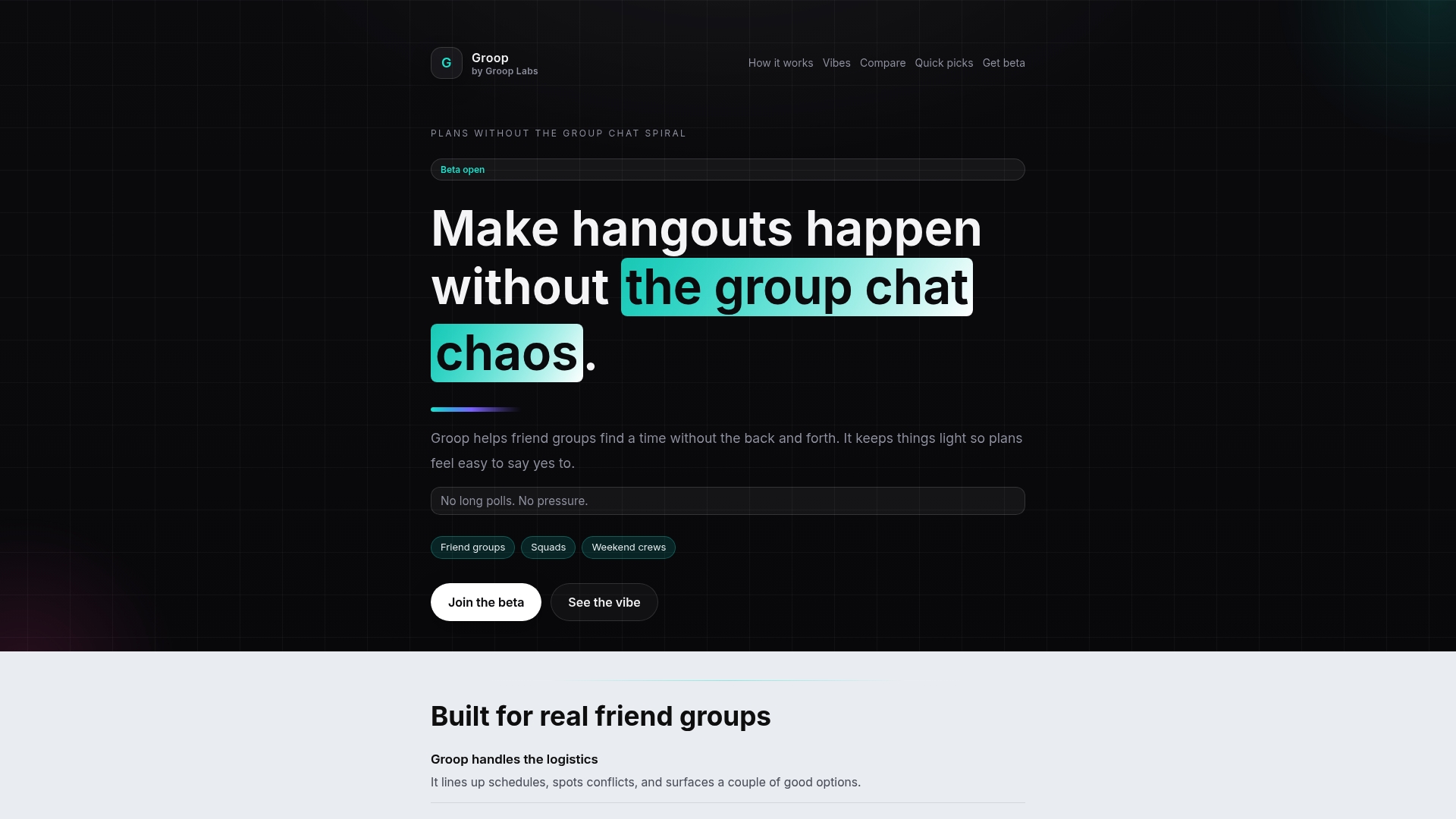
Experience the power of streamlined social planning with Groop. Visit Groop Labs now to start organizing your hangouts with less hassle and more clarity. Check out how Groop’s lightweight scheduling features can turn chaotic chats into smooth, fun planning sessions at Groop Main Page and discover the benefits of real-time group scheduling explained in our blog Real-Time Group Scheduling. Don’t let confusing chats slow your plans down take control today and keep your group connected with ease.
Frequently Asked Questions
How can I set a clear purpose for my group chat?
To set a clear purpose, first define the specific goal of the chat, whether it’s for planning, sharing ideas, or coordinating events. Create a brief description or pinned message that explains this goal to keep everyone focused and engaged.
What are effective ways to decide on plans quickly in a group chat?
Using polls and scheduling tools helps group members vote on preferences without endless back-and-forth messaging. Propose multiple date and time options, and encourage everyone to vote to streamline decision-making.
How can I keep my messages concise in a group chat?
To keep messages concise, start with your main point followed by bullet points if necessary, avoiding unnecessary details. Aim for clarity and directness; if you can explain your message in one sentence, do so to maintain engagement.
What strategies can I use to respect everyone’s availability in a group chat?
Recognizing different time zones and asking about members' preferred communication times helps to foster respect for everyone’s availability. Establish communication norms that define when and how often members should respond to messages, ensuring everyone feels valued.
How can we surface conflicts early in the group chat?
Encouraging open communication and addressing potential conflicts as soon as they arise prevents misunderstandings from escalating. Use neutral language to acknowledge different viewpoints and focus on finding shared goals to foster collaboration.
What steps can I take to limit notifications in our group chat?
Limit notifications by muting non-critical conversations and setting specific times for checking messages. Establish clear group norms that define what constitutes important updates, helping to reduce distractions and improve overall focus.