
Articles
7 Essential Tips for Group Chat Etiquette Checklist
Discover a group chat etiquette checklist with 7 practical tips for university students and young professionals. Master smooth, stress-free social planning.
7 Essential Tips for Group Chat Etiquette Checklist
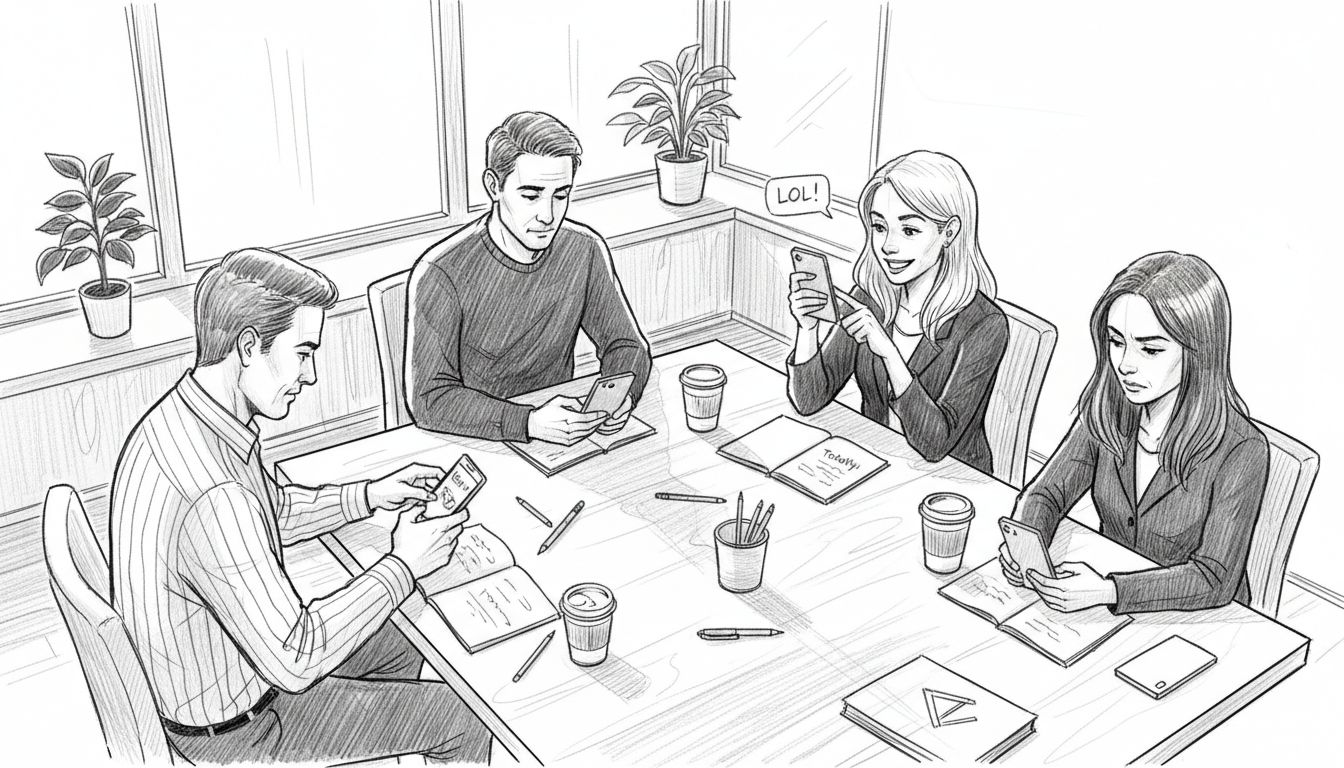
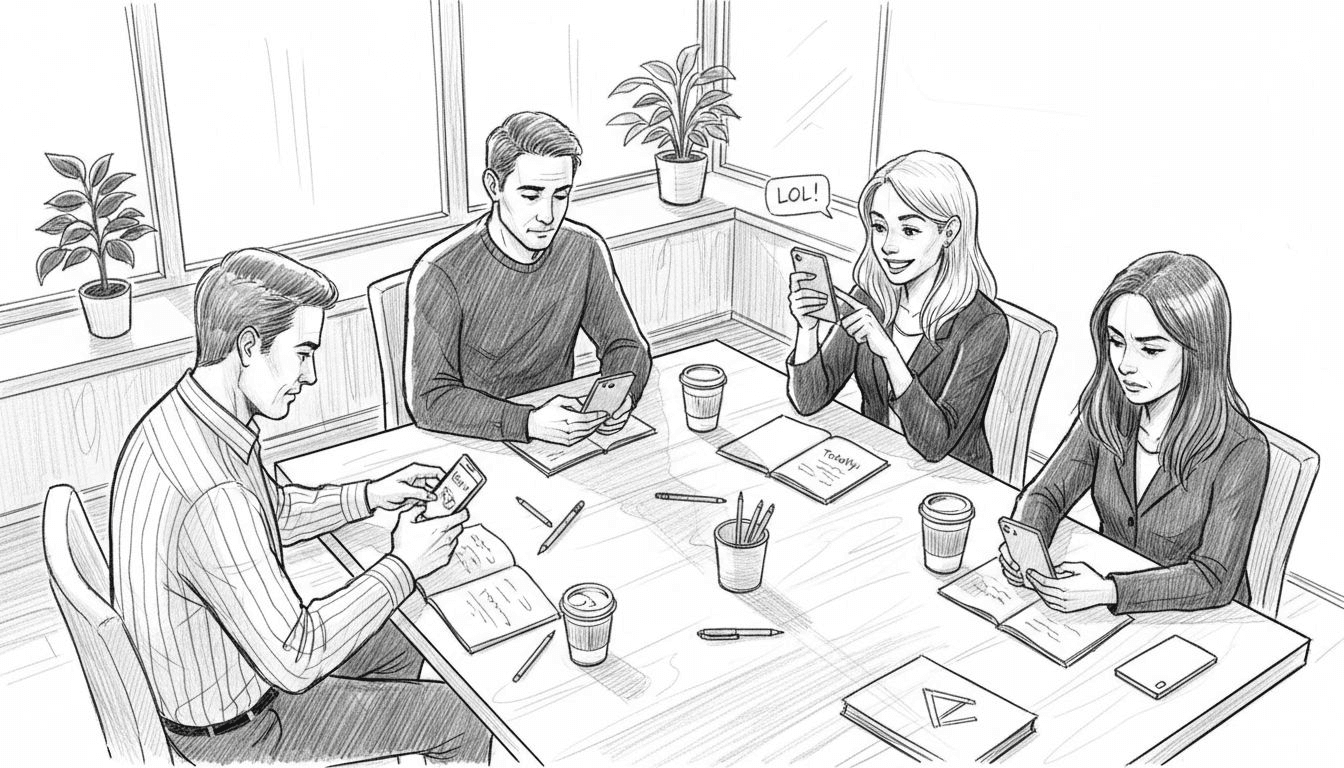
Group chats can turn a simple conversation into a confusing maze when messages pile up or off-topic debates derail the group. Misunderstandings, interrupted workflows, and overlooked messages are common when digital etiquette is missing. What seems like a quick ping can easily disrupt a colleague at the wrong time or send the wrong message to your whole team.
You deserve smoother communication, fewer interruptions, and a group chat experience where everyone feels respected and included. This list will help you master clear messages, digital boundaries, and polite reactions in any group setting. Get ready to discover practical habits that keep chats organized, professional, and enjoyable for everyone involved.
Table of Contents
- 1. Keep Messages Clear And On-Topic
- 2. Respect Everyone's Time And Availability
- 3. React Politely To Messages And Plans
- 4. Use Quiet Mode And Mentions Wisely
- 5. Share Media And Links Thoughtfully
- 6. Avoid Spamming With Multiple Messages
- 7. Handle Conflicts Calmly And Respectfully
Quick Summary
| Takeaway | Explanation |
|---|---|
| 1. Keep Messages Clear and Concise | Focus on direct and relevant communication to avoid misunderstandings and keep discussions efficient. |
| 2. Respect Others' Time and Availability | Be considerate of different schedules and avoid non-urgent messages during off-hours to maintain healthy group dynamics. |
| 3. Respond Politely to Reactions and Plans | Acknowledge messages promptly and use supportive language to foster positive interactions among group members. |
| 4. Use Notifications Wisely | Manage notification settings and use mentions thoughtfully to prevent overwhelming others with unnecessary alerts. |
| 5. Handle Conflicts Calmly and Thoughtfully | Approach disagreements with empathy, using focused language to promote constructive dialogue instead of escalating tensions. |
1. Keep Messages Clear and On-Topic
In the world of group chats, clarity is your communication superpower. Maintaining focused and straightforward messages prevents misunderstandings and keeps everyone on the same page.
Maintaining clear communication requires intentional effort. When you're participating in a group chat, your messages should be:
- Direct and concise
- Relevant to the current conversation
- Easy to understand at a glance
- Respectful of everyone's time and attention
Group chats can quickly become chaotic when participants drift off-topic or use overly complex language. Professional chat guidelines emphasize staying focused to ensure efficient communication. This means avoiding unnecessary tangents, keeping messages short, and ensuring each message contributes meaningfully to the discussion.
Clear communication isn't about saying more—it's about saying exactly what matters.
When writing messages, ask yourself: "Would someone who just joined the chat understand what I'm saying?" This mindset helps you craft messages that are accessible and straightforward.
Additionally, pay attention to your tone and writing style. Avoid using all capital letters, which can be interpreted as shouting, and use punctuation and emoji sparingly to prevent misinterpretation.
Pro tip: Before sending a message, quickly scan it to ensure it directly relates to the group chat's current topic and adds clear value to the conversation.
2. Respect Everyone's Time and Availability
In group chats, being considerate of others' schedules and availability is more than just good manners—it's essential for maintaining healthy digital relationships. Your thoughtfulness can transform group communication from chaotic to collaborative.
Respecting time means understanding that group chat members have different work patterns and personal commitments. Team communication practices emphasize considering individual availability before sending messages.
Key strategies for demonstrating respect include:
- Check status indicators before messaging
- Avoid sending non-urgent messages during off-hours
- Consider different time zones for global groups
- Use "do not disturb" settings appropriately
- Send messages when recipient is likely available
Thoughtful communication is about quality over quantity.
Understanding digital boundaries helps prevent unnecessary interruptions. This means recognizing that just because someone is in a group chat doesn't mean they're always ready to respond immediately.
Professional group chats particularly require careful timing. Urgent matters need immediate attention, while routine discussions can wait until standard working hours.
Pro tip: Set your notification preferences to minimize disruptions and communicate your typical response times to set clear expectations for group chat interactions.
3. React Politely to Messages and Plans
Reacting politely to group chat messages isn't just about being nice—it's about maintaining positive group dynamics and ensuring everyone feels heard and valued. Your digital interactions can make or break the group's communication flow.
Online conversation practices highlight the importance of thoughtful responses that balance expressiveness and brevity. When someone sends a message or proposes a plan, your reaction matters.
Effective and polite reactions include:
- Acknowledging messages promptly
- Using supportive emojis appropriately
- Avoiding negative or dismissive language
- Providing clear and concise feedback
- Showing genuine interest in group discussions
A thoughtful reaction is worth a thousand words.
The goal is digital communication harmony. This means responding in ways that make group members feel respected and included. A simple thumbs-up emoji or a brief "Sounds good" can work wonders.
When plans are proposed, be constructive. If you cannot attend or have concerns, communicate them clearly and kindly. Passive-aggressive responses or complete silence can create unnecessary tension.
Remember that tone is challenging to convey digitally. What might seem neutral to you could be interpreted as rude or disinterested by others. Choose your words and reactions carefully.
Pro tip: Before responding, take a quick breath and read your message from the perspective of the receiver to ensure your reaction comes across as positive and supportive.
4. Use Quiet Mode and Mentions Wisely
In the world of digital communication, notification management is an art form. Learning to use quiet mode and mentions strategically can transform your group chat experience from chaotic to calm.
Modern chat etiquette emphasizes mindful notification practices that respect everyone's digital boundaries. Not every message requires an immediate response or global announcement.
Key strategies for intelligent notification management include:
- Activate quiet mode during focused work hours
- Use @mentions sparingly and purposefully
- Understand your chat app's notification settings
- Respect others' potential do-not-disturb status
- Limit late-night group chat interruptions
Smart notifications are about quality over quantity.
Mentions are powerful communication tools. They should be used like surgical instruments - precise and only when absolutely necessary. Tagging someone pulls them directly into the conversation and generates an immediate notification.
Consider the context before hitting that @ button. Are you requesting specific input? Do you genuinely need this person's immediate attention? These questions help prevent notification fatigue.
Pro tip: Create a personal rule to only @mention someone when the message directly requires their immediate action or response.
5. Share Media and Links Thoughtfully
In the digital age, sharing content is as easy as clicking a button. But with great sharing power comes great responsibility—especially in group chats where everyone's attention is a precious resource.
Group chat communication requires thoughtful media sharing that respects the collective experience of all participants. Not every meme or random link deserves broadcast status.
Key guidelines for responsible sharing include:
- Ensure content is relevant to the group's purpose
- Check link safety before posting
- Avoid flooding the chat with multiple media items
- Consider the timing and context of your share
- Ask for permission if sharing sensitive information
Quality trumps quantity in digital sharing.
Media sharing is about community, not personal entertainment. Before you hit send ask yourself: Would this genuinely interest or benefit the entire group? If the answer is uncertain, perhaps a private message is more appropriate.
Some group chats might have different tolerance levels for casual content. Know your audience and adjust your sharing accordingly. What works in a friend group might be inappropriate in a professional setting.
Remember that every shared item contributes to the group's overall communication rhythm. Too many random links or images can quickly become noise that drowns out important messages.
Pro tip: Create a quick mental filter before sharing: Would you want to receive this message if you were another group member right now?
6. Avoid Spamming With Multiple Messages
Group chats can transform from collaborative spaces to chaotic noise zones with just a few careless keystrokes. Understanding how to communicate efficiently is the key to maintaining a respectful digital dialogue.
Workplace communication best practices emphasize message consolidation to prevent overwhelming participants with excessive notifications. One thoughtful message trumps five fragmented ones.
Effective communication strategies include:
- Organize your thoughts before typing
- Use edit/compose features to refine messages
- Send comprehensive updates in single messages
- Wait for responses before sending follow-ups
- Pause and review before hitting send
Quality communication is about precision, not volume.
Multiple rapid-fire messages are the digital equivalent of interrupting someone mid-conversation. Respecting group chat rhythm means being intentional about your communication style.
Think of your group chat like a shared physical space. Would you want someone constantly tapping you on the shoulder with half-formed thoughts? Probably not. The same principle applies digitally.
If you have complex information to share, consider:
- Writing a draft first
- Reviewing for clarity
- Sending a concise, comprehensive message
- Waiting for group feedback
Messaging is an art of brevity. Each message should add clear value without creating unnecessary noise.
Pro tip: Create a personal 30-second rule: Wait and review before sending multiple messages to ensure you're communicating effectively, not just frequently.
7. Handle Conflicts Calmly and Respectfully
Conflicts are inevitable in group chats—but how you handle them can transform a potentially explosive situation into an opportunity for understanding and growth. Digital communication requires emotional intelligence and strategic communication skills.
Collaborative conflict resolution focuses on understanding perspectives without assigning blame or escalating tensions. Your goal is connection, not confrontation.
Key strategies for managing group chat conflicts include:
- Pause before responding emotionally
- Use "I" statements instead of accusatory language
- Seek to understand other perspectives
- Avoid sarcasm and passive-aggressive comments
- Focus on the issue, not personal attacks
Effective communication turns conflicts into conversations.
When disagreements arise, emotional regulation is critical. Remember that text lacks tone and can be easily misinterpreted. What seems like a harsh comment might simply be a misunderstood perspective.
If a conflict emerges, consider these steps:
- Take a deep breath
- Read the message objectively
- Clarify any misunderstandings
- Respond with empathy
- Suggest moving to a private discussion if needed
Understanding that everyone has different communication styles helps prevent unnecessary escalation. What feels direct to one person might feel aggressive to another.
Pro tip: When feeling triggered, wait 15 minutes before responding to allow your emotional temperature to cool down and craft a measured, respectful reply.
Below is a comprehensive table summarizing the key strategies for effective group chat communication discussed in the article.
| Topic | Guidelines | Outcome |
|---|---|---|
| Clear and On-Topic Messages | Ensure messages are direct, relevant, and concise. | Promotes clarity and understanding. |
| Respecting Members' Time | Be mindful of others' availability and avoid unnecessary disturbances. | Fosters mutual respect and avoids interruptions. |
| Polite Reactions | Respond thoughtfully and constructively to messages and proposals. | Enhances group harmony and collaboration. |
| Notification Management | Use "quiet mode" and @mentions strategically. | Balances attentiveness with respect for focus. |
| Sharing Media Responsibly | Share relevant and safe content considering the group's context. | Prevents distractions and maintains group value. |
| Messaging Efficiency | Consolidate messages and avoid spamming. | Retains communication flow, reducing clutter. |
| Conflict Resolution | Address disagreements calmly and respectfully. | Resolves issues productively and maintains cohesion. |
Simplify Group Chat Coordination with Groop
Managing clear communication and respecting everyone's time in group chats can be challenging. This article highlights common struggles like staying on-topic and avoiding notification overload, all of which can lead to confusion and frustration among friends or social squads. Groop offers a solution designed to reduce the back-and-forth chaos by streamlining social planning with simple scheduling tools that honor everyone’s availability and keep the conversation focused.
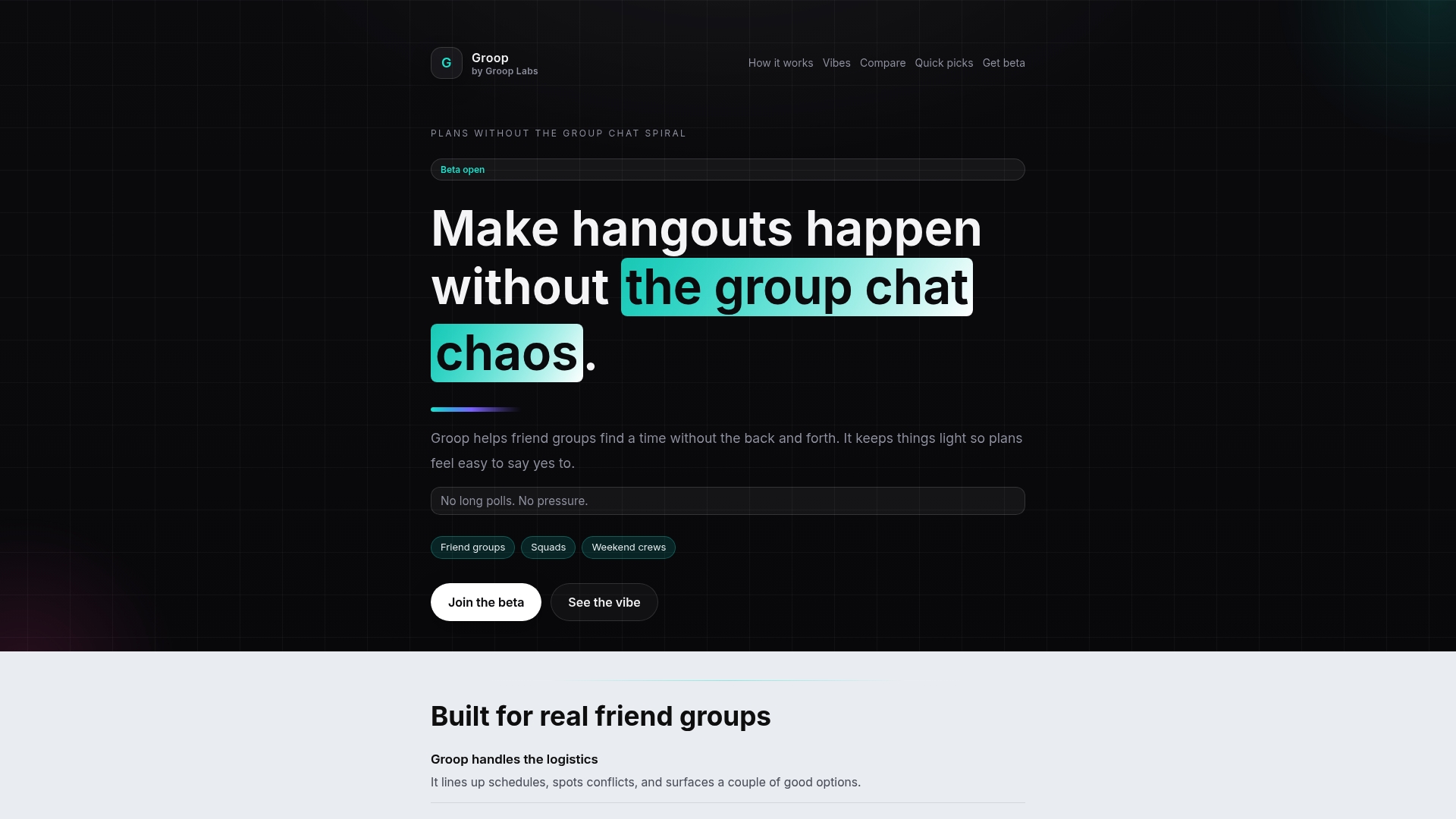
Take control of your group’s hangouts today with Groop’s lightweight app that helps surface conflicts, provide easy options, and maintain your group’s natural vibe without endless chat interruptions. If you want to keep messages concise, react politely, and plan efficiently, visit Groop Homepage now and transform how your group coordinates. Act now to enjoy hassle-free planning that respects everyone’s time and keeps the fun going.
Frequently Asked Questions
What are the key components of clear communication in group chats?
Clear communication in group chats includes being direct, concise, and relevant to the ongoing conversation. To improve your messaging, focus on simplifying your language and ensuring each message genuinely adds value to the discussion.
How can I respect others' time and availability in group chats?
Respecting others' time means being mindful of their work patterns and avoiding non-urgent messages during off-hours. To do this, check status indicators and try to send messages during regular working hours when you know recipients are likely available.
What is the importance of reacting politely to messages in group chats?
Reacting politely helps maintain positive group dynamics and ensures everyone feels valued. To enhance group morale, acknowledge messages promptly and provide constructive feedback, showing genuine interest in others’ contributions.
How do I manage notifications effectively in group chats?
You can manage notifications by activating quiet mode during focused work hours and using @mentions sparingly to avoid unnecessary interruptions. For a more organized chat experience, assess whether a message truly requires immediate attention before tagging someone.
What should I consider before sharing media or links in a group chat?
Before sharing media or links, ensure the content is relevant to the group's purpose and safe to view. Always think about how your share will benefit the entire group, and avoid sending unrelated content that may clutter the conversation.
How can I handle conflicts calmly in group chats?
To manage conflicts, pause before responding to avoid emotional reactions and focus on understanding other perspectives. Use