Articles
10 event scheduling examples for stress-free social planning
Discover 10 real event scheduling examples to make group planning easy and fun. Find the right app for your friend group and skip the back-and-forth chaos.

10 event scheduling examples for stress-free social planning

TL;DR:
- Fun, engaging features are key to encouraging group participation in event scheduling.
- Using familiar apps with low onboarding barriers increases response rates for casual plans.
- Matching tools to your group's vibe and size ensures smoother, more effective coordination.
Getting everyone in your friend group to agree on a time is basically herding cats. One person is free Saturday, another has work, and the third just stops responding to the thread entirely. Sound familiar? The good news is that the right digital tools can turn that stressful back-and-forth into something quick, easy, and honestly kind of fun. This guide walks you through real examples of event scheduling apps and methods, what to look for when choosing one, and how to match the right tool to your group's vibe so your next hangout actually happens.
Table of Contents
- How to pick the perfect event scheduling tool
- Examples of event scheduling apps and methods
- Comparison table: Social event scheduling options
- Which event scheduling method is best for your group?
- Why fun makes event scheduling actually work (and what most guides get wrong)
- Ready to make group planning fun and simple?
- Frequently asked questions
Key Takeaways
| Point | Details |
|---|---|
| Fun beats utility | Apps with reactions, polls, and playful design win when planning with friends. |
| Guest access lowers friction | Tools allowing non-signup guest participation make group plans easier. |
| Compare before you commit | See which solution matches your group’s style before switching everyone over. |
| Use free features wisely | Most free event scheduling apps work well but watch for ad or feature limits. |
| Mix and match methods | Combining chats, polls, and calendars gives you flexible ways to coordinate fast. |
How to pick the perfect event scheduling tool
Now that you're ready to ditch group chat chaos, let's look at what to prioritize in choosing the right app. Not every scheduling tool is built the same, and for casual friend groups, the features that matter most are probably different from what a corporate team needs.
Here's what to keep in mind when evaluating your options:
- Fun and interactive elements: For social planning, a tool that feels playful keeps people engaged. Reactions, GIFs, and visual feeds make the experience feel less like a chore and more like part of the hangout itself.
- Instant feedback: Polls, availability views, and quick reacts let everyone weigh in fast, so no one is waiting around for a response that may never come.
- Minimal onboarding: If your friends have to create an account, verify an email, and watch a tutorial just to say they're free Friday, they won't do it. Low-barrier entry is essential.
- Free vs. premium: Most tools offer free tiers, but watch for ads or feature limits that slow things down. Dedicated social apps like Howbout outperform general calendars for young adults by integrating fun elements and AI suggestions that make scheduling feel natural.
- Guest access: Not everyone wants another app on their phone. Apps with guest access and instant availability views make group planning less stressful for everyone involved.
Think about the group chat app features your group already uses and whether a scheduling layer could fit naturally on top.
"The best scheduling tool is the one your whole group will actually open."
Pro Tip: Start with whatever platform your group already uses. Many chat apps have built-in polls or calendar features. If you need something more dedicated, look for apps that offer guest links so people can respond without downloading anything.
Examples of event scheduling apps and methods
With your must-haves in mind, here are the easiest ways to actually set up plans, with samples for every vibe.
There are more options out there than most people realize. The key is matching the tool to your group's habits and energy.
Fun-focused apps:
- Howbout: Built specifically for social scheduling, Howbout integrates reacts, feeds, and AI to make the process more dynamic and engaging. It feels less like a calendar and more like a social feed where plans come together naturally.
- TimeTree: Great for ongoing shared calendars with color coding for different people or events. TimeTree's free tier is accessible and easy to set up, though ads can be a minor annoyance and the premium version offers a cleaner experience.
Utility-first tools:
- Doodle: A classic for a reason. You set up a poll with time options, share a link, and everyone marks when they're free. No account required for respondents, which makes it a go-to for groups with mixed tech comfort levels.
- Google Forms: A surprisingly flexible option for anonymous availability collection, especially useful when you want honest responses without social pressure.
All-in-one chats:
- WhatsApp and Discord: Both platforms now support in-line polls and reminders, meaning you can coordinate without ever leaving your existing group chat. Check out top group chat apps for a broader look at what's available.
For more structured guidance, group event planning tips can help you figure out which approach fits your situation. And if you've already tried a few tools and want something fresh, exploring Groop.cc alternatives is worth a look.
Pro Tip: You don't have to commit to just one platform. Use Doodle to find a time, then confirm and coordinate details in your Discord or WhatsApp group. Mixing tools for different jobs keeps things flexible.
Comparison table: Social event scheduling options
It's way easier to choose when you can see the highlights side by side.
| App | Best for | Fun factor | Onboarding | Free tier |
|---|---|---|---|---|
| Howbout | Social hangouts | High | Easy | Yes |
| TimeTree | Ongoing group calendars | Medium | Easy | Yes (with ads) |
| Doodle | One-off availability polls | Low | Very easy | Yes |
| Groups already using it | Medium | None needed | Yes | |
| Discord | Gaming and hobby groups | Medium | Moderate | Yes |
| Google Forms | Anonymous input | Low | Easy | Yes |
| Grooop | Casual friend squads | High | Very easy | Yes |
As free tiers enable easy adoption, the tradeoff is usually ads or feature limits that can frustrate users over time. It's worth testing a few before committing.
A few things worth highlighting from the table:
- Casual events (movie nights, park hangouts) work best with high fun-factor apps or tools your group already has open.
- Formal or larger events (birthday parties, group trips) benefit from dedicated tools like Doodle or TimeTree that keep records and send reminders.
- Most people will try a new app if the poll or guest feature is simple enough to use in under a minute.
For a deeper look at what separates the best options, check out best group chat apps and group chat apps with scheduling built in.
Which event scheduling method is best for your group?
After seeing the options, here's how to actually decide what's best for your next group hangout or project.
The right tool depends on a few things: how big your group is, how tech-savvy everyone is, and whether this is a one-time plan or something recurring.
- Small group (2 to 5 people): A quick WhatsApp poll or a shared Howbout event is usually all you need. Keep it light.
- Medium group (6 to 12 people): Doodle or Google Forms work well here because they scale easily and don't require everyone to download something new.
- Large group (13 or more): Use a combination. Collect availability with Doodle, then announce and coordinate in a Discord server or group chat.
- Group that hates notifications: Go with Doodle or Google Forms. They're asynchronous, meaning people respond when they want, with zero pressure.
- Recurring plans (weekly study sessions, regular game nights): TimeTree or Grooop are better fits because they support ongoing coordination rather than one-off events.
| Situation | Recommended tool |
|---|---|
| One-time hangout | Doodle or WhatsApp poll |
| Recurring meetup | TimeTree or Grooop |
| Mixed tech comfort | Doodle (guest access) |
| High engagement group | Howbout |
| Already in Discord | Discord poll + reminder |
Apps with instant availability views and low onboarding are ideal for pressure-free use, especially when you want a fast answer without a long setup process. Staying on top of group planning trends can also help you spot new tools worth trying. And if you want to understand why some methods work better than others, reading about hassle-free planning gives helpful context.

Pro Tip: For one-off events, skip the setup-heavy apps entirely. A simple poll with guest access gets you an answer in minutes, not days.
Why fun makes event scheduling actually work (and what most guides get wrong)
Those are the main methods you can try, but here's what nearly every adult-focused guide overlooks, especially for teens and young adults.
Most scheduling guides obsess over features: integrations, calendar syncing, notification settings. But for your friend group, none of that matters if the app feels boring or clinical. The real reason plans fall through isn't a lack of features. It's a lack of engagement.
When a tool feels playful, people actually open it. A fun reaction on Howbout, a GIF in the Discord poll, a color-coded calendar in TimeTree. These small touches signal that this is a social space, not a work task. That shift in feeling changes how people respond. They're faster, more enthusiastic, and more likely to follow through.
The best planners we've seen don't just pick the most powerful tool. They pick the one that matches their group's energy. If your squad loves memes and voice chats, Discord is your home base. If everyone's already texting on WhatsApp, add a poll there. And if you want something purpose-built for casual friend coordination, real-time group scheduling tools like Grooop are designed exactly for that vibe.
Stop chasing the perfect feature set. Start with what feels right for your people.
Ready to make group planning fun and simple?
If you're ready to put these ideas into action, here's the easiest way to start.
Grooop, built by Groop Labs, was designed specifically for friend groups who want to skip the chaos and get straight to the fun part. No endless polls, no pressure, no one getting left out of the loop.
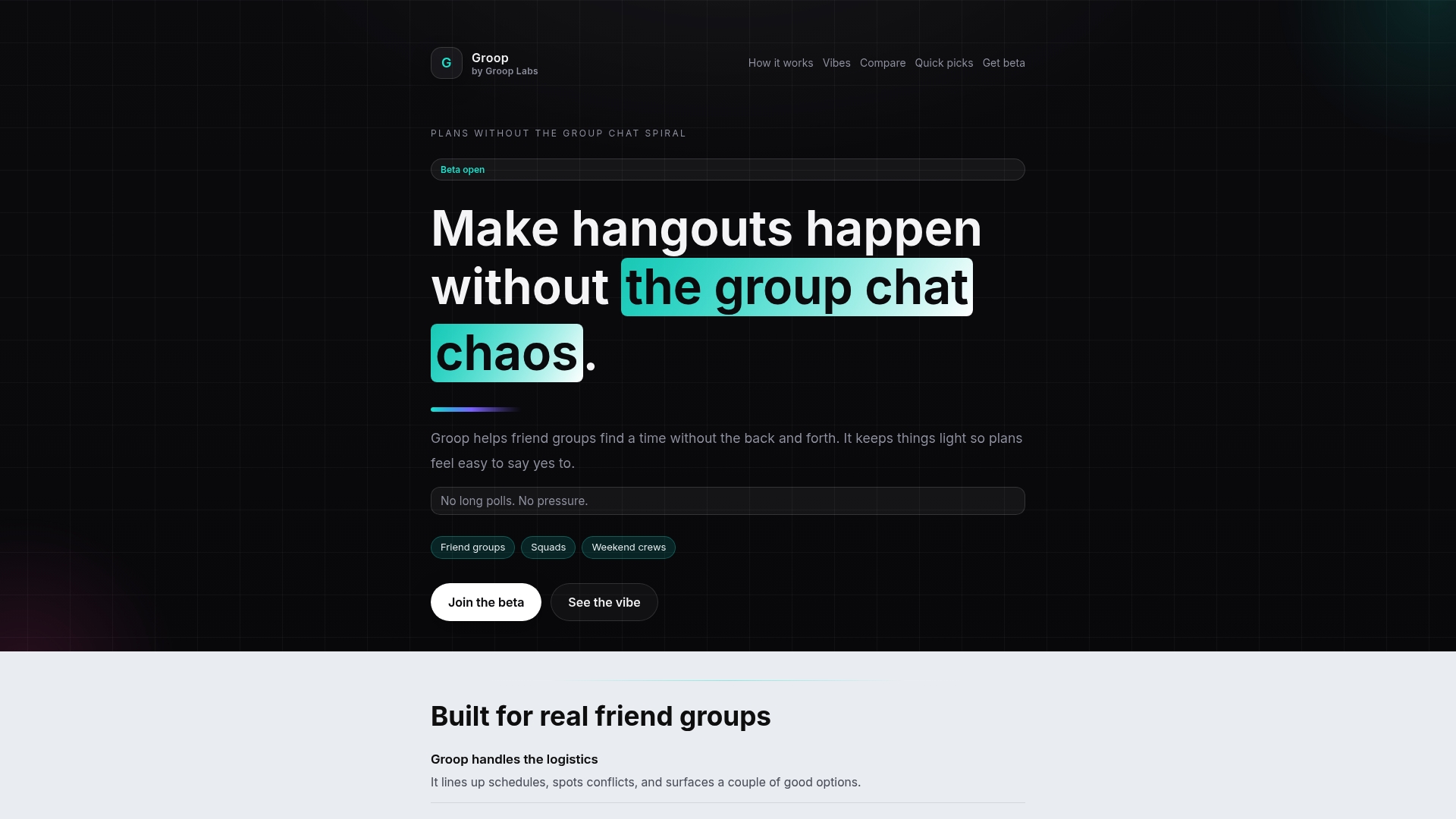
With Grooop, you start a plan, the app lines up everyone's availability automatically, surfaces any conflicts, and gives your group simple choices to pick from. It's the kind of tool that works quietly in the background so your hangout can take center stage. Whether you're organizing a movie night, a study session, or a spontaneous road trip, Groop Labs makes it easy to get everyone on the same page. You can also browse Howbout alternatives if you want to compare a few options before deciding.
Frequently asked questions
What is the easiest way to schedule a group event online?
Apps like Howbout and Doodle let you schedule group events quickly with polls, guest links, and instant availability views, making coordination fast and low-pressure. Howbout's fun elements also help keep everyone engaged throughout the process.
Are free event scheduling apps good enough?
Most free apps offer plenty of features for casual use, but free tiers on apps like TimeTree come with ads or functional limits that can get frustrating over time, so premium is worth considering if you plan regularly.
Which app is best for planning with friends who hate downloading new stuff?
Pick tools with guest access like Doodle's guest link feature, or use built-in polls on WhatsApp or Discord so no one has to install anything new.
How is scheduling social events different than organizing serious meetings?
Social planning works best with playful features and low-pressure options. Dedicated social apps like Howbout outperform general calendars for teens and young adults by integrating fun elements that keep the vibe relaxed.
Can I mix different scheduling tools in my group?
Absolutely. Many people combine polls, chat apps, and shared calendars for flexible planning. Using each tool for what it does best keeps the process smooth without overcomplicating things.