
Articles
10 group organization tips for easy social plans
Struggling with group planning chaos? These 10 practical, research-backed group organization tips help young adults coordinate hangouts and activities with ease.

10 group organization tips for easy social plans

TL;DR:
- Clear goals and expectations simplify group planning and reduce confusion.
- Structured decision techniques and interactive polls promote fairness and faster consensus.
- Using specialized tech tools streamlines coordination and enhances group participation.
Getting a group of friends to agree on a time, place, and activity can feel like herding cats. You send a message, someone asks a question, three people react with emojis, and suddenly the thread has 47 unread messages with zero decisions made. The stress of organizing a hangout can actually kill the excitement before anything even happens. But it doesn't have to be that way. With a few practical, research-backed strategies, you can cut the chaos and get everyone moving in the same direction. Here are 10 group organization tips that make social planning feel easy, fun, and low pressure.
Table of Contents
- Set clear group goals and expectations
- Use interactive polls to make decisions faster
- Try decision techniques to ensure fairness
- Leverage tech tools to streamline group planning
- What most guides miss: The power of structure and real participation
- Make your next group hangout effortless with Groop Labs
- Frequently asked questions
Key Takeaways
| Point | Details |
|---|---|
| Use group polls | Quick interactive polls boost participation and speed up group decisions. |
| Set clear expectations | Clarify group goals, budget, and norms up front to avoid confusion later. |
| Try structured techniques | Decision tools like Nominal Group Technique ensure all voices are heard. |
| Leverage tech tools | Digital group planning apps streamline logistics and keep everyone on track. |
| Balance structure with fun | A light structure prevents chaos but still keeps social plans flexible and enjoyable. |
Set clear group goals and expectations
With everyone ready to plan better, start by laying a solid foundation and get to know your group's needs first.
One of the biggest reasons group plans fall apart is that nobody agrees on what the group is actually for. Is this a weekly coffee catch-up crew? A squad that does big seasonal trips? A study group that occasionally grabs food? When the purpose is fuzzy, every decision becomes a negotiation from scratch.
Defining expectations early saves everyone time and energy. Think about setting a few simple ground rules right at the start:
- Budget range: What's everyone comfortable spending? Even a rough range helps.
- Frequency: Are you meeting weekly, monthly, or just whenever?
- Communication style: Is the group chat for logistics only, or is it also for casual chatting?
- Decision-making: Who has the final call, or do you always vote?
- Attendance: Is showing up optional, or is there a soft commitment?
These aren't rigid rules. They're just shared understandings that make everything smoother. You can cut planning time significantly when the group already knows what it's working with.
Polls are a great way to surface preferences before you even start booking anything. Start planning with polls on interests, budget, and dates before committing to anything, and always lean toward inclusive activities that work for most of the group.
"The best group plans start with a shared understanding, not a shared calendar invite."
Pro Tip: At the very first group meetup or in your opening message, ask everyone to share one thing they love doing and one thing they'd rather skip. It takes two minutes and tells you everything you need to know.
Use interactive polls to make decisions faster
Once your group's goals are set, the next big hurdle is making decisions everyone will actually follow through on.

Endless group chats are a real problem. Someone suggests an idea, five people respond with variations, and the original idea gets buried. Message loops like this delay decisions by hours or even days. Polls cut through that noise by giving everyone a focused, structured way to weigh in.
Here's a quick way to run a group poll that actually works:
- Identify the decision: Pick one thing to decide, like location, time, or activity.
- Offer 2 to 4 options: Too many choices cause more confusion, not less.
- Set a deadline: Give people 24 hours to vote, then close it.
- Share the result clearly: Announce the winner and move on.
- Use the result: Don't reopen the debate after the poll closes.
Research backs this up. Choice interventions like polls boost optional session attendance by 12%, and sessions where participants had poll-based input averaged 6.4 attendees compared to just 0.5 for those without. That's a massive difference for something as simple as asking people what they want.
Here's a quick comparison of popular poll tools for group planning:
| Tool | Best for | Free tier | Works in chat? |
|---|---|---|---|
| Doodle | Scheduling across time slots | Yes | No |
| Google Forms | Detailed preference surveys | Yes | No |
| Built-in chat polls | Quick in-thread decisions | Yes | Yes |
| Grooop | Availability and hangout planning | Yes | Yes |
When you plan hangouts easily with the right tool, the decision gets made faster and people feel more invested in showing up. Keeping up with group coordination trends also helps you pick tools your crew is already comfortable using.
Try decision techniques to ensure fairness
Polls help narrow options, but what about those tough group calls or when a few voices dominate?
Classic group voting has a well-known flaw: louder personalities tend to steer the outcome. Quieter members often just go along with whatever the most vocal person suggests, even if they have a better idea. Over time, this creates resentment and lower engagement.
The Nominal Group Technique (NGT) is a structured method that fixes this. It was designed to give everyone equal input, regardless of personality. Here's how it works in four steps:
- Silent ideation: Everyone writes down their ideas independently, with no discussion.
- Round-robin sharing: Each person shares one idea at a time, in rotation, until all ideas are on the table.
- Clarification: The group asks questions to understand each idea, but no debating yet.
- Private voting: Everyone ranks their top choices privately, and the votes are tallied.
Nominal Group Technique ensures equal input through silent ideation, round-robin sharing, and private voting, which means the best idea wins, not just the loudest pitch.
| Factor | Standard voting | Nominal Group Technique |
|---|---|---|
| Participation rate | Low to medium | High |
| Idea diversity | Limited | Broad |
| Satisfaction with outcome | Mixed | Generally high |
| Dominant voice influence | High | Minimal |
For easy group scheduling and fair decisions, NGT is one of the most underused tools in casual social planning. You don't need a whiteboard or a facilitator. A shared notes app and a group message work just fine.
Pro Tip: Rotate who leads the decision process each time. When everyone takes a turn facilitating, the group stays balanced and no single person carries all the planning weight.
Leverage tech tools to streamline group planning
Fair decision processes set the tone, but the right technology removes nearly all manual friction from group planning.
Manual coordination is exhausting. Tracking who said yes, who's maybe, and who went quiet takes real effort. Digital tools handle that automatically, so you can focus on actually enjoying the hangout instead of managing logistics.
Here are some tools worth having in your group planning toolkit:
- Grooop: Built specifically for friend groups, it lines up availability and surfaces conflicts automatically.
- Google Calendar: Shared calendars let everyone see what's coming without asking.
- Doodle: Great for finding a time that works across a larger group.
- WhatsApp or iMessage polls: Quick and easy for in-chat decisions.
- Notion or Google Docs: Useful for tracking recurring hangout ideas or a group bucket list.
Research on tools like Optimeet shows that structured planning tools optimize group formation and reduce recruitment waste compared to manual coordination. In plain terms, apps do the heavy lifting so you don't have to chase people down.
One thing to watch out for is notification fatigue. If your group uses five different platforms, people start ignoring all of them. Pick one or two central tools and stick with them. Consistency matters more than having the fanciest setup.
For a deeper look at what's available, check out top group planning tools and compare options based on your group's size and habits. You can also explore best group chat features to figure out which built-in functions your current app already offers.
Pro Tip: Set up auto-reminders for any confirmed plan. A quick nudge 24 hours before keeps everyone on track without you having to send a single follow-up message.
What most guides miss: The power of structure and real participation
With all the tools and tactics out there, it helps to step back and see what really makes group plans work or fail.
Here's the honest truth: most groups don't fall apart because they lack good ideas. They fall apart because the choices get confusing and people quietly drop off. When nobody knows what's happening or feels like their input matters, attendance fades and the group loses momentum.
What actually keeps a group together is light structure combined with genuine participation. You don't need a complicated system. You need clear communication norms, a reliable way to make decisions, and a process that feels easy enough that people actually use it. A group event workflow doesn't have to be elaborate. It just has to be consistent.
The mistake most planning guides make is focusing entirely on the tools and ignoring the human side. Real participation means people feel heard, not just included. When someone's vote actually shapes the outcome, they show up. When they feel like the plan was already decided without them, they don't.
Start small. Pick one or two strategies from this list and use them consistently for a month. See what sticks. The goal isn't a perfect planning system. It's a group that keeps showing up because it's genuinely fun and easy to be part of.
Make your next group hangout effortless with Groop Labs
If you want to put these tips into action without the headache, there's a solution built for your crew.
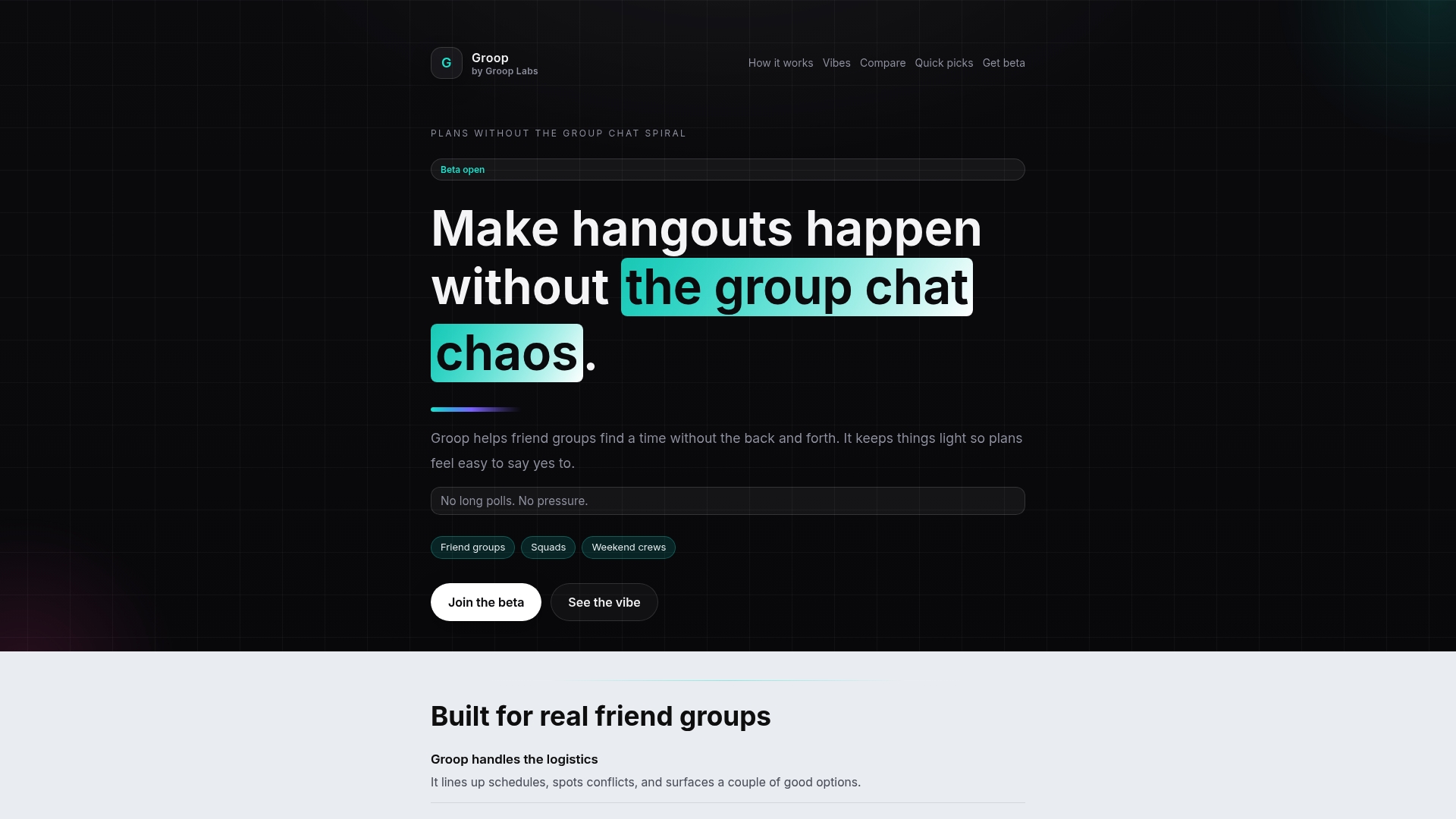
Grooop by Groop Labs brings together everything covered in this article, from automatic availability matching and surfacing scheduling conflicts to keeping decisions simple and pressure-free. You don't need to run separate polls, chase down responses, or manage a messy group thread. Grooop handles the logistics so your group can focus on the fun part. Whether you're planning a casual hangout, a study session, or a weekend outing, Grooop makes it easy to go from idea to confirmed plan in minutes. Check out Groop Labs and see how effortless group planning can actually be.
Frequently asked questions
What is the easiest way to find a group activity everyone likes?
Use quick group polls to suggest and vote on activities so everyone has input. Polling on interests and budget before booking helps you land on inclusive options the whole group will enjoy.
How can I avoid endless chatting and indecision in group plans?
Use structured decision techniques like Nominal Group Technique or group polls to reach quick consensus. These methods give everyone a voice while keeping the process moving forward.
Do group planning apps really make a difference?
Structured tools and apps reduce wasted coordination effort and help groups organize more efficiently than manual methods. The right app can turn a 40-message thread into a two-tap decision.
What's a simple structure for organizing recurring hangouts?
Set a regular date, use polls for topics or locations, and rotate the group organizer each time. Keeping the format consistent means less planning overhead every single round.
How do you include quiet or introverted group members?
Anonymous polls or silent idea sessions ensure all voices get heard, not just the loudest. When input is private, quieter members feel safe sharing their real preferences.
Recommended
- Master social scheduling to simplify your group plans | Groop Blog
- Step-by-step group scheduling: easy social planning | Groop Blog
- Group planning trends for young adults: easy coordination | Groop Blog
- How to organize group plans for stress-free hangouts | Groop Blog
- How to Organise Events for Maximum Impact: Step-by-Step Guide - team I
- How to organize get to know each other games (2026 guide) - The World Game