
Articles
What is casual group planning? A guide for friends
Discover what casual group planning is and how it helps friends coordinate hangouts with 70% less stress. Learn practical methods, tools, and best practices for effortless social coordination.
What is casual group planning? A guide for friends
Ever tried organizing a simple hangout with friends only to watch it dissolve into endless texts, conflicting schedules, and someone asking "what's the plan?" two hours before you're supposed to meet? You're not alone. Casual group planning offers a smarter approach to coordinating social activities without the usual chaos. This guide breaks down what casual group planning is, why it works, and how you can use it to finally make plans that actually happen.
Table of Contents
- Understanding Casual Group Planning: What It Is And Why It Matters
- Common Methods And Tools For Casual Group Planning In 2026
- Best Practices For Stress-Free Casual Group Planning
- Real-World Examples: How Casual Group Planning Looks In Practice
- Streamline Your Social Life With Groop
- What Is Casual Group Planning?
Key takeaways
| Point | Details | |-------|---------|| | Definition | Casual group planning is informal, flexible coordination that helps friends organize hangouts without stress or pressure. | | Core benefit | Reduces planning anxiety by up to 70% while improving attendance rates through clearer communication and simple decision-making tools. | | Best tools | Dedicated planning apps, polling features, and shared calendars streamline coordination without abandoning your existing group chats. | | Implementation | Start with one simple tool your group already knows, set gentle deadlines, and keep communication light but consistent. |
Understanding casual group planning: What it is and why it matters
Casual group planning is the practice of coordinating social events among friends using informal, flexible methods that prioritize ease over perfection. Unlike formal event planning with spreadsheets and rigid timelines, casual planning keeps things light while ensuring everyone knows when and where to show up.
The benefits are real and measurable. Group planning apps cut 70% stress for friends in 2026 by replacing scattered messages with organized decision-making. You get clearer communication, fewer last-minute cancellations, and more time actually enjoying your friends instead of herding them.
Casual group planning solves specific pain points that plague friend groups:
- Schedule conflicts that turn simple plans into week-long negotiations
- Last-minute changes that leave half the group confused
- Unclear details that spawn dozens of "wait, what time again?" messages
- Decision paralysis when no one wants to pick the restaurant
Getting started is simpler than you think. Pick a single coordination method, whether it's a dedicated app or a shared calendar. Propose the plan with 2-3 time options rather than asking open-ended questions. Give everyone a reasonable window to respond, then finalize based on majority availability.
Pro Tip: Choose a casual group organization approach that matches your group's existing habits rather than forcing everyone to adopt completely new tools.
Common methods and tools for casual group planning in 2026
The right tools make casual planning feel effortless instead of like another chore. The key is finding platforms that reduce friction without overwhelming your group with features nobody asked for.
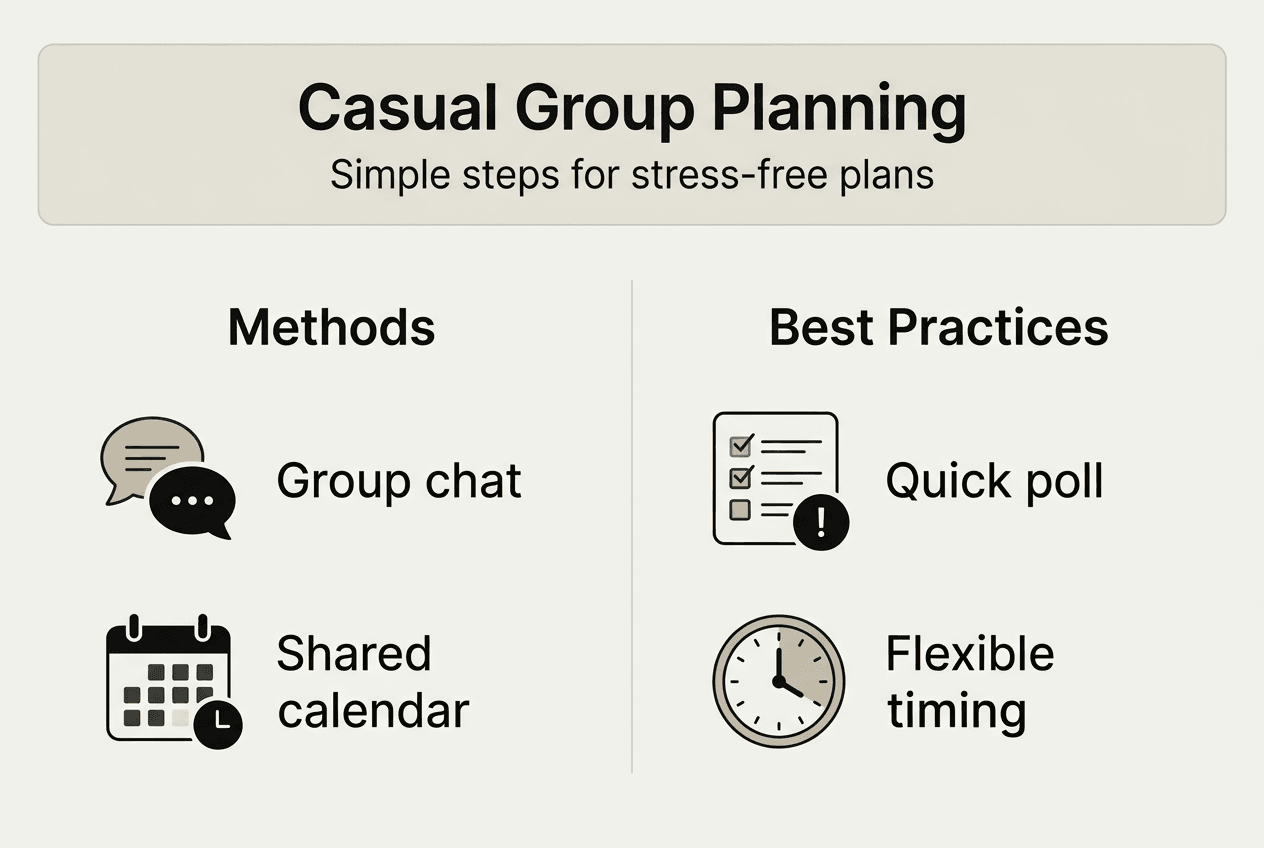
Top group planning apps simplify team events and social plans by offering purpose-built features for coordination. Here's what different tool categories bring to the table:
- Dedicated planning apps provide polling, availability checking, and automatic conflict detection in one place
- Group chat platforms keep conversations flowing but often bury important details in endless scrolling
- Shared calendar tools show everyone's schedules but require manual updates and coordination
- Polling apps excel at quick decisions but don't handle the full planning workflow
When choosing your stack, consider what your group already uses versus what would genuinely make planning easier. The best tool is the one everyone will actually open.
| Tool Type | Best For | Potential Drawback |
|---|---|---|
| Planning apps | Full workflow from idea to execution | Requires everyone to download something new |
| Group chats | Keeping existing communication flow | Important details get lost quickly |
| Calendar apps | Visual schedule alignment | Manual entry creates coordination burden |
| Poll tools | Fast decision-making | Limited to single-question scenarios |
Look for features that actively reduce planning work rather than just organizing it differently. Automated availability surfacing beats asking everyone individually. Integrated reminders prevent the "I forgot" excuses. Simple yes/no/maybe responses trump lengthy discussion threads.
Pro Tip: Stick with tools your group already knows for 80% of coordination tasks. Only introduce specialized group scheduling social plans tools when the added features justify the adoption effort.
Best practices for stress-free casual group planning
Having the right tools matters less than using them with smart habits that respect everyone's time and preferences. These practices transform coordination from a dreaded task into a quick, painless process.
Start by clarifying basic expectations without creating rigid rules. Agree on reasonable response times for plan invites, typical advance notice for events, and how decisions get finalized when not everyone responds. This prevents confusion without feeling controlling.
Use simple decision-making systems that move plans forward:
- Offer 2-3 specific options instead of open-ended questions
- Set a gentle deadline for responses so plans don't linger indefinitely
- Default to majority preference when you can't achieve unanimous agreement
- Confirm final details once rather than repeatedly checking if everyone saw the message
Keep communication consistent but light. A single consolidated message beats five separate texts asking the same question. Updates should inform without pressuring. The goal is clarity, not creating another notification storm.
Best practices for social groups cut planning time 40% in 2026 by eliminating unnecessary back-and-forth. Every message should either gather needed information or share a decision.
Pro Tip: Set a standard planning window for your group, like finalizing weekend plans by Wednesday evening. This creates predictable rhythm without rigid scheduling.
Avoid over-planning the actual event. Settle the essential logistics like time, place, and who's coming, then let the rest unfold naturally. Trying to script every detail kills the spontaneous energy that makes casual hangouts fun. Leave room for in-the-moment decisions about what to do next or where to grab food after.
Real-world examples: How casual group planning looks in practice
Seeing casual planning in action makes the concepts concrete. Here's how real friend groups apply these methods to common scenarios.
Consider a weekend hiking trip with six friends. Here's the streamlined process:
- Initial proposal: One person suggests the hike with two date options and a rough time window on Friday
- Quick poll: Everyone responds with availability by Saturday morning using a simple planning tool
- Decision: The organizer picks the date with most availability and shares trailhead details Saturday afternoon
- Confirmation: A single reminder goes out Friday evening with final logistics
- Execution: Everyone shows up prepared because expectations were clear from the start
This process replaced what used to be a week of scattered messages, multiple plan changes, and inevitable confusion about meeting times.
Small group planning benefits for social life improve attendance and satisfaction by making participation feel easy rather than demanding. When the coordination burden drops, people say yes more often.
Here's what one frequent organizer shared about adopting casual planning methods:
"We went from half our plans falling apart to actually doing everything we propose. The difference isn't that we're better friends now, it's that we removed the friction that made organizing feel like work. Now making plans takes five minutes instead of five days."
Another common scenario is coordinating group dinners. The old approach involved endless "where should we go?" discussions that satisfied nobody. The casual planning version presents three restaurant options with a quick vote, books a reservation based on the winner, and shares the final details once. Decision made, plan set, stress eliminated.
The key pattern across successful examples is reducing decision points while maintaining flexibility. You're not creating rigid structure, you're removing unnecessary chaos. Plans happen faster, more people participate, and the actual hangout starts without anyone asking basic questions that should have been organized for stress-free hangouts from the beginning.
Streamline your social life with Groop
If you're ready to put these casual planning principles into practice with a tool built specifically for friend groups, Groop delivers exactly what you need without the bloat.
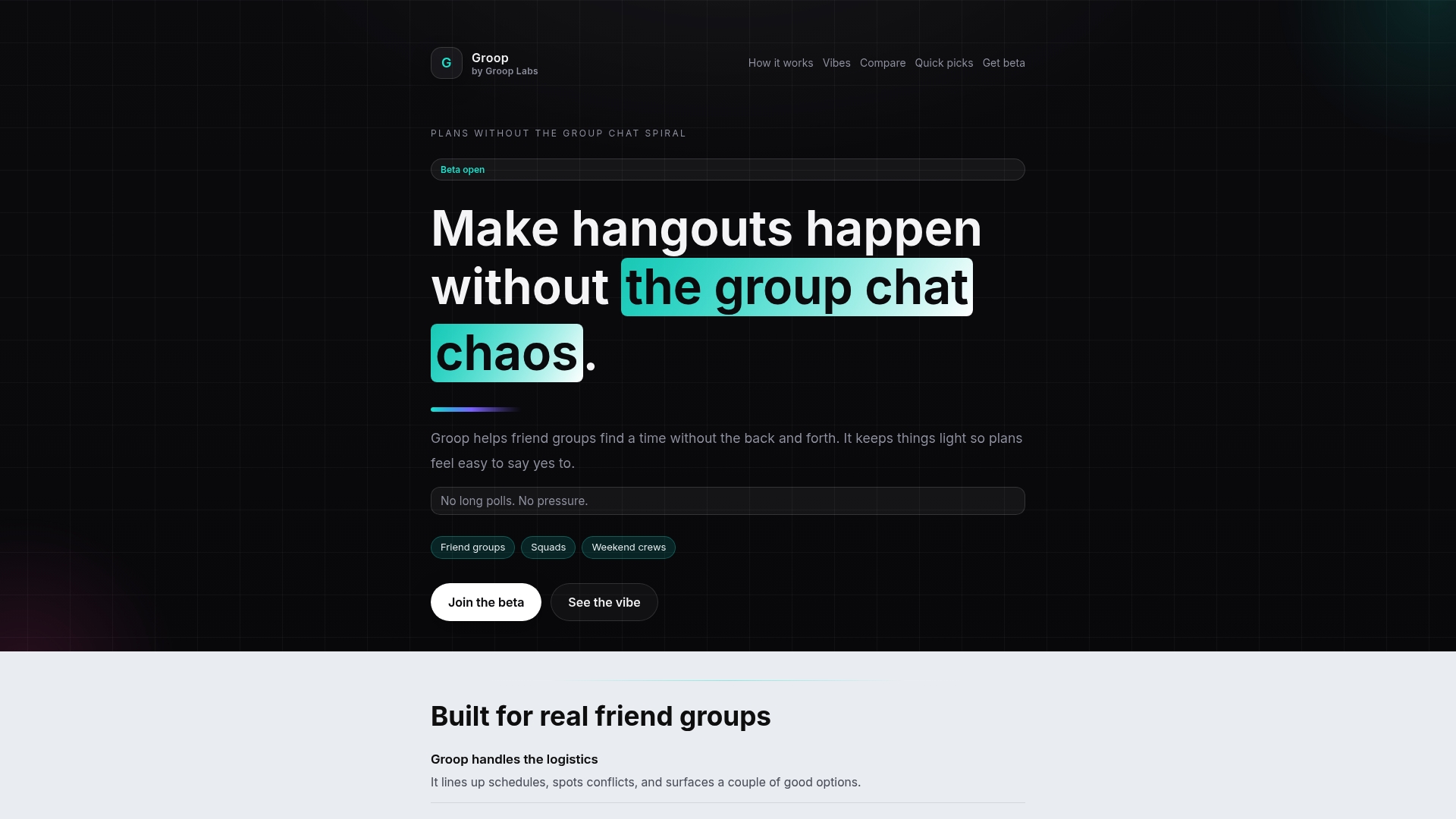
Groop handles the coordination logistics so you can focus on actually enjoying time with friends. The app surfaces availability conflicts automatically, offers simple yes/maybe/no responses, and keeps everyone aligned without drowning in notifications. It's designed for the way friend groups actually communicate, not corporate meeting schedules.
Explore how Groop's casual group planning approach can transform your social coordination from chaotic to effortless. The platform is free to use and built specifically for scenarios like weekend trips, dinner outings, and spontaneous hangouts where heavy-duty planning tools feel like overkill.
What is casual group planning?
What defines casual group planning compared to formal planning?
Casual group planning prioritizes flexibility and ease over detailed structure. It uses simple coordination tools rather than complex project management systems. The focus is getting friends together with minimal friction, not creating perfect itineraries. Formal planning involves detailed timelines, assigned roles, and extensive documentation that casual social events simply don't need.
Which apps are best for casual group planning?
The best apps balance useful features with simple interfaces that don't overwhelm users. Look for tools offering quick polling, availability checking, and integrated messaging without requiring extensive setup. Dedicated casual group organization platforms like Groop often work better than repurposed business tools. The right choice depends on whether your group values familiarity with existing apps or specialized features that reduce coordination work.
How can you get your friends to adopt casual group planning?
Start by using casual planning methods for one event and demonstrating the time savings. Choose tools that require minimal learning curve so adoption feels effortless rather than demanding. Frame it as making everyone's life easier, not adding another app to manage. Once friends experience smoother coordination firsthand, they'll naturally prefer it over chaotic group chat planning.
Does casual group planning really reduce planning stress?
Yes, measurably so. Studies show structured coordination approaches reduce planning-related stress significantly compared to unorganized group chats. The reduction comes from clearer communication, fewer repeated questions, and confident decisions about logistics. When everyone knows the plan without hunting through message history, anxiety about miscommunication disappears.
Any quick tips for starting casual group planning today?
Pick one upcoming event and propose it with 2-3 specific time options instead of asking "when works for everyone?" Use a simple poll tool to collect responses with a 48-hour deadline. Finalize based on majority availability and share details once in a clear, consolidated message. This single change will immediately show your group how much smoother planning can be.