
Articles
Define casual group organization for easy planning
Learn what casual group organization means and how apps like Grooop simplify friend planning by reducing stress, cutting coordination time, and preserving your squad's natural vibe.

Define casual group organization for easy planning

Planning another hangout with your squad shouldn't feel like coordinating a military operation. Yet somehow, every group chat devolves into endless back-and-forth messages, conflicting schedules, and plans that never materialize. Casual group organization offers a smarter approach to streamline social planning, cutting through the chaos with simple tools and clear processes that actually get your crew together. Apps like Grooop make this easier by reducing decision fatigue and preserving your group's natural vibe.
Table of Contents
- What Is Casual Group Organization?
- Why Is Casual Group Planning Challenging?
- How Apps Like Grooop Facilitate Casual Group Organization
- Common Misconceptions About Casual Group Organization
- Comparing Casual Group Planning Apps: Features And Approach
- Implementing Casual Group Organization For Effective Social Planning
- Conclusion: Embracing Casual Group Organization For Better Social Life
Key takeaways
| Point | Details |
|---|---|
| Casual group organization balances simplicity with social dynamics | It focuses on low-pressure planning that keeps your group's vibe intact while making logistics manageable. |
| Scheduling apps cut planning time and reduce indecision | Tools like Grooop surface conflicts automatically and limit options to speed up decisions. |
| Simpler choices boost attendance and satisfaction | Offering 2-3 clear options instead of endless polls helps groups commit faster and show up more often. |
| App features directly impact engagement and retention | Apps preserving social vibe retain users 25% longer than purely functional tools. |
| Practical implementation steps make organizing effortless | Identifying core members, limiting options, and using conflict detection features streamline the entire process. |
What is casual group organization?
Casual group organization refers to informal, low-pressure methods for coordinating social plans among friend groups without the rigidity of formal event planning. It prioritizes maintaining natural group dynamics while making logistics simple enough that everyone can participate without stress. Unlike corporate team scheduling or complex event management, this approach centers on spontaneity, flexibility, and social comfort.
The core philosophy emphasizes reducing friction in communication and decision-making. When your group wants to grab dinner, catch a movie, or plan a study session, casual organization keeps the process light and natural. It acknowledges that overly structured planning kills the vibe, while complete chaos leads to nothing happening at all.
Typical examples include:
- Weekend hangouts with 4-6 close friends
- Impromptu study sessions between classes
- Casual outdoor activities like hiking or park meetups
- Regular game nights or watch parties
- Sibling gatherings or family friend events
The key differentiator is simplicity. Casual group organization strips away unnecessary complexity, offering just enough structure to overcome scheduling conflicts without turning fun plans into homework. It respects that your group already knows what they want to do. They just need help figuring out when everyone can actually make it happen.
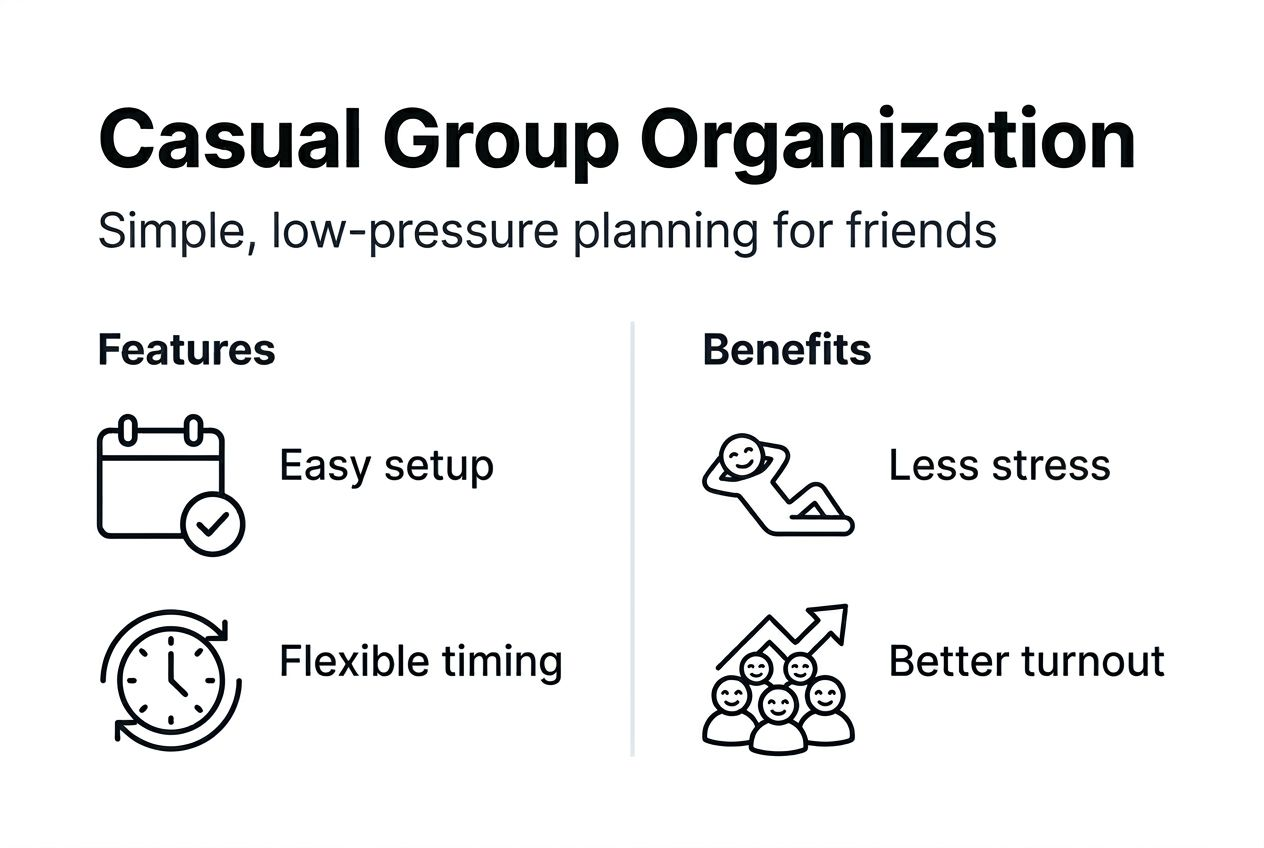
This approach works because it aligns with how young adults naturally socialize. Your friendships thrive on spontaneity and easy connection, not rigid calendars and formal RSVPs. Casual organization supports those values while solving the logistical headaches that often prevent plans from coming together.
Why is casual group planning challenging?
Even informal social planning hits frustrating roadblocks that prevent groups from actually getting together. Understanding these obstacles helps you recognize why traditional group chats often fail to produce results.
Communication overload creates the first major hurdle. Back-and-forth chats increase planning time by 40%, leading to engagement drop-offs. When eight people are throwing out different times across multiple messages, critical information gets buried. Someone suggests Tuesday, another counters with Thursday, and before you know it, nobody remembers what was decided or if anything was decided at all.
Conflicting schedules compound the problem:
- Work shifts, class times, and existing commitments create genuine availability gaps
- Time zones add complexity when friends attend different colleges
- Last-minute changes force groups to restart the entire planning process
- Unclear availability information leads to assumptions and miscommunication
Indecision paralyzes even the most motivated groups. When faced with too many options or incomplete information about who can actually attend, people default to waiting for others to decide. This creates a standoff where everyone expects someone else to take charge, resulting in plans that perpetually exist in limbo.

Stress and planning fatigue gradually erode your group's willingness to organize anything. After several failed attempts to coordinate schedules, members start opting out of future planning conversations entirely. The social friction of dealing with social planning challenges becomes more exhausting than the potential enjoyment of the hangout itself.
Managing group dynamics adds subtle but significant pressure. Some members always respond immediately while others take days. Quiet friends might not voice their preferences, leading to plans that work for the loudest voices but not everyone. These social patterns make coordination harder than pure logistics suggest.
Pro Tip: Designate one person as the "plan starter" who initiates scheduling and sets a decision deadline. This simple role eliminates the standoff where everyone waits for someone else to take charge, cutting planning time significantly.
How apps like Grooop facilitate casual group organization
Specialized scheduling apps solve traditional planning problems by automating the tedious parts while preserving what makes your group's social dynamic work. These tools don't replace your group chat but rather add a coordination layer that handles logistics efficiently.
Lightweight scheduling options reduce user effort dramatically. Instead of asking everyone to check their calendar and report back, apps like Grooop let members quickly indicate availability through simple taps. This removes the burden of composing messages and waiting for responses, transforming a 40-message thread into a streamlined process.
Automatic availability lining and conflict surfacing in apps speed decision-making by clarifying options and reducing indecision. When the app shows that six out of seven people can make Saturday but only three can do Friday, the choice becomes obvious. This visibility eliminates guesswork and helps groups converge on workable solutions faster.
Simple, limited choices accelerate group decisions:
- Presenting 2-3 clear time options instead of open-ended polls
- Automatically highlighting times when most people are available
- Surfacing conflicts before they derail plans
- Providing visual indicators of group consensus
Preserving social vibe proves crucial for ongoing engagement. Apps centered on preserving group social vibe retain users 25% longer than those focusing only on functionality. Grooop's design philosophy recognizes that planning tools must feel natural to your group's communication style. Features like starting a plan with minimal input and offering pressure-free acceptance options maintain the relaxed feel of casual organizing.
App design choices directly affect retention and satisfaction. Tools offering tips for group planning apps emphasize that simplicity beats feature bloat. When an app tries to do everything, it becomes overwhelming. Focused tools that excel at coordination without complicating social interaction earn sustained adoption.
The key app features for casual group organizing include automatic reminders, conflict detection, and easy plan modification. These capabilities handle common pain points while letting your group maintain control over the social elements. The app manages when and where, while your crew decides the vibe and activities.
By understanding UX design of group scheduling apps, you can appreciate how thoughtful interfaces reduce cognitive load. Good apps minimize the number of taps required, present information clearly, and never force users to navigate complex menus just to indicate availability. This attention to user experience explains why some tools succeed where others create more frustration than they solve.
Common misconceptions about casual group organization
Several widespread myths prevent groups from adopting more effective planning strategies. Debunking these misconceptions helps you make better choices about coordination tools and methods.
More poll options do not create fairer or more accepted plans. Many people assume that offering five or six time slots gives everyone a better chance to participate. In reality, excessive options increase decision fatigue and slow consensus. Groups perform better with focused choices that clarify trade-offs rather than creating analysis paralysis.
Casual organizing requires more structure than informal chatting:
- Unstructured group chats work great for conversation but fail at logistics
- Some organizational framework prevents plans from dissolving into confusion
- Light structure supports spontaneity rather than constraining it
- Tools providing just enough coordination help groups achieve their social goals
Apps focusing only on functionality often lose users quicker than anticipated. A scheduling tool might technically work perfectly but still get abandoned if it feels cold or impersonal. The importance of social vibe in apps cannot be overstated. When technology feels like it's imposing on your social dynamic rather than supporting it, adoption fails regardless of feature completeness.
Social vibe proves crucial for retention and adoption. Your group won't keep using a tool that makes planning feel like a chore or turns casual hangouts into formal events. Apps must match the energy and style of how friends naturally interact. This means embracing informality, allowing flexibility, and never making coordination feel like filling out paperwork.
Simplified, vibe-preserving tools outperform complex solutions consistently. A basic app that your entire group actually uses beats a feature-rich platform that only the organizer understands. Adoption across all members matters more than sophisticated capabilities that create barriers to participation.
Comparing casual group planning apps: features and approach
Different apps take varying approaches to group coordination, each with distinct design philosophies and feature priorities. Understanding these differences helps you choose the right tool for your specific group needs.
| Feature | Grooop | Doodle | Eventbrite |
|---|---|---|---|
| Primary Focus | Social vibe + minimal polling | Calendar integration + complex polls | Large formal events |
| Conflict Detection | Automatic surfacing | Manual review required | Limited availability features |
| Options Complexity | 2-3 simple choices | Unlimited poll options | Full event management suite |
| Target Group Size | 4-10 close friends | 10-50 participants | 50+ attendees |
| User Autonomy | High, pressure-free acceptance | Moderate, structured voting | Low, formal RSVP process |
| Social Integration | Maintains group chat vibe | Separate from social interaction | Event-focused communication |
Grooop prioritizes vibe, minimal polling, and automatic conflict surfacing to keep planning relaxed and efficient. Its design assumes your group already communicates well and just needs help with logistics. The app focuses on stress reduction with group apps by presenting limited, clear options that speed consensus.
Doodle emphasizes calendar integration and supports complex polls with numerous time slots. This approach works well for professional settings or larger groups where comprehensive availability mapping matters more than maintaining casual social dynamics. The trade-off involves more setup time and potential decision overload.
Eventbrite targets larger, more formal event management with features like ticketing, promotion, and detailed attendee tracking. While powerful for organized events, this complexity overwhelms casual friend groups who just want to grab dinner or plan a game night.
User autonomy and social vibe impact retention and plan acceptance significantly. Apps allowing members to accept plans without pressure or complicated interfaces see higher completion rates. When coordination feels natural rather than bureaucratic, groups stick with the tool long-term.
Choosing the right app depends on your group's size and planning style. Small friend squads benefit from streamlined tools like those in best casual group planning apps, while larger or more formal groups might need additional features. Exploring Grooop alternatives for group coordination helps you evaluate options based on specific requirements.
Implementing casual group organization for effective social planning
Putting casual group organization into practice involves specific steps that reduce planning time while encouraging spontaneous hangouts. These actionable strategies help you coordinate more successfully.
-
Identify your core group members and map common free times across the week. Understanding baseline availability patterns helps you propose times that work for most people from the start, avoiding obvious conflicts.
-
Limit scheduling options to 2-3 clear choices that represent genuinely different alternatives. Instead of asking when everyone is free, present specific options like Saturday afternoon or Sunday morning. This focused approach speeds decisions dramatically.
-
Use app features like conflict surfacing to highlight schedule overlaps before finalizing plans. Tools that automatically show when certain members can't attend help you adjust early rather than discovering conflicts later.
-
Encourage low-pressure acceptance that preserves your group's vibe and prevents planning from feeling like an obligation. Frame invitations as genuine options rather than mandatory attendance, making it easier for members to commit honestly.
-
Send reminders and updates through the app to improve attendance without nagging. Automated notifications handle the logistical communication while keeping the social interaction natural.
Pro Tip: Start plans 3-5 days ahead for casual hangouts and 1-2 weeks for bigger activities. This sweet spot gives enough time to coordinate without making plans feel distant or formal.
Implementing tips to reduce planning time transforms how efficiently your group organizes. The methods for simplifying social plans emphasize reducing unnecessary complexity while maintaining the spontaneous feel your group enjoys.
Comparing using scheduling apps vs chats reveals that dedicated tools handle logistics better while group chats excel at social interaction. Using both together creates the optimal balance. Your chat stays fun and free-flowing while the scheduling app manages coordination cleanly.
Following step-by-step group organizing tips ensures you cover essential elements without overthinking the process. These practical guidelines help new organizers avoid common mistakes while experienced planners refine their approach.
Conclusion: embracing casual group organization for better social life
Casual group organization transforms how friend groups coordinate plans by reducing stress and cutting planning time significantly. This approach improves event attendance and group enjoyment by preserving the natural social vibe that makes hangouts worthwhile in the first place. Apps like Grooop make organizing easy and fun by handling logistics efficiently while keeping social dynamics relaxed. Start implementing these methods now to spend less time planning and more time actually hanging out with your crew. The simple shift toward structured yet flexible coordination tools can revitalize your social calendar and strengthen your friendships.
Streamline your casual plans with Grooop
You've learned how casual group organization makes coordinating friends easier and more enjoyable. Now it's time to experience these benefits firsthand. Grooop helps reduce stress with Grooop by 70% through automatic conflict detection and simple, pressure-free planning options.
The app is specifically designed to cut your planning time by over 60% while preserving your group's natural social vibe. Instead of endless group chat messages, Grooop surfaces availability conflicts immediately and presents 2-3 clear options that help your squad decide quickly. Automatic reminders ensure everyone shows up without you having to chase people down. Setup takes minutes, and your entire group can start coordinating better plans today. Download Grooop today and transform how your friend group hangs out.
What exactly defines casual group organization?
Casual group organization means using low-pressure, simple planning methods specifically designed for friend groups and spontaneous social events. It minimizes communication stress and decision overhead by providing just enough structure to overcome scheduling conflicts without turning fun plans into formal obligations. This approach typically gets implemented through lightweight apps or coordination tools that handle logistics while preserving your group's natural social dynamics and relaxed vibe.
Why do casual group plans often fail or get complicated?
Planning failures usually stem from conflicting schedules, communication overload across endless group chat messages, indecision when facing too many options, and lack of basic organizational structure. These issues create delays, force cancellations, and cause participation drop-offs as members become frustrated with the coordination process. The combination of logistical challenges and social friction gradually erodes your group's motivation to plan anything at all.
How do apps improve casual group organization?
Apps streamline coordination by offering simple scheduling interfaces, automatic conflict detection that surfaces availability issues immediately, built-in reminders, and design choices that preserve social vibe throughout the planning process. They limit options to reduce decision fatigue and clarify choices so groups can reach consensus quickly. By handling tedious logistics automatically, these tools let your crew focus on the social aspects while ensuring plans actually happen.
What are common mistakes to avoid in casual group organizing?
Overloading your group with too many scheduling options, relying exclusively on informal chat threads for logistics, and ignoring group social dynamics represent the most frequent planning mistakes. These approaches create confusion, slow decision-making, and often result in plans that never materialize. Using structured coordination tools while keeping the process simple and vibe-focused produces much better outcomes and higher attendance rates.