
Articles
What is informal group planning: A guide for easy meetups
Discover what informal group planning means for friend groups and learn practical strategies to coordinate casual meetups without stress, endless messages, or failed plans.

What is informal group planning: A guide for easy meetups

Ever tried organizing a hangout with your friends only to watch the plan dissolve into endless messages, conflicting schedules, and zero commitment? You're not alone. Most young people struggle with coordinating casual meetups because traditional group chats turn planning into chaos. This guide breaks down what informal group planning actually means, why it works for friend groups, and how you can use simple strategies and tools to make your next get-together happen without the usual stress or confusion.
Table of Contents
- Key takeaways
- Understanding informal group planning in social friend groups
- How informal group planning benefits your friend meetups
- Common tools and methods used in informal group planning
- Best practices to make informal group planning work smoothly
- Enhance your informal group planning with Groop Labs
- FAQ
Key Takeaways
| Point | Details |
|---|---|
| No formal structure | Informal planning uses casual coordination without designated leaders or formal roles. |
| Fast group decisions | Ideas are proposed and options are decided quickly through casual input from the group. |
| Flexible timing | Schedules and locations can shift easily to accommodate everyone. |
| Less planning stress | A lightweight process keeps plans simple and reduces anxiety from perfection. |
Understanding informal group planning in social friend groups
Informal group planning is exactly what it sounds like: organizing activities with friends in a relaxed, flexible way without the structure of formal event management. Unlike planning a wedding or corporate meeting, informal group planning is characterized by flexible, casual coordination without strict rules or formal roles. It's how you naturally coordinate movie nights, study sessions, weekend hikes, or spontaneous coffee runs with your squad.
This type of planning fits perfectly with how young people actually socialize. You don't need agendas, official invitations, or designated leaders. Instead, someone throws out an idea, the group discusses options casually, and you land on a time and place that works for most people. The goal is keeping things simple while still making plans actually happen.
The key characteristics that define casual group organization include:
- No formal roles or hierarchy among group members
- Flexible timing and locations based on group preference
- Quick decision-making without lengthy deliberation
- Adaptable plans that can change based on availability
- Emphasis on fun and social connection over logistics
What makes informal planning different from formal approaches is the lack of structure. Formal planning involves designated organizers, detailed schedules, budget tracking, and clear responsibilities. Informal planning thrives on spontaneity and shared responsibility. Everyone contributes ideas, availability gets checked casually, and the group moves forward together.
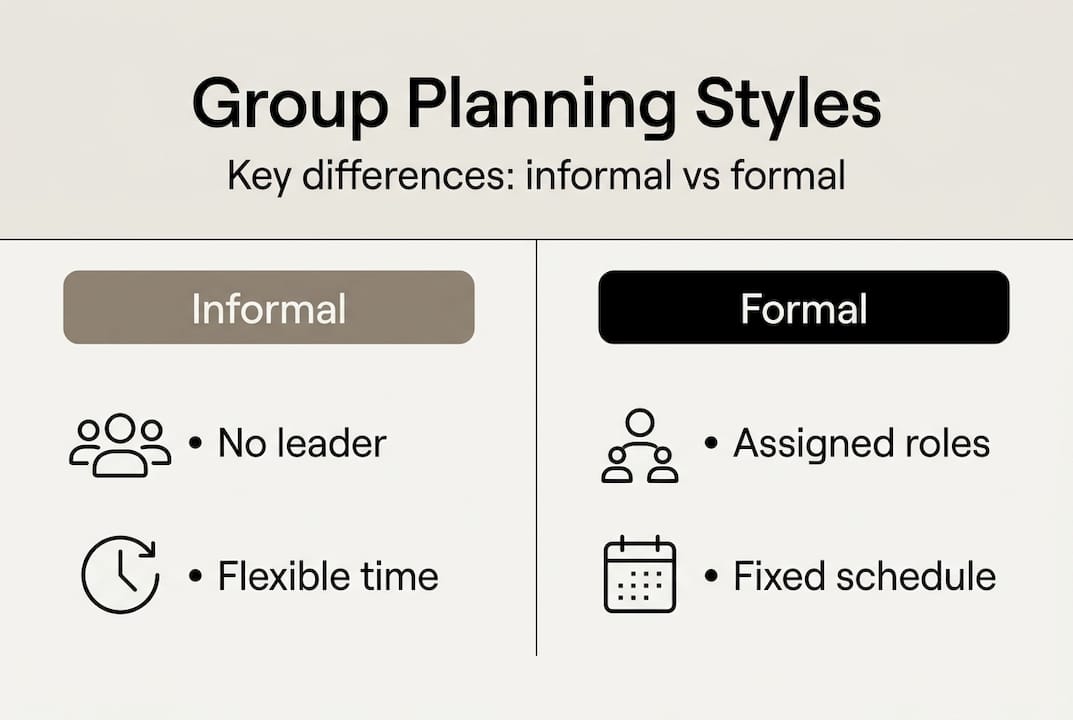
Young people use informal planning constantly for activities like grabbing lunch between classes, organizing game nights, planning beach trips, coordinating study groups, or arranging birthday celebrations. These situations don't need complex coordination, just enough organization to get everyone on the same page.
The challenge comes when informal planning happens entirely through group chats. Messages get buried, people miss updates, conflicting ideas create confusion, and enthusiasm fades as the conversation drags on. Without some lightweight structure or tool, even the simplest plans can fall apart before they happen.
How informal group planning benefits your friend meetups
Embracing informal group planning delivers real advantages that make your social life better and less stressful. Understanding these benefits helps you see why this approach works so well for casual friend groups.
Speed stands out as the biggest win. Informal planning allows for simpler, quicker decision-making and flexibility that suits casual social groups. Instead of waiting days for everyone to weigh in on every detail, you propose options, gather quick responses, and move forward. This velocity keeps momentum alive and prevents plans from dying in endless discussion.

Flexibility gives your group breathing room. Informal planning doesn't lock you into rigid schedules or locations. If someone can't make the original time, you adjust. If a better idea emerges, you pivot. This adaptability reduces pressure and makes planning feel collaborative rather than restrictive.
Reduced stress matters enormously for young people already juggling school, work, and personal commitments. Formal planning creates anxiety through its demands for perfection and detailed coordination. Informal planning removes that weight by accepting that plans can be loose, spontaneous, and still successful. You're not stressing over every detail, just focusing on the essentials: when, where, and who.
Group satisfaction improves when everyone feels heard without the process becoming burdensome. Informal planning naturally incorporates everyone's preferences through casual discussion. People feel invested in plans they helped shape, which increases the likelihood they'll actually show up and enjoy themselves.
The small group planning benefits extend to maintaining the fun factor. Over-planning sucks the joy out of social activities. Informal coordination keeps things light and exciting. The spontaneity that comes with flexible planning often leads to the best memories because there's room for surprises and organic experiences.
Key benefits you'll notice:
- Plans happen faster with less back and forth
- Lower anxiety around coordinating schedules
- Higher attendance rates when people feel involved
- More enjoyable planning process that doesn't feel like work
- Better adaptability when circumstances change
Pro Tip: Start with a simple question like "Who's free this weekend?" rather than proposing fully formed plans. This approach gauges interest and availability simultaneously, making the planning process feel natural and collaborative from the start.
Common tools and methods used in informal group planning
The right tools transform informal group planning from chaotic to effortless. Young people have multiple options, but not all methods work equally well for casual coordination.
Dedicated group planning apps lead the pack for effectiveness. Top group planning apps provide features like polling, easy scheduling, and reminders tailored for casual groups. These apps understand that friend groups need lightweight coordination, not enterprise-level project management.
Groop stands out specifically for young people because it's designed around how friends actually plan. You start a plan, the app automatically checks availability, surfaces conflicts, and gives everyone simple choices. No complicated polls, no endless message threads, just clear options that make decisions quick and pressure-free. The interface keeps your group's vibe intact while handling the logistics behind the scenes.
Other popular tools include simple scheduling apps, shared calendar platforms, and polling services. Each offers different features that might suit your group's needs:
| Tool Type | Key Features | Best For |
|---|---|---|
| Groop | Automatic availability, conflict detection, simple choices | Friend groups wanting effortless coordination |
| Polling apps | Vote on options, see results quickly | Groups deciding between specific choices |
| Shared calendars | View everyone's schedule, block times | Groups with regular meetups |
| Group chat apps | Built-in polls, event features | Groups already using the platform |
Traditional methods like group text chains or social media threads remain popular but come with serious drawbacks. Messages get lost in conversation flow, people miss updates, and tracking who responded becomes impossible. These platforms weren't built for coordination, so using them for planning creates unnecessary friction.
The advantages of purpose-built planning apps over improvised methods include:
- Centralized information everyone can reference
- Clear visibility into who's available and who's not
- Automatic reminders so plans don't get forgotten
- Reduced message clutter in your main chat
- Faster consensus without endless discussion
Picking the right tool depends on your group's specific needs and preferences. Consider how tech-savvy your friends are, what platforms they already use, and how complex your typical plans get. For most casual friend groups, simpler is better. You want something that removes friction without adding new complications.
Pro Tip: Test a new planning tool with a low-stakes hangout first. If the app makes coordinating easier, your group will naturally adopt it for bigger plans. If it feels clunky or adds work, try something else before committing.
Best practices to make informal group planning work smoothly
Even informal planning benefits from smart practices that prevent common pitfalls and keep your social plans alive. Follow this step-by-step approach to coordinate effectively:
- Float the idea casually to gauge interest before diving into details
- Propose 2-3 specific options for timing rather than asking open-ended questions
- Set a soft deadline for responses to maintain momentum
- Use a planning app to track availability and preferences
- Make the final call once you have enough commitment
- Send a quick reminder the day before to confirm attendance
Clear communication forms the foundation of successful informal planning. Effective informal group planning depends on clear communication and commitment from group members. Keep messages focused on the essential details: what, when, where, and who. Avoid tangents that derail the planning conversation into unrelated topics.
Assigning informal roles helps without making things feel rigid. Someone naturally takes the lead by proposing the activity. That person can also handle follow-ups and final confirmations. This doesn't mean becoming a formal organizer, just accepting responsibility for keeping things moving forward.
Common pitfalls destroy even the best-intentioned plans:
- Endless indecision where the group debates every small detail
- Ignored messages because people assume someone else will respond
- Too many options that paralyze decision-making
- No clear deadline leading to indefinite postponement
- Lack of commitment where everyone says "maybe" but nobody commits
Avoid these issues by using apps that structure the process lightly. When everyone can see availability in one place, decisions happen naturally. When reminders go out automatically, people don't forget. When options are limited and clear, consensus forms quickly.
Understanding why plans die in the group chat helps you prevent the same fate. Plans typically fail when the coordination process becomes too burdensome, too confusing, or drags on too long. Combat this by keeping planning separate from regular conversation, using tools that simplify coordination, and maintaining momentum through quick decision-making.
Pro Tip: If your group struggles with commitment, try the "two yes" rule. Once two people confirm they're definitely coming, announce that the plan is happening regardless. This creates social proof that motivates others to commit rather than staying in maybe mode indefinitely.
Enhance your informal group planning with Groop Labs
Now that you understand what makes informal group planning work, consider how the right tool can eliminate the frustrations you've experienced. Groop Labs built Grooop specifically for young people who want their social plans to actually happen without the usual chaos.
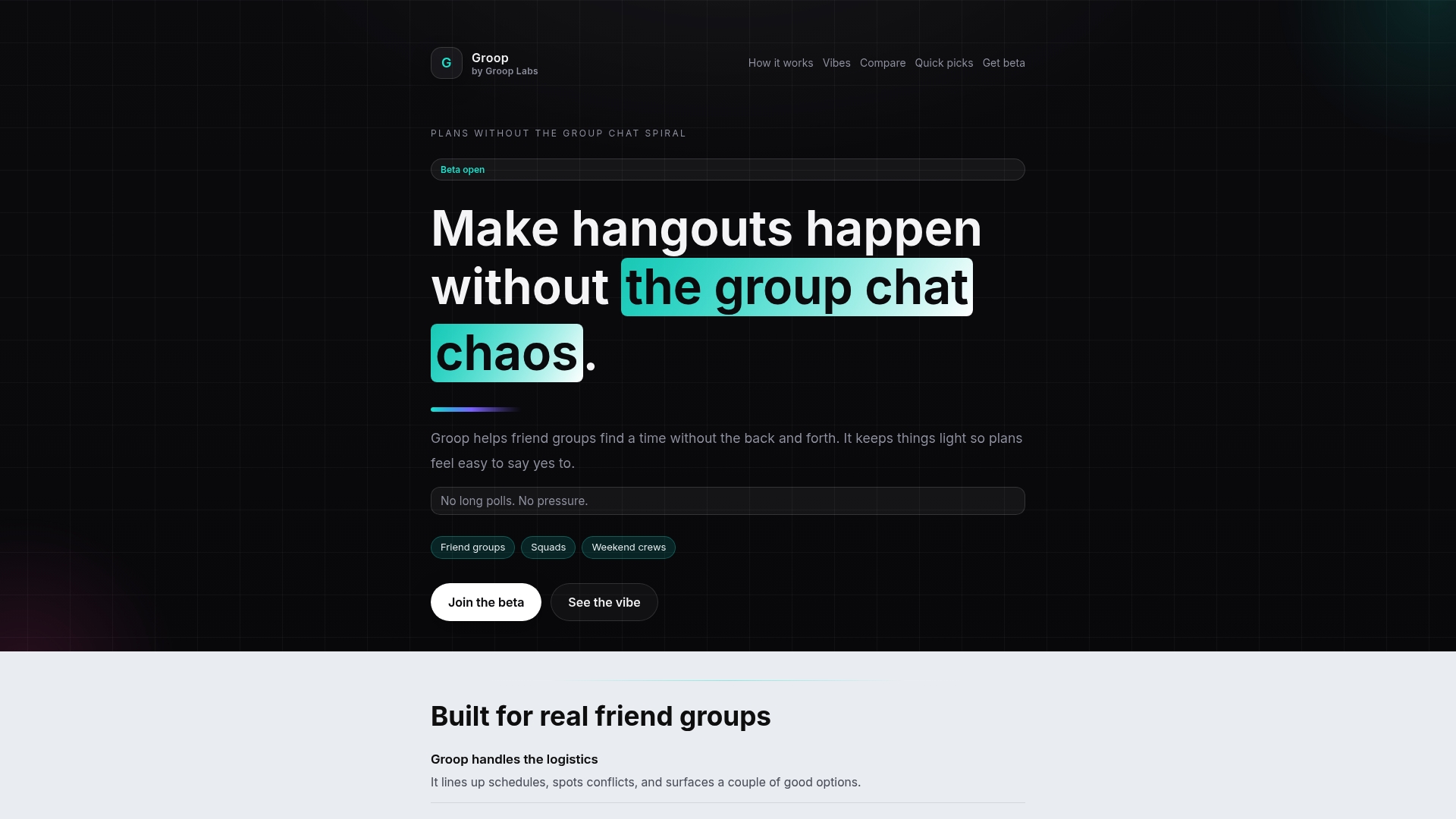
The app handles the logistics that typically derail plans while keeping your group's vibe intact. Start a plan with a few taps, and Grooop automatically lines up everyone's availability, surfaces conflicts, and presents simple choices. No complicated polls, no endless message threads, just clear options that help your group decide quickly and move forward. The interface feels natural because it's designed around how friends actually coordinate, not how businesses schedule meetings. Whether you're planning study sessions, weekend adventures, or casual hangouts, Grooop makes the process effortless so you can focus on enjoying time together.
FAQ
What is informal group planning?
Informal group planning is casual, flexible coordination among friends for social activities without strict rules or formal roles. It emphasizes spontaneity and shared decision-making rather than structured processes. This approach works perfectly for friend groups organizing hangouts, study sessions, or weekend activities where maintaining fun matters more than perfect logistics.
What common challenges arise in informal group planning?
Challenges include missed messages in busy group chats, slow responses that kill momentum, and multiple conflicting ideas that create confusion. Without clear structure, plans often remain indefinite as enthusiasm fades and people assume someone else will take charge. These issues typically result in failed meetups despite everyone's initial interest.
Which tools best support informal group planning?
Apps offering polls, shared calendars, automatic availability checking, and reminders work best for casual coordination. Top group planning apps designed specifically for friend groups provide lightweight features that simplify decision-making without adding complexity. Look for tools that integrate naturally with how your group already communicates.
How can I avoid plans dying in group chats?
Keep planning communication clear and focused on essential details only. Use dedicated planning apps to reduce message overload and prevent important information from getting buried in conversation. Understanding why plans die in group chats helps you recognize warning signs early and take action to maintain momentum through quick decisions and clear commitment.