
Articles
What is casual group coordination? Simple tools to plan
Discover what casual group coordination means and explore simple, pressure-free tools that make planning hangouts with friends easy and fun for young adults and teens.

What is casual group coordination? Simple tools to plan

Ever tried organizing a casual hangout with friends only to end up lost in a maze of group chats, conflicting schedules, and unanswered messages? You're not alone. Coordinating social plans shouldn't feel like a full-time job, but for many young adults and teens, it often does. This article breaks down what casual group coordination actually means and introduces you to easy, pressure-free tools designed to make planning with friends simple and fun. You'll discover feature-rich apps that transform chaotic group chats into smooth, enjoyable social planning experiences.
Table of Contents
- Understanding Casual Group Coordination: What It Really Means
- Exploring Popular Apps That Make Casual Group Coordination Easy
- Navigating Friend Group Dynamics And The Role Of Coordination Tools
- Practical Tips For Stress-Free Casual Group Coordination With Friends
- Try Simple Tools For Easy Group Coordination
- Frequently Asked Questions
Key takeaways
| Point | Details |
|---|---|
| Definition matters | Casual group coordination means managing informal social plans efficiently without stress or confusion |
| Apps simplify planning | Tools like CoHost, Feelr, and Howbout integrate invites, scheduling, and chat to reduce coordination chaos |
| Social dynamics impact coordination | Understanding friend group dynamics helps you use tools more effectively and avoid misunderstandings |
| Practical steps work best | Choose the right app, set clear expectations, and keep communication light for stress-free planning |
| Technology reduces pressure | Digital tools provide clear expectations and easy responses, lowering social anxiety around commitments |
Understanding casual group coordination: What it really means
Casual group coordination is all about managing informal social plans efficiently without the stress that usually comes with organizing get-togethers. Think of it as the art of bringing friends together for spontaneous hangouts, study sessions, or weekend adventures without drowning in endless group texts or missed messages. When plans aren't coordinated well, confusion reigns. Someone doesn't get the invite, another person shows up at the wrong time, and suddenly your chill hangout turns into an awkward mess.
Several common hurdles make coordination tricky. You're probably switching between multiple apps, dealing with group chat chaos where important details get buried under memes, and struggling to find times that work for everyone. These challenges aren't just annoying, they can lead to friends feeling left out or plans falling apart completely. That's where dedicated tools come in, combining invitations, scheduling, and chat features in one place to keep everyone on the same page.
CoHost aims to simplify event planning by integrating various features into a single app, addressing the common issue of juggling multiple apps for coordination. Instead of bouncing between texting, calendar apps, and social media, you get one streamlined space where planning actually makes sense. This approach transforms casual group organization explained from a headache into something genuinely easy.
Key aspects of casual group coordination include:
- Easy invites that reach everyone instantly without manual texting
- Simple RSVP tracking so you know who's coming and who's not
- Availability checks that surface scheduling conflicts before they become problems
- Casual chat features that keep conversations focused on the plan
- Flexibility to adjust details as plans naturally evolve
Understanding these basics helps you see why traditional group chats often fail. A group chat is just a conversation thread, while casual group coordination tools add structure without killing the vibe. An RSVP is simply a response confirming whether you'll attend, making it easier for organizers to plan accordingly. Casual events are informal gatherings with friends, different from formal events that require detailed planning, dress codes, or specific venues. Getting these definitions straight sets you up to use coordination tools effectively.
Exploring popular apps that make casual group coordination easy
Several apps have emerged specifically to tackle the coordination challenges young adults and teens face. CoHost stands out as an all-in-one event planning app that brings invites, RSVP tracking, and group chat together in one iPhone-friendly interface. The app has a rating of 5.0 out of 5 based on 5 ratings, showing early users love its approach. It's designed for people who want everything in one place without the complexity of traditional event planning software.
Feel like being spontaneous? Feelr takes a unique approach with mood-based friend matching for last-minute hangouts. Feelr offers features like real-time availability, instant chat, and smart alerts to enhance the user experience. You can see who's free right now and wants to hang out, making it perfect for those "what are we doing tonight?" moments. The app removes the awkwardness of reaching out by showing you when friends are actually available and in the mood to socialize.
Howbout focuses on solving the group chat chaos problem with shared calendars and time polls. Howbout offers features like time polls, shared calendars, and dedicated chat for each plan to facilitate easy coordination. Instead of endless back-and-forth messages, you create a poll, everyone votes on times, and the app finds what works. Each plan gets its own chat thread, so details don't get lost in unrelated conversations.
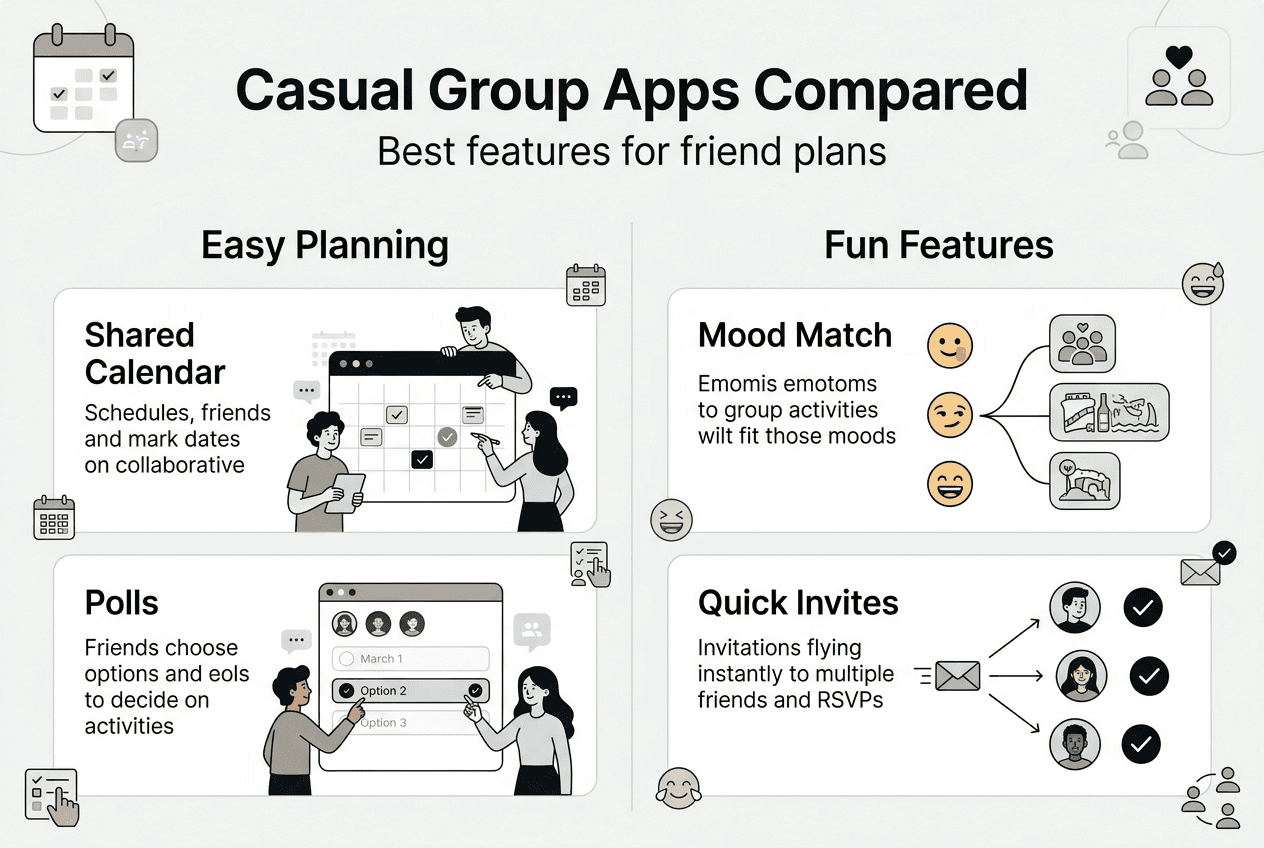
| Feature | CoHost | Feelr | Howbout | | --- | --- | --- | | Main strength | All-in-one planning | Spontaneous matching | Shared calendars | | Best for | Organized friend groups | Last-minute hangouts | Busy schedules | | Ease of use | Very intuitive | Simple and quick | Moderate learning curve | | Unique benefit | Integrated everything | Mood-based discovery | Visual time conflicts | | Platform | iPhone focused | Cross-platform | Cross-platform |
Each app has pros and cons depending on your coordination style. CoHost excels for groups that want one tool for everything but requires everyone to adopt the same app. Feelr is amazing for spontaneity but less useful for planning ahead. Howbout handles complex scheduling beautifully but might feel like overkill for super casual get-togethers. Understanding these differences helps you pick what fits your crew's vibe.
Pro Tip: Choose an app that matches your group's natural communication style rather than forcing everyone to change habits, and you'll see much better adoption and less resistance.
Exploring group planning apps 2026 options helps you understand what features matter most for your specific needs. Pay attention to group chat app features that reduce friction rather than just adding more bells and whistles.
Navigating friend group dynamics and the role of coordination tools
Even the best coordination app can't fix every social challenge, but understanding friend group dynamics helps you use these tools more effectively. Trio friendships, for example, come with unique complications. A three-person group can feel like the perfect size because it's small enough to feel close, but big enough to avoid awkward silences and always have someone to sit with. Yet trios often struggle with accidental alliances where two people feel closer, leaving the third feeling excluded.
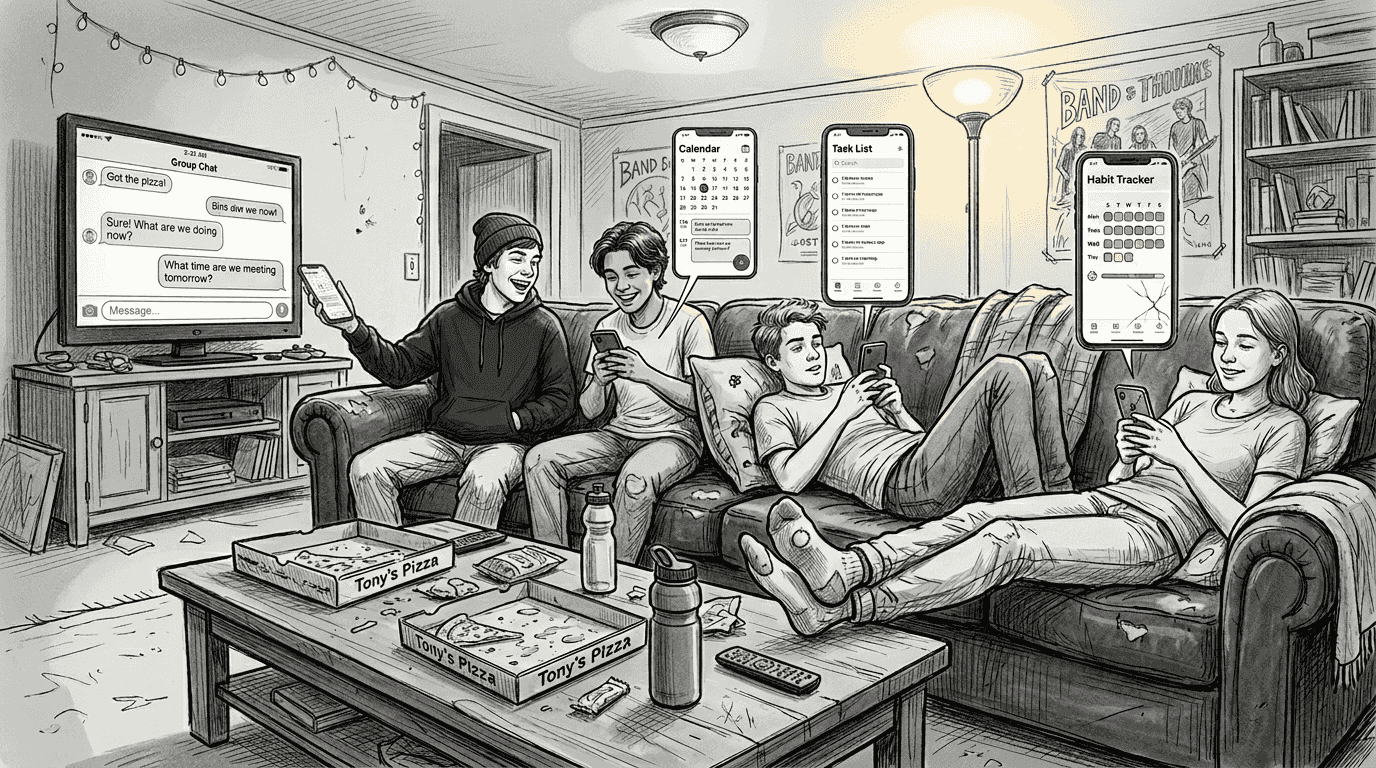
Coordination apps help by making communication visible and shared. When everyone sees the same invites, messages, and schedule updates, there's less room for accidental exclusion or miscommunication. You're not wondering if someone forgot to add you to the text thread because everything happens in one transparent space. This visibility reduces the social anxiety that comes from uncertainty about whether you're truly included.
Managing expectations within friend groups requires honest communication and realistic acceptance:
- Recognize that equal closeness among all members of a trio is not always possible
- Communicate your needs clearly rather than expecting friends to read your mind
- Accept different friendship intensities without taking them personally
- Create space for one-on-one time within larger friend groups
- Use coordination tools to ensure everyone gets invites, even if closeness varies
Trio friendships naturally involve complex dynamics where closeness levels shift and change. The key isn't forcing equal relationships but maintaining honest communication and ensuring everyone feels valued and included in group activities.
Technology serves as a tool to support better social harmony, not replace human connection. Apps can't make someone a better friend or force people to include you, but they can remove logistical barriers that accidentally create exclusion. When plans are clear and accessible, social dynamics improve because confusion and miscommunication decrease. Understanding friend group coordination explained from both technical and social perspectives gives you a complete picture.
The most successful friend groups combine good coordination tools with emotional intelligence. They use apps to handle logistics while maintaining open conversations about feelings, boundaries, and expectations. This balance keeps friendships healthy and planning stress-free.
Practical tips for stress-free casual group coordination with friends
Ready to put coordination tools to work? Follow these practical steps to make planning with friends genuinely easy and fun:
- Choose the right app that fits your group's communication style and planning needs
- Set clear expectations for RSVPs and availability updates so everyone knows what's expected
- Use app features like polls and dedicated chats for quick feedback without endless scrolling
- Rotate hosts or planners to share responsibility and prevent burnout from always organizing
- Keep plans flexible and low-pressure, accepting that changes happen and that's okay
These steps work because they address both the technical and social sides of coordination. Choosing the right tool matters, but so does creating a group culture where planning feels collaborative rather than burdensome. When everyone contributes and expectations are clear, coordination becomes almost effortless.
Role-playing and improvisation games are effective social skills activities for teens, providing a "social laboratory" where mistakes are learning opportunities. While that might sound formal, the principle applies to coordination too. Practice communicating your needs and navigating group social rules in low-stakes situations. Try discussing availability openly or suggesting alternative plans when conflicts arise. The more comfortable you get with these conversations, the smoother coordination becomes.
Pro Tip: Run through practice scenarios with close friends where you role-play handling schedule conflicts or expressing needs, building confidence before real coordination challenges arise.
Keep communication light and open to avoid peer pressure and social stress. If you can't make a plan, say so clearly without over-explaining or feeling guilty. If someone cancels on you, accept it gracefully without taking it personally. This mindset prevents coordination from becoming emotionally charged and keeps friendships healthy. Learning avoiding group chat chaos techniques helps maintain this positive communication flow.
Balance spontaneity with structure for best results. Too much structure kills the casual vibe, but too little leads to confusion and flaky plans. Use coordination tools to handle the logistics like time, place, and who's coming, then let the actual hangout unfold naturally. The app manages the boring stuff so you can focus on having fun with friends.
Try simple tools for easy group coordination
Ready to transform how you plan with friends? Groop Labs offers solutions specifically designed to simplify casual group coordination for young adults and teens. Our tools integrate scheduling, invites, and chat in one intuitive space, keeping planning fun and completely stress-free. You get all the features you need without the complexity that makes other apps feel like work.
Explore the Groop Labs homepage to discover apps and tips tailored for your social lifestyle. Whether you're coordinating weekend hangouts, study sessions, or spontaneous adventures, we've built tools that actually understand how young people want to plan. Stop juggling multiple apps and endless group texts. Start enjoying the process of bringing friends together.
Frequently asked questions
What are the best apps for casual group coordination?
CoHost, Feelr, and Howbout are top choices for 2026, each offering unique strengths. CoHost provides all-in-one planning with integrated invites and chat, Feelr excels at spontaneous mood-based matching, and Howbout solves scheduling conflicts with shared calendars and time polls. Choose based on whether your group prioritizes comprehensive features, spontaneity, or complex schedule management.
How do I choose the right app for casual group coordination?
Consider your group size, preferred communication style, and the types of events you typically plan. Try apps like CoHost, Feelr, or Howbout to see which interface and features match your vibe best. Pay attention to whether your friends actually use the app consistently, since adoption matters more than features. The right tool feels natural rather than forced.
How can I avoid feeling left out in friend group coordination?
Communicate openly about your needs and expectations with friends rather than hoping they'll guess. Use shared planning apps to stay in the loop and reduce misunderstandings that lead to accidental exclusion. Remember that feeling left out sometimes stems from different closeness levels in the group, which is normal. Focus on clear communication and using tools that make inclusion easy and visible.
What makes casual group coordination different from formal event planning?
Casual coordination focuses on informal, spontaneous get-togethers without pressure or rigid structure. It uses lightweight tools designed for quick, fun, and easy planning rather than detailed event management software. The emphasis is on maintaining the group's natural vibe while handling logistics efficiently. Formal event planning involves more structure, advance notice, and specific requirements that casual hangouts simply don't need.
How can technology reduce peer pressure in social planning?
Apps allow clear expectations and easy responses, lowering social pressure to commit immediately or explain detailed reasons for declining. Being organized reduces anxiety and helps maintain healthier friendships by removing ambiguity. Adolescents exposed to high levels of peer pressure experienced higher levels of coercive behavior from romantic partners and lower levels of parent-reported functional independence. Digital coordination tools create transparent systems where saying no feels acceptable and everyone's boundaries are respected, supporting healthier social development.