
Articles
Group outing logistics explained: smart tips for easy planning
Learn practical group outing logistics strategies using mobile tools, polls, and smart coordination tips to reduce no-shows and planning chaos for friend groups.

Group outing logistics explained: smart tips for easy planning

Planning a group outing with friends should feel exciting, but too often it turns into a frustrating mess of endless texts, conflicting schedules, and last-minute cancellations. Whether you're organizing a casual hangout, study session, or weekend adventure, the logistics can quickly overwhelm the fun. This guide cuts through the chaos by explaining practical logistics principles and mobile planning tools that make coordinating with your crew simple and stress-free. You'll learn how to choose the right group size, pick effective apps, avoid common pitfalls, and use smart strategies that actually get everyone together without the headache.
Table of Contents
- Key takeaways
- Understanding group outing logistics basics
- Choosing the right mobile tools for group planning
- Avoiding common pitfalls in group outing logistics
- Practical strategies to streamline your group outing planning
- Simplify your group outings with Groop Labs
- FAQ
Key Takeaways
| Point | Details |
|---|---|
| Ideal group size | For smooth planning keep groups between three and ten participants to minimize scheduling conflicts and messages. |
| Limited date options | Provide three to five specific date options and set deadlines to encourage timely responses. |
| Poll driven choices | Polls democratize decisions so no single person bears the planning load. |
| Simple free tools | Choose free tools like Partiful GroupMe and Sesh to keep planning friction low and meet your crew where they already communicate. |
| Add buffer time | Add buffer time for last minute changes so plans stay on track. |
Understanding group outing logistics basics
Successful group outings start with understanding the sweet spot for participation. Friend groups 3-10 are ideal for planning outings to reduce complexity, creating enough energy without overwhelming coordination demands. Once you push past 10 participants, every additional person multiplies the scheduling conflicts and communication threads exponentially.
The foundation of smooth logistics rests on offering limited, clear choices rather than open-ended questions. When you ask "when should we meet?" without structure, you invite chaos. Instead, providing 3-5 specific date options gives your group a manageable decision framework that respects everyone's time while moving toward consensus quickly.
Deadlines transform vague intentions into concrete commitments. Setting a specific cutoff for poll responses creates urgency without pressure, helping your group avoid the endless "still waiting on a few people" limbo. Pair deadlines with friendly reminders sent 24-48 hours before both the poll closes and the actual event, and you'll see attendance rates climb significantly.
Consider these logistics fundamentals for every outing:
- Establish a clear decision timeline from proposal to final confirmation
- Communicate the core details upfront (activity, approximate cost, duration)
- Designate one person to track responses, but share decision-making through polls
- Build in buffer time for last-minute adjustments without derailing plans
- Keep backup options ready if the primary plan falls through
The goal isn't perfection but progress. By managing group outings efficiently, you create a rhythm where planning becomes almost automatic, letting your crew focus on the actual experience rather than the logistics nightmare. Small groups naturally communicate better, limited options prevent analysis paralysis, and clear deadlines respect everyone's need to plan their week.
Think of logistics as the invisible framework that supports spontaneity. When the coordination mechanics work smoothly in the background, your group gains freedom to be flexible with the fun stuff while maintaining structure where it counts.
Choosing the right mobile tools for group planning
The app you choose shapes how easily your group coordinates, so picking tools that match your crew's habits matters more than chasing fancy features. Young adults and teens should prioritize free and SMS apps like Partiful, GroupMe, and Sesh for casual, low-friction planning. These platforms remove financial barriers and technical complexity, meeting your group where they already communicate.

Partiful excels at event-specific coordination with visual invites that feel more engaging than plain text. GroupMe offers robust messaging with built-in polls that work across iOS and Android without forcing everyone onto the same platform. Sesh integrates directly with Discord, making it perfect for crews already hanging out in servers together.
The real power of modern planning tools lies in their polling and voting features. Using polls and voting features helps avoid designated planner burnout by democratizing decisions and spreading responsibility across the group. When everyone votes on dates, locations, or activities, no single person carries the mental load of reading the room and making the call.
A quality group planning app should check these boxes:
- Free tier that covers essential features without paywalls
- SMS or cross-platform compatibility so nobody gets excluded
- Simple poll creation that takes under 30 seconds
- Push notifications that actually reach people without being annoying
- Privacy controls that let users choose what information they share
Privacy deserves special attention when selecting tools. Your group's coordination data reveals patterns about schedules, locations, and social connections. Apps that harvest excessive data or sell user information create risks beyond just annoying ads. Look for platforms with clear privacy policies that don't require phone number sharing or location tracking unless absolutely necessary for the feature.
Pro Tip: Test new apps with a small subset of your group first. Have 2-3 people try coordinating a simple coffee meetup using the tool before rolling it out to everyone. This trial run reveals interface issues, notification problems, or feature gaps without frustrating your entire crew.
The best tool ultimately depends on where your group already spends time. If everyone lives in Instagram DMs, look for planning features there. If your crew uses Snapchat constantly, explore its event functions. Meeting people in their existing digital spaces reduces friction far more than forcing everyone to download yet another app, no matter how elegant its design.
Avoiding common pitfalls in group outing logistics
Even with good intentions and decent tools, several traps can derail your planning efforts before they gain momentum. Biased app reviews can mislead users into picking unsuitable tools, especially when platforms pay influencers or seed fake testimonials. Always cross-reference recommendations from multiple sources and prioritize feedback from people with similar group dynamics to yours.
Traditional availability listing methods create more problems than they solve. When everyone lists every time they're free, you end up with overwhelming grids of information that require complex mental math to find overlaps. Inverse availability listings outperform traditional methods for coordinating times by flipping the script. Instead of mapping out every free hour, participants simply mark when they're NOT available from a limited set of proposed options.
This inverse approach transforms coordination from a puzzle into a process of elimination:
- Start with 3-5 specific time slots rather than open-ended availability
- Have each person mark which options absolutely don't work for them
- The slot with fewest conflicts becomes the automatic winner
- Ties get resolved through quick preference voting among viable options
Privacy violations represent another common stumbling block that damages group trust. Some apps default to sharing location data, contact lists, or calendar details beyond what's necessary for basic coordination. Before committing your group to any platform, audit its permission requests and data practices. If an app demands access to your entire contact list just to send invites, that's a red flag.
Communication breakdowns often stem from unclear expectations rather than technical failures. When someone says "I'm free Saturday," do they mean all day or just evening? Does "maybe" mean 50% likely or 90% likely but waiting on one detail? Establishing shared language prevents these ambiguities.
| Traditional Approach | Improved Method | Why It Works Better |
|---|---|---|
| "When are you free?" | "Can you do Friday 7pm, Saturday 2pm, or Sunday 5pm?" | Limits decision space and enables quick yes/no responses |
| Open group chat discussion | Structured poll with deadline | Prevents endless back-and-forth and surfaces consensus |
| One person decides everything | Voting on key decisions | Distributes responsibility and increases buy-in |
| Assuming everyone saw the message | Explicit confirmations required | Eliminates "I didn't see that" excuses |
Pro Tip: Create a simple group norm document, even if it's just three bullet points in your chat description. Clarify how decisions get made, what "maybe" means in your crew, and how much advance notice people need. This upfront clarity prevents 90% of coordination conflicts.
The most insidious pitfall is letting planning fatigue kill momentum. When coordination feels like work, people disengage and outings stop happening. Combat this by rotating the planning role, celebrating small wins when plans come together smoothly, and knowing how to avoid group chat chaos through intentional structure. Keep the process light, acknowledge when something isn't working, and adjust quickly rather than forcing a broken system.
Practical strategies to streamline your group outing planning
Implementing specific tactics transforms abstract logistics principles into concrete results. Using 3-5 date options, deadlines, and reminders effectively reduce no-shows by creating accountability without pressure. Start every planning cycle by proposing a narrow range of dates rather than asking open-ended availability questions.
Follow this proven sequence for maximum efficiency:
- Propose the outing idea with 3-5 specific date and time options
- Create a poll immediately and set a deadline 48-72 hours out
- Send a friendly reminder when 24 hours remain before the poll closes
- Announce the winning option and ask for final confirmations
- Send a second reminder 24 hours before the actual event
- Share any last-minute logistics details 2-3 hours before meetup time
Deadlines work because they create productive urgency. Without a cutoff, polls linger indefinitely as people wait to see what others choose or simply forget to respond. A 48-72 hour window gives everyone reasonable time to check their schedule while maintaining momentum. Shorter deadlines feel rushed, longer ones lose urgency.
Reminders serve a different psychological function than nagging. A well-crafted reminder acknowledges that people are busy and provides a low-friction opportunity to engage. Frame them positively: "Hey crew, poll closes tomorrow at 8pm so we can lock in our plans!" beats "Only 3 people responded, need everyone else ASAP."
Group size management prevents coordination from becoming unmanageable. When your crew grows beyond 10 people for a casual outing, consider splitting into smaller subgroups or accepting that some folks will naturally opt out. Trying to accommodate everyone in an oversized group often results in pleasing nobody.
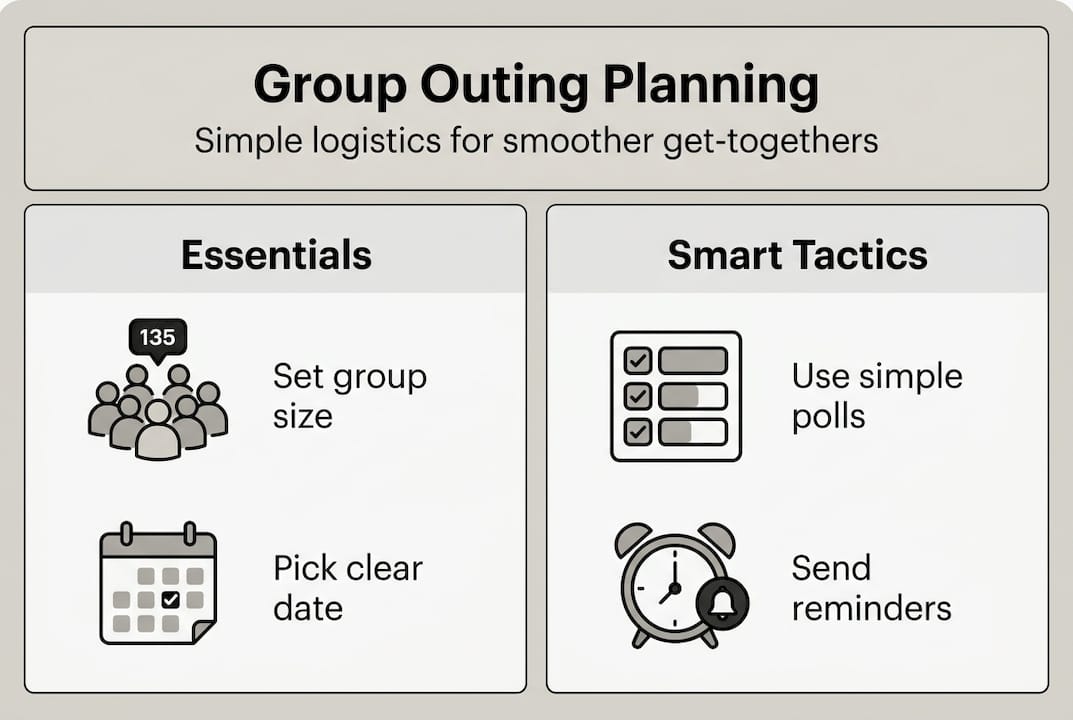
Voting and poll features distribute decision-making power across your group, preventing the common dynamic where one person becomes the default organizer and eventually burns out. Understanding the 7 key features of group chat apps for easy planning helps you leverage these tools effectively. Rotate who creates polls, let different people suggest activities, and celebrate when someone besides the usual organizer takes initiative.
Consider this wisdom from experienced group coordinators:
"The best plans are the ones that actually happen, not the perfect ones that collapse under their own complexity. Give your group clear choices, respect their time with deadlines, and keep the energy positive even when logistics get messy."
Practical implementation means starting small and building habits. Don't try to revolutionize your group's entire coordination system overnight. Pick one strategy, like adding deadlines to polls, and stick with it for three outings. Once that becomes natural, layer in reminders. Gradually, these tactics become your group's default operating system.
The ultimate goal is making planning so smooth it becomes invisible. When logistics flow naturally, your crew can focus mental energy on enjoying time together rather than wrestling with coordination chaos. That shift from planning as obstacle to planning as enabler marks the difference between groups that drift apart and those that stay connected.
Simplify your group outings with Groop Labs
After exploring logistics principles and coordination strategies, you might wonder if there's a tool designed specifically around these best practices. Groop Labs built its mobile platform to embody exactly the approaches that make group planning effortless for friend groups like yours.
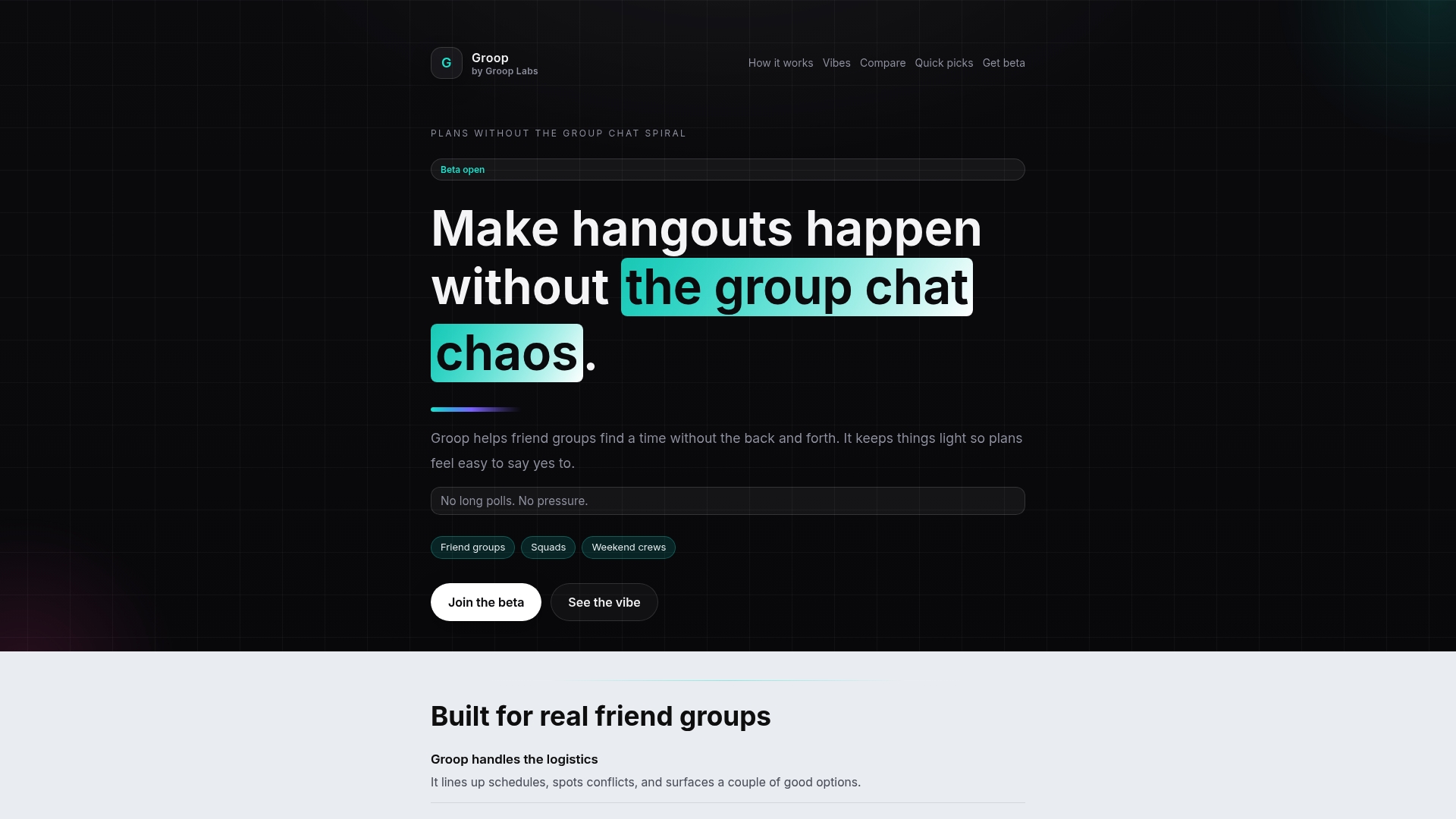
The Grooop app streamlines social coordination by automatically surfacing schedule conflicts, offering clear date options, and facilitating quick decisions without endless group chat threads. It respects your group's vibe while handling the logistics heavy lifting, letting you focus on the fun rather than the friction. Features like built-in polls, smart reminders, and privacy-first design align perfectly with the strategies covered throughout this guide, making it worth exploring for your next outing.
FAQ
What are the best apps for casual group outing planning?
Partiful, GroupMe, and Sesh consistently rank as top choices for friend groups coordinating casual outings. These platforms offer free tiers with essential polling and messaging features that work across different devices without creating barriers. They balance simplicity with functionality, making coordination feel natural rather than like a project management task.
How many people should be in a group for easy outing planning?
The ideal range sits between 3 and 10 participants for smooth coordination. Groups smaller than 3 lack energy and options, while those exceeding 10 people face exponentially more scheduling conflicts and communication complexity. If your crew is larger, consider organizing subgroup outings or accepting that some members will naturally opt out of specific events.
What practical tips reduce no-shows at group outings?
Limiting date choices to 3-5 options makes commitment easier by reducing decision paralysis. Setting clear deadlines on polls creates urgency without pressure, while friendly reminders sent 24 hours before both the poll closes and the event itself dramatically improve attendance. These tactics combined can cut no-show rates significantly compared to open-ended planning approaches.
Why does inverse availability work better than traditional scheduling?
Inverse availability asks people to mark when they can't make it from a limited set of options rather than listing all their free time. This approach simplifies coordination by turning it into a process of elimination instead of a complex matching puzzle. The method surfaces the best option faster and requires less mental effort from participants.
How do I prevent one person from becoming the default planner?
Rotate who creates polls and proposes activities so planning responsibility spreads across your group. Use voting features to democratize decisions rather than having one person read the room and make calls. Celebrate when different people take initiative, and establish a norm that planning is a shared role rather than one person's job.