
Articles
Group logistics explained: simplify planning gatherings
Learn what group logistics really means and discover practical ways to coordinate friend gatherings with less stress and more success using modern planning tools.

Group logistics explained: simplify planning gatherings

You know the drill. Someone drops "we should hang out soon" in the group chat, and suddenly you're drowning in a flood of conflicting schedules, vague maybes, and that one friend who never responds until it's too late. Sound familiar? If coordinating plans with your squad feels like herding cats, you're not imagining things. The chaos isn't about your friends being flaky or disorganized. It's about group logistics, and most of us have no clue what that really means or how to handle it. This guide breaks down group logistics in plain terms, shows you why it matters for your social life, and gives you practical ways to make planning hangouts way less stressful and way more fun.
Table of Contents
- Key takeaways
- What is group logistics and why does it matter?
- Common challenges in group logistics and modern solutions
- How to separate logistics from social decisions to plan effectively
- Practical tips to master group logistics for fun social gatherings
- Simplify your group plans with Groop
- Frequently asked questions about group logistics
Key Takeaways
| Point | Details |
|---|---|
| What logistics include | Group logistics covers when and where to gather and how to coordinate details like transportation and budgets. |
| Benefits of good logistics | When logistics are solid, fewer people cancel, stress is reduced, and everyone can focus on enjoying the hangout. |
| App driven planning | Apps like Partiful combine calendar syncing, voting, and social style features to make planning feel less like work. |
| Plan early | Pro tips suggest starting planning at least a week before small hangouts and two weeks before larger events. |
| Differentiate logistics and social | Differentiating logistics from social decisions helps clarify who handles what and keeps preferences from slowing coordination. |
What is group logistics and why does it matter?
Group logistics is the behind-the-scenes work that makes social gatherings actually happen. Think of it as the practical coordination stuff: picking dates, choosing locations, figuring out transportation, and managing budgets. It's different from social decisions, which are about preferences, vibes, and what your group wants to do together. Logistics answers "when and where," while social decisions tackle "what and how we feel about it."
When you nail the logistics, everything else flows smoother. Good coordination means fewer people bail last minute, less stress for everyone involved, and more energy to actually enjoy the hangout instead of scrambling to fix problems. Bad logistics? That's how you end up with three people at a restaurant that closed an hour ago while the rest of your group is still figuring out the address.
Here's what group logistics typically includes for casual gatherings:
- Date and time selection that works for most people
- Venue booking or location scouting
- Transportation arrangements and parking details
- Budget planning and cost splitting
- Head counts and dietary restrictions
- Reminder systems so people don't forget
Young adults especially benefit from apps like Partiful that integrate social feeds with logistics, making planning feel less like work and more like scrolling your favorite app. These tools combine the practical coordination you need with the aesthetic engagement you want, which is exactly why they catch on with friend groups who value both efficiency and style.
Pro Tip: Start your logistics planning at least a week before smaller hangouts and two weeks before bigger events. Clear early communication prevents the dreaded day-of scramble when half your group realizes they had conflicting plans.
Common challenges in group logistics and modern solutions
Coordinating friend groups comes with predictable headaches that make planning feel harder than it should be. Conflicting schedules top the list. Everyone's juggling work, classes, side projects, and other social commitments, so finding overlap gets messy fast. Then there's the information scatter problem where details live across texts, DMs, emails, and someone's Instagram story you saw three days ago but can't find anymore.
Decision fatigue hits hard too. When every choice requires a group vote and endless back-and-forth, people check out mentally. Missed communications are another killer. That crucial update about the time change? Half your group never saw it because it got buried under memes and random chat noise.
Modern group planning apps tackle these issues head-on with smart features designed for how young adults actually communicate. Calendar syncing shows everyone's availability at a glance without the "when are you free" interrogation. Voting features let groups make decisions quickly without endless debate. Integrated chat keeps all plan-related talk in one searchable thread instead of scattered across platforms.

Here's how popular apps stack up:
| App | Key Features | Aesthetic Appeal | Best For |
|---|---|---|---|
| Partiful | Social feed integration, RSVP tracking, event updates | High, Instagram-style interface | Parties and larger social gatherings |
| CoHost | Collaborative planning, shared to-do lists, polls | Medium, clean and functional | Multi-host events with shared responsibilities |
| Groop.cc | Availability surfacing, conflict detection, simple choices | High, minimal and modern | Casual friend hangouts and small group coordination |
The apps that win with young adults do more than handle logistics. They create an experience that feels social and engaging, not like filling out a boring form. Partiful nails this by making event pages look like social media posts you'd actually want to interact with. When planning feels fun instead of tedious, people participate more consistently.
These tools also reduce the mental load on whoever usually ends up organizing everything (you know who you are). Instead of manually tracking responses and sending reminder texts, the app does the heavy lifting. That means the organizer can actually enjoy the event instead of stress-managing it until the last second.
Pro Tip: When introducing a new planning app to your group, pick one that matches your squad's aesthetic preferences and tech comfort level. An app everyone finds visually appealing gets adopted way faster than one that feels clunky or outdated, even if the features are similar.
How to separate logistics from social decisions to plan effectively
Confusing logistics with social decisions creates unnecessary friction in group planning. Social decisions involve personal preferences, group vibe, and what feels right for your squad. Should we do karaoke or bowling? What's the dress code? Who's bringing the playlist? These choices shape the experience and reflect your group's personality.
Logistics, on the other hand, are the practical necessities that make the event possible regardless of what you choose to do. They're less about feelings and more about facts: available dates, realistic budgets, physical locations, and coordination mechanics.
When you mix these up, planning gets messy. People debate logistics like they're social decisions (spending 30 minutes arguing about whether 7pm or 7:30pm "feels better") or treat social decisions like logistics (picking an activity just because it's convenient, not because anyone actually wants to do it).
Here's how to keep them separate and handle each effectively:
- Identify which decisions are purely logistical (dates, times, locations, budgets, transportation)
- Assign logistics tasks to one or two organized people who can handle coordination without constant group input
- Open social decisions to the full group through quick polls or casual discussion
- Use apps that clearly separate these functions with different features for scheduling versus preference gathering
- Make logistics decisions first to establish the framework, then layer in social choices
- Communicate which type of decision you're making so everyone knows their level of input
Apps like Partiful excel at this separation by offering distinct interfaces for logistical coordination (RSVPs, time selection, location details) and social engagement (comments, reactions, shared media). This clarity helps groups stay focused and prevents the endless circular discussions that kill momentum.
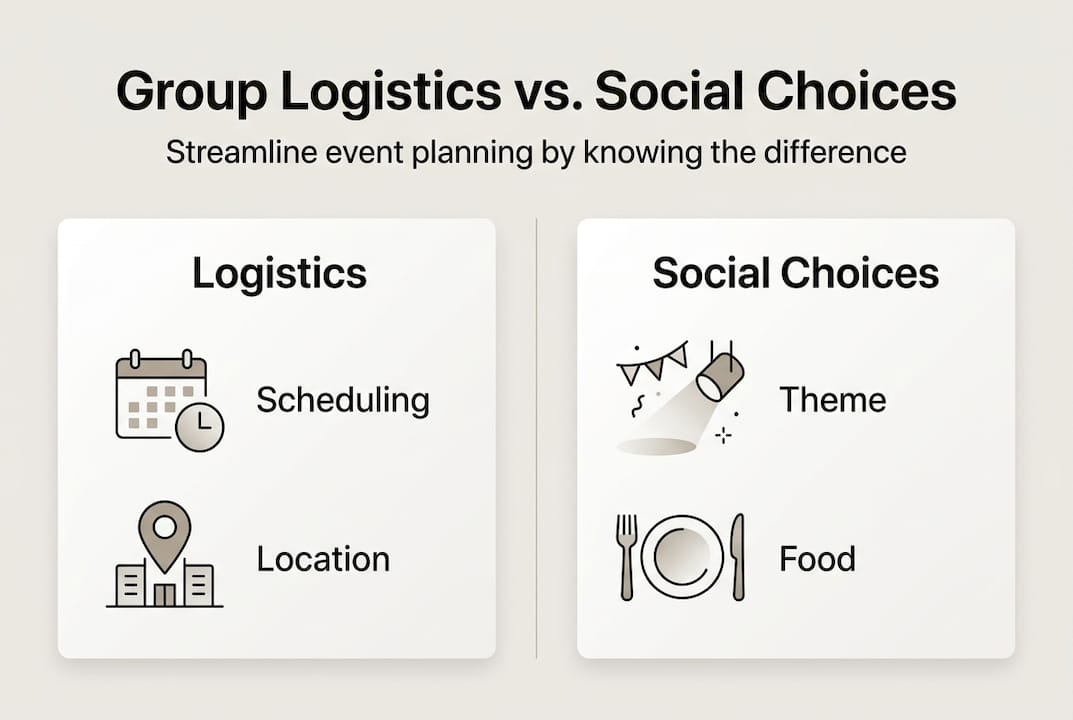
When logistics are handled efficiently by a small coordination team, the whole group can focus energy on the fun stuff: deciding what to do, setting the vibe, and building excitement. This division of labor respects both the practical needs and the social nature of gathering with friends.
The key is recognizing that not every decision needs full group consensus. Logistics decisions benefit from quick, practical choices made by people willing to handle details. Social decisions thrive on group input and collective excitement. Mixing the two creates bottlenecks where neither gets done well.
Practical tips to master group logistics for fun social gatherings
Mastering group logistics isn't about becoming a professional event planner. It's about developing simple habits that make coordination feel effortless instead of exhausting. Start by confirming availability early, ideally as soon as someone suggests getting together. Waiting until the last minute guarantees conflicts and disappointment.
Centralize all your planning information in one place, whether that's a dedicated app, a shared note, or a pinned group chat thread. Scattered details across multiple platforms create confusion and missed updates. When everyone knows where to find the latest plan information, you eliminate the constant "wait, what time again?" questions.
Set reminders at strategic intervals: one when plans are confirmed, another a few days before, and a final one the day of. This keeps your gathering top of mind without being annoying. Delegate specific roles to different people based on their strengths. Someone good with money handles cost splitting. Your friend with the car coordinates transportation. Your most organized buddy manages the timeline.
Keep plans flexible enough to adapt without falling apart completely. Build in buffer time for people running late. Have backup options for weather-dependent activities. Rigidity creates stress when reality inevitably shifts a bit from your perfect plan.
Young adults respond best to apps that feel intuitive and look good, so choose tools that match your group's style. Partiful works because it doesn't feel like using a corporate scheduling tool. It feels like scrolling social media, which your group already does naturally.
Here are specific logistics elements to prioritize:
- Clear start and end times so people can plan around your event
- Exact addresses with parking or transit instructions
- Honest budget expectations upfront to avoid awkwardness later
- Dietary restrictions and preferences collected early
- A single point person for day-of questions and updates
Avoid overcomplicating things by focusing only on logistics that actually matter for your specific gathering. A casual coffee meetup doesn't need the same coordination depth as a weekend trip. Scale your logistics effort to match the event size and complexity.
Balance technology with personal touch when it makes sense. Apps handle the repetitive coordination tasks brilliantly, but a quick voice call or face-to-face chat can resolve confusion faster than 50 text messages sometimes. Use tech for efficiency, not as a replacement for all human interaction.
Pro Tip: Create visual timelines or checklists within your planning app to track tasks and deadlines. Seeing progress motivates everyone to stay on track, and it makes the logistics workload feel manageable instead of overwhelming. When you can literally check things off a list, planning feels less abstract and more achievable.
Simplify your group plans with Groop
If you're tired of the coordination chaos and want planning to feel as effortless as it should be, Groop Labs built something specifically for squads like yours. The platform combines everything you need to organize hangouts without the usual headaches: automatic availability checking, conflict surfacing, and simple decision-making tools that respect your group's vibe.
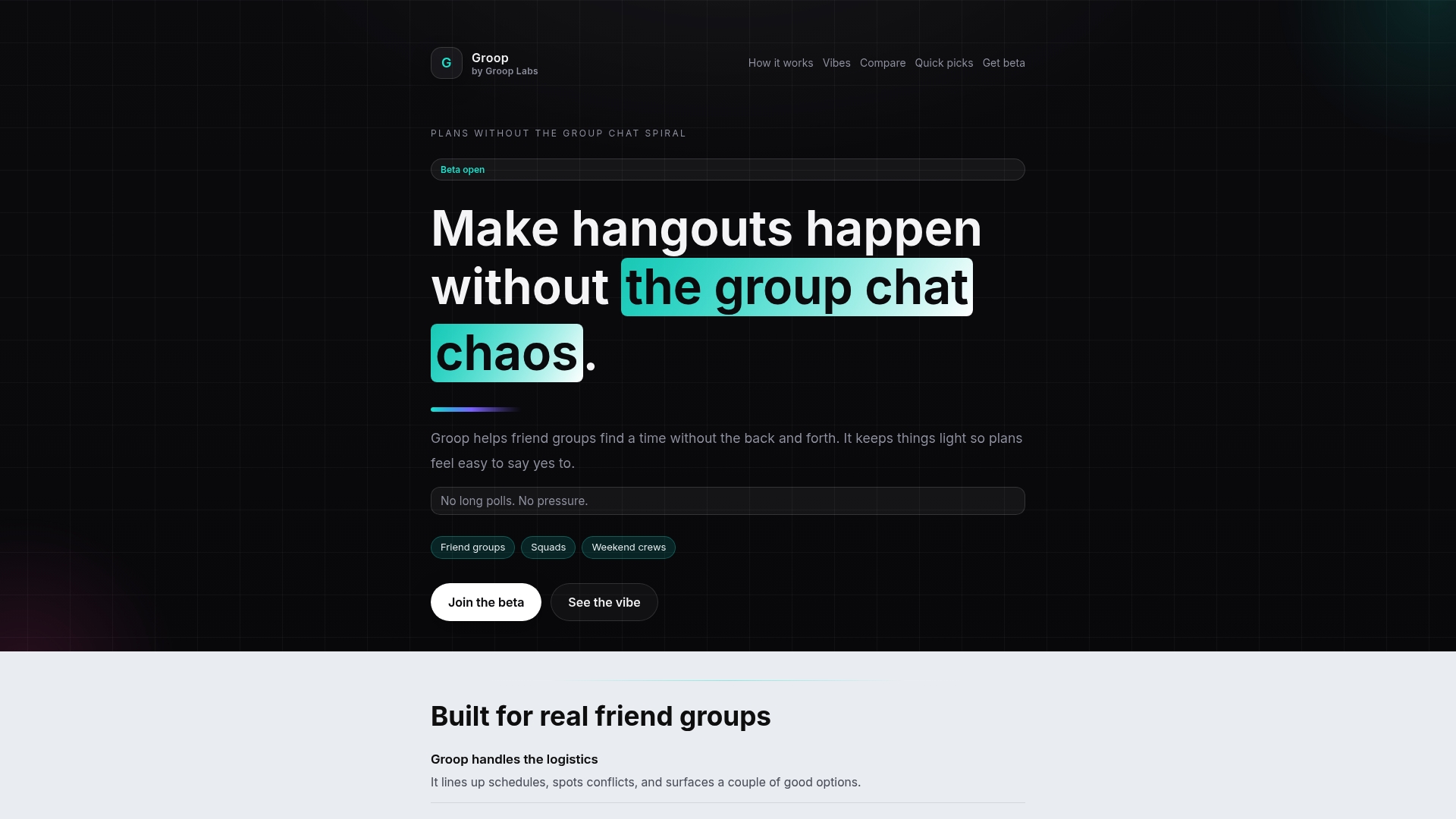
Groop handles the logistics layer so you can focus on the social stuff that actually matters. No more endless polls or chat threads where important details get lost. The app surfaces what needs deciding, presents clear options, and lets your group make choices quickly without pressure or confusion. It's designed for casual friend groups who want efficiency without sacrificing the relaxed, natural feel of planning with people you actually like.
Whether you're coordinating study sessions, weekend adventures, or just trying to get everyone together for dinner, Groop cuts the planning time and stress significantly. The interface stays minimal and modern because nobody wants to learn complicated software just to hang out with friends. Try Groop Labs and experience what group planning feels like when the logistics actually work for you instead of against you.
Frequently asked questions about group logistics
What is the difference between group logistics and social decisions?
Group logistics covers the practical coordination tasks like scheduling, location selection, budget management, and transportation that make events physically possible. Social decisions involve personal preferences, group vibe, activity choices, and the experiential elements that make gatherings enjoyable. Logistics asks "when and where," while social decisions ask "what and how we feel about it." Separating these helps you assign the right people to handle each type effectively.
Which apps are best for planning casual friend gatherings?
Partiful excels for parties and larger social events with its Instagram-style interface and social feed integration. CoHost works well when multiple people share hosting responsibilities and need collaborative planning tools. Groop.cc specializes in small friend group coordination with availability surfacing and conflict detection that makes scheduling effortless. Choose based on your group size, tech comfort level, and whether you prioritize social engagement features or pure logistics efficiency.
How can I reduce stress when coordinating with large groups?
Start planning earlier than you think necessary to give people time to adjust schedules. Use apps with automated features like calendar syncing and RSVP tracking so you're not manually chasing responses. Delegate specific logistics tasks to reliable friends instead of trying to handle everything yourself. Set clear deadlines for decisions and responses to prevent endless delays. Most importantly, accept that not everyone will make it to every event, and that's okay.
Is it better to use technology or personal communication for group plans?
Use both strategically. Technology handles repetitive coordination tasks, information centralization, and automated reminders far more efficiently than manual communication. Personal communication works better for resolving confusion quickly, addressing sensitive topics, and maintaining the human connection that makes gatherings meaningful. Let apps manage the logistics mechanics while you use direct conversation to handle nuanced social decisions and keep your group engaged.
What should I focus on first when organizing a group hangout?
Start with availability and date selection since that determines whether your event can happen at all. Once you have a confirmed time that works for most people, nail down the location with specific address details. Then tackle budget expectations and any logistics that require advance booking or preparation. Save activity details and social decisions for after the practical framework is set. This sequence prevents wasted effort planning details for an event that never materializes due to scheduling conflicts.