
Articles
7 Brilliant Free Scheduling Tool Like Doodle Options for 2026
Discover 7 brilliant free scheduling tool like Doodle options for 2026 that make group planning easy for us all Find your perfect fit and enjoy stress free organising
Finding a time that works for everyone can still feel like a puzzle in 2026, whether it is for work, study, or just catching up with friends. The search for a free scheduling tool like doodle is more relevant than ever, as we all want less hassle and more time together.
Doodle made group polls easy, but now there are fresh, free alternatives designed for every kind of group vibe. Imagine scheduling that feels as light as a group chat and as simple as picking a movie together.
In this post, we will explore seven brilliant options that bring unique features, less pressure, and a more relaxed way to coordinate. Let us make planning feel less like work and more like hanging out.
Why People Need Free Scheduling Tools in 2026
Trying to get a group together in 2026 can feel like herding cats. Our calendars are packed, friends and colleagues are scattered, and nobody wants to be the one chasing replies. That’s where a free scheduling tool like doodle comes in, making it easier for everyone to find time without the usual stress.
The Evolution of Group Coordination
Life’s busier than ever, with more hybrid work, global teams, and social groups spread across cities. Traditional group chats and endless email threads often leave us feeling stuck, waiting for someone else to decide. In fact, over 60% of people say they’re frustrated by the constant back-and-forth when making plans.
If you’ve ever been caught in a group chat spiral, you know how quickly things get confusing. That’s why many are turning to a free scheduling tool like doodle to skip the hassle and keep things moving. For a deeper dive into how chat group chaos affects planning, check out Chat groups and scheduling dynamics.
What Makes a Scheduling Tool Truly Useful?
A free scheduling tool like doodle should feel simple and inviting. No complicated sign-ups or pressure to decide right away. The best tools let everyone respond at their own pace and protect your privacy, so you never feel put on the spot.
It’s also important these tools work on any device and don’t hide the basics behind paywalls. Whether you’re on your phone, tablet, or laptop, accessibility matters for keeping groups included and plans flexible.
Doodle’s Legacy and Why Alternatives Matter
Doodle changed the way we plan by making group polls the norm. But sometimes, even doodle feels a bit too formal or urgent. Some groups—like friends or classrooms—prefer a more relaxed approach, with less pressure and more privacy.
Take the example of a study group that switched from doodle to a chat-like scheduling tool. Suddenly, more people joined in, and planning felt less like a chore. It shows how the right free scheduling tool like doodle can adapt to your group’s unique style.
Key Capabilities to Look For
Look for features that make group planning smoother, not stricter. Automated time suggestions, calendar integrations, and easy sharing links keep things light. Anonymous voting, “maybe” options, and flexible responses mean nobody feels forced to commit before they’re ready.
A quick comparison can help clarify what matters most:
| Frustration | What to Look For |
|---|---|
| Endless messages | Automated suggestions |
| Peer pressure | Anonymous voting |
| Missed replies | Mobile-friendly sharing |
| Rigid polls | “Maybe” response options |
The Social Side of Scheduling
Group dynamics can make planning tricky. Sometimes, people feel pressured to decide or just get tired of too many choices. The right free scheduling tool like doodle keeps things optional and light, helping everyone stay connected without the stress.
In 2025, more than 70% of Gen Z said they prefer tools that feel like texting a friend, not filling out forms. That’s why mobile-first, chat-like solutions are on the rise, making coordination something we can all enjoy—never a burden.
7 Brilliant Free Scheduling Tool Like Doodle Options for 2026
Finding a free scheduling tool like doodle should feel as easy as chatting with your friends, not like doing homework. With so many choices today, we can pick the one that feels right for our group, whether it is for work, study, or fun. Let us explore seven standout options, each with its own vibe and strengths.
Groop
Groop is a new free scheduling tool like doodle, built for groups who want to keep things light and friendly. It is free during open beta, so anyone can try it out. Groop checks when everyone is free, shows options clearly, and lets people respond privately, so there is no pressure or poll fatigue.
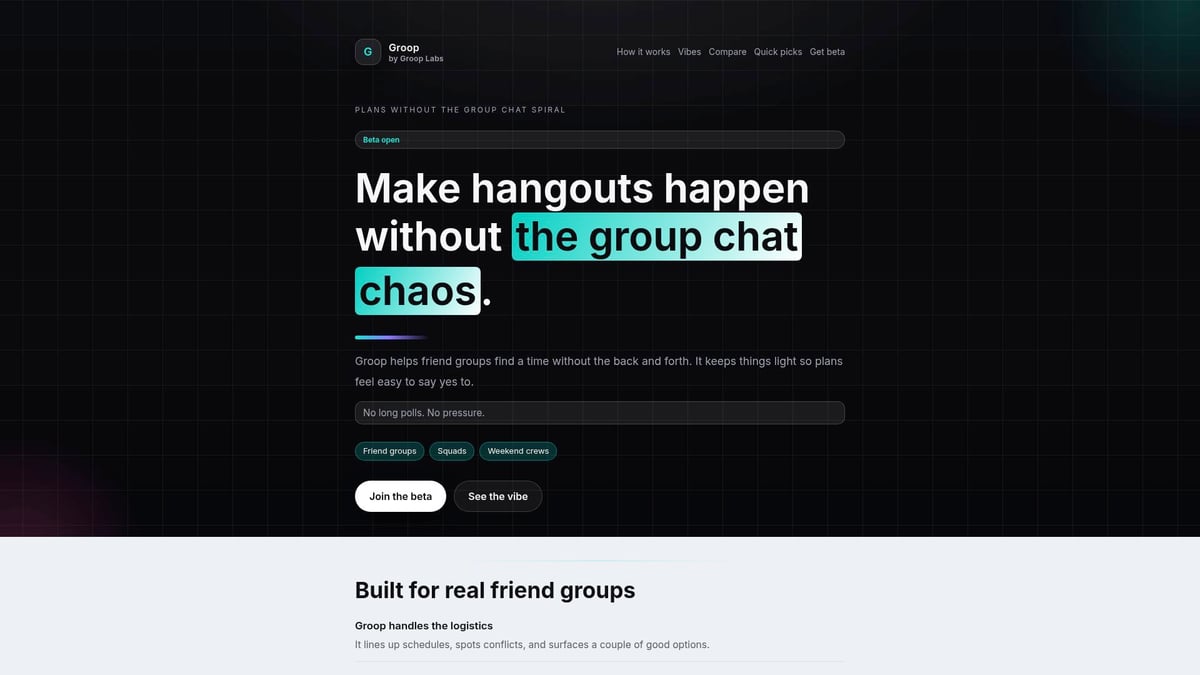
What makes Groop special is its focus on friend groups and informal circles. No more endless group chats or feeling like you have to decide right now. Everyone can join in when they are ready.
- Automated group availability checks
- No deadlines or pressure
- Privacy-focused responses
Groop is perfect for young adults, students, or anyone tired of messy group chats. The only real downside is that it is still evolving, so some features are in progress. Recently, a weekend crew used Groop to plan a movie night, and everyone felt included without any stress.
If you want more tips on making group plans easy, check out this guide on how to plan group hangouts. It fits perfectly with the free scheduling tool like doodle experience Groop aims to provide.
Calendly
Calendly is a polished, professional free scheduling tool like doodle that works well for freelancers, consultants, and small teams. Its free plan lets you send out scheduling links, connect your calendar (Google, Outlook, and more), and automatically detect time zones.

Calendly stands out for its clean look and seamless integrations. It is easy to share, even with people outside your team. However, some group scheduling features are only available on paid plans, and advanced options might need an upgrade.
- Automated scheduling links
- Calendar integrations
- Time zone detection
A consultant recently booked meetings with clients across time zones, skipping the usual confusion. Calendly saves time and keeps things tidy, making it a reliable free scheduling tool like doodle for professional settings.
When2meet
When2meet is a super simple free scheduling tool like doodle. There is no sign-up, no fuss—just a grid where everyone marks when they are free. It updates in real time and works perfectly for quick polls.
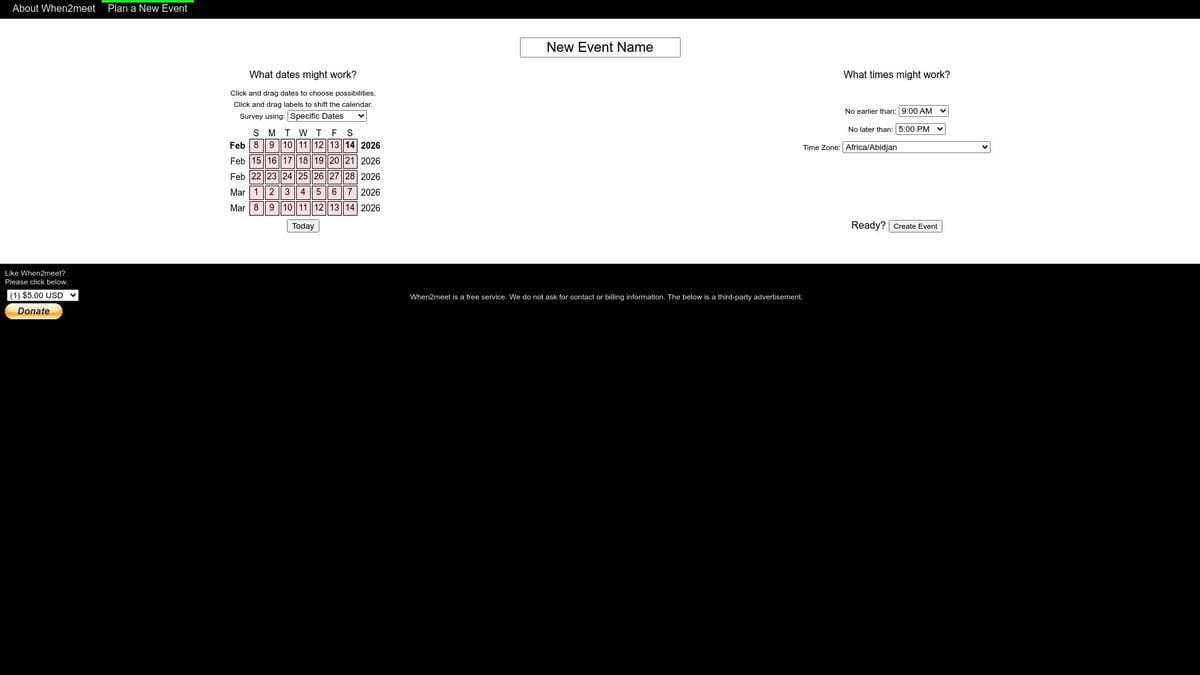
It is ideal for study groups, casual meetups, or event organisers who just want to find a time fast. The interface is basic and does not offer calendar integration, but the speed and anonymity are hard to beat.
- Grid-based availability selection
- No account needed
- Real-time updates
A student group recently used When2meet to find a study session slot in seconds. If you want a frictionless free scheduling tool like doodle for casual plans, this one is worth a try.
Rallly
Rallly is a free, open-source scheduling tool with a focus on privacy and customisation. It lets you create polls, vote anonymously, comment, and suggest new times. Rallly is community-driven and always improving, thanks to its open-source nature.
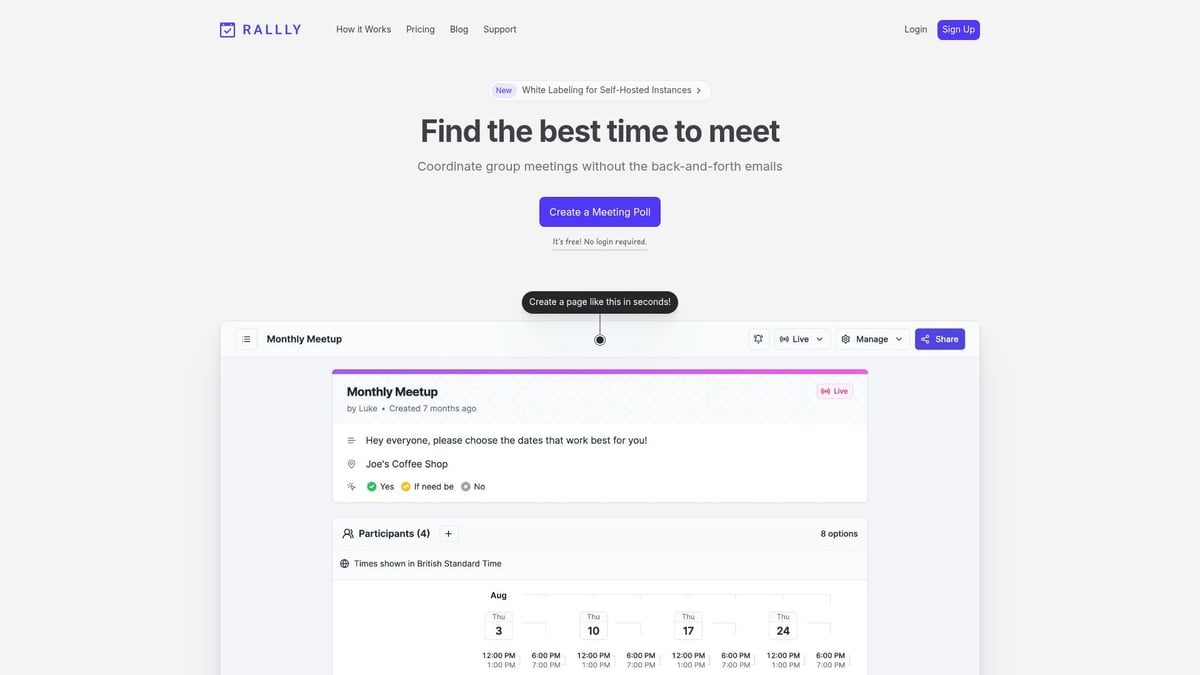
It is a great free scheduling tool like doodle for community groups, non-profits, or anyone who values transparency. There are no ads, and it supports large groups, but it does have fewer integrations and a basic interface.
- Easy poll creation
- Anonymous voting
- Comment threads
A local club uses Rallly to organise monthly meetings, with everyone giving feedback openly. If privacy and group input matter to you, this free scheduling tool like doodle is a solid choice.
Google Forms
Google Forms is a flexible free scheduling tool like doodle for anyone already using Google’s suite. You can create custom polls, use different question types, and see automatic summaries of the results.
It works well for schools, clubs, and teams who need something versatile. The downside is that it is not purpose-built for scheduling, so you will need to set up the poll yourself and manually review responses.
- Customisable polls
- Multiple question types
- Real-time results
A teacher recently used Google Forms to poll students for project meeting times. For those who like flexibility and already use Google tools, this free scheduling tool like doodle is easy to recommend.
Microsoft FindTime
Microsoft FindTime is a free scheduling tool like doodle for Outlook and Microsoft 365 users. It integrates deeply with Microsoft’s ecosystem, suggests meeting times, and lets people vote on options. It can even hold calendar slots automatically.
FindTime is perfect for businesses and remote teams already using Microsoft tools. It streamlines meetings and reduces the usual back-and-forth. However, it requires a Microsoft 365 account and is not the best fit for informal groups.
- Outlook integration
- Automatic time suggestions
- Calendar holds
A project team recently used FindTime to schedule cross-department meetings without endless emails. For business users looking for a free scheduling tool like doodle that fits their workflow, this is a smart pick.
Framadate
Framadate is a privacy-focused, open-source free scheduling tool like doodle, hosted in Europe. It is all about simple poll creation, anonymous voting, and no registration. There is no data tracking or ads, making it ideal for privacy advocates and grassroots groups.
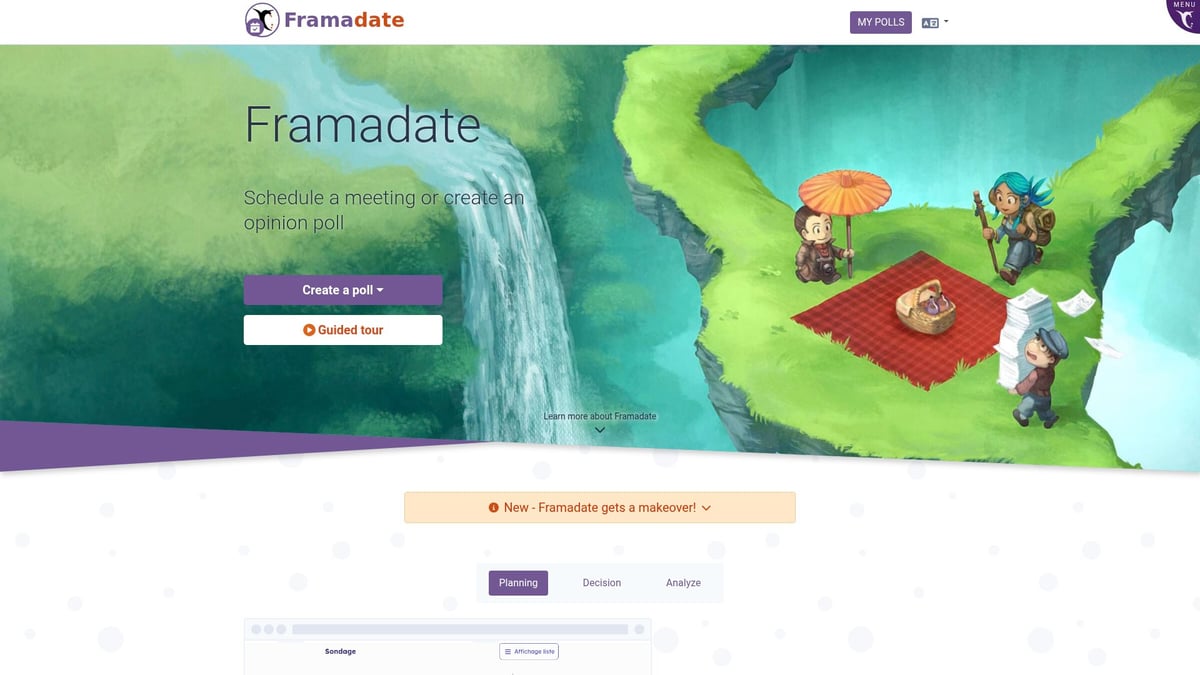
Framadate supports both date and text polls, but has limited design options and fewer integrations. Still, it is valued for its open-source ethos and commitment to user privacy.
- Simple poll creation
- Anonymous voting
- No registration needed
An EU-based activist group used Framadate to coordinate volunteer shifts securely. If keeping things private and straightforward is your priority, this free scheduling tool like doodle will feel just right.
How to Choose the Right Scheduling Tool for Your Group
Choosing a free scheduling tool like doodle should feel easy, not overwhelming. The best fit depends on your group’s size, vibe, and how you naturally chat with each other. Think about whether you’re planning casual hangouts or formal meetings, and how much privacy your group prefers.
Understanding Your Group’s Needs
Start by considering what your group truly needs from a free scheduling tool like doodle. Are you a close-knit friend group, a classroom, or a remote team? Some groups love simplicity, while others want lots of options. Privacy also matters—do you want everyone’s responses visible, or would you prefer anonymous choices?
Comparing Features and Limitations
Not all tools are created equal. Use this mini-table to compare key features:
| Feature | Essential For | Good to Have |
|---|---|---|
| Calendar Integration | Work teams | Social groups |
| Anonymous Voting | Privacy-minded groups | Everyone |
| Mobile Compatibility | All groups | |
| “Maybe”/Flexible Replies | Casual gatherings |
When picking a free scheduling tool like doodle, weigh which features feel most natural for your group’s flow.
Real-World Scenarios
Picture this: Your mates want a spontaneous pizza night, while your work team needs to coordinate a weekly check-in. A free scheduling tool like doodle can help in both cases, but the right choice might differ. For friends, lightweight, chat-like polls work best. For workplaces, calendar sync and reminders are a plus.
Keeping Planning Light and Optional
The secret to smooth planning is keeping things low-pressure. Let people mark “maybe,” skip a vote, or suggest new times. A free scheduling tool like doodle should adapt to indecision, not force a quick answer. Making scheduling feel like a group chat—friendly, flexible, and optional—keeps everyone happy.
Tips for Smooth Group Scheduling
- Let everyone have a say, but don’t rush decisions.
- Use tools that keep things open-ended and relaxed.
- Embrace indecision; it’s part of real life.
- For more ideas, check out this step-by-step friend group hangout guide to make planning feel even easier.
Choosing a free scheduling tool like doodle is about finding what feels right for your group’s unique rhythm. There’s no one-size-fits-all—just what works for you.
Future Trends in Group Scheduling for 2026 and Beyond
The future of group scheduling is looking brighter, lighter, and more human. As we move into 2026, the demand for a free scheduling tool like doodle that feels natural and non-intrusive is shaping the way these tools evolve.
Artificial intelligence is stepping in to make coordination even easier. Many platforms now use smart algorithms to suggest meeting times, spot patterns, and gently nudge groups towards options that suit everyone. The growth of AI-driven scheduling tools shows just how much people value effortless planning.
We are also seeing research into adaptive scheduling, like Togedule, which uses large language models to make suggestions feel more like a group chat than a rigid poll. This makes scheduling feel softer and more flexible, especially for friend groups and informal teams.
Key trends shaping the next wave of free scheduling tool like doodle alternatives:
- More privacy controls and anonymous options, so everyone feels safe sharing preferences.
- Mobile-first designs that work wherever you are.
- Tools tailored for specific groups, from remote teams to clubs and social circles.
- Chat-inspired interfaces that make scheduling feel as easy as texting friends.
Looking ahead, scheduling will keep getting lighter, with tools adapting to our rhythms instead of the other way around. The goal is always to make planning together feel natural, optional, and truly group-friendly.We all know how finding the perfect time with friends can feel like herding cats—especially as our lives get busier and group chats get noisier. That’s why I love tools that just make planning feel easy and natural, without any pressure or endless back-and-forth. If you’re ready to say goodbye to scheduling chaos and try something designed for real groups like ours, here’s your chance to see what’s possible. Let’s make group plans feel fun again—Join the beta and help shape the future of hassle free coordination with us!